Along the sun-dappled shores of a small Greek village, where the sea whispered against jagged rocks and the smell of salt mingled with the scent of wild herbs, there lived a humble fisherman named Nikolas. His boat was worn, patched with scraps of timber and tar, and his nets bore the frayed threads of many seasons. Every morning, he rowed out into the gentle waves, casting his nets with care and returning home with whatever the sea had provided.
Nikolas lived simply, sharing a modest hut with his wife, Eleni. Their home was plain: a single room with a hearth for cooking, a small wooden table, and a few earthen pots and bowls. Yet despite their poverty, Nikolas and Eleni were content. They did not own gold or silver, nor did they have grand furniture or rich clothing. Their joy lay in the warmth of the hearth, the bounty of the sea, and the quiet life they led together.
Experience legends where mountains breathe magic and heroes face moral choices that shape destiny
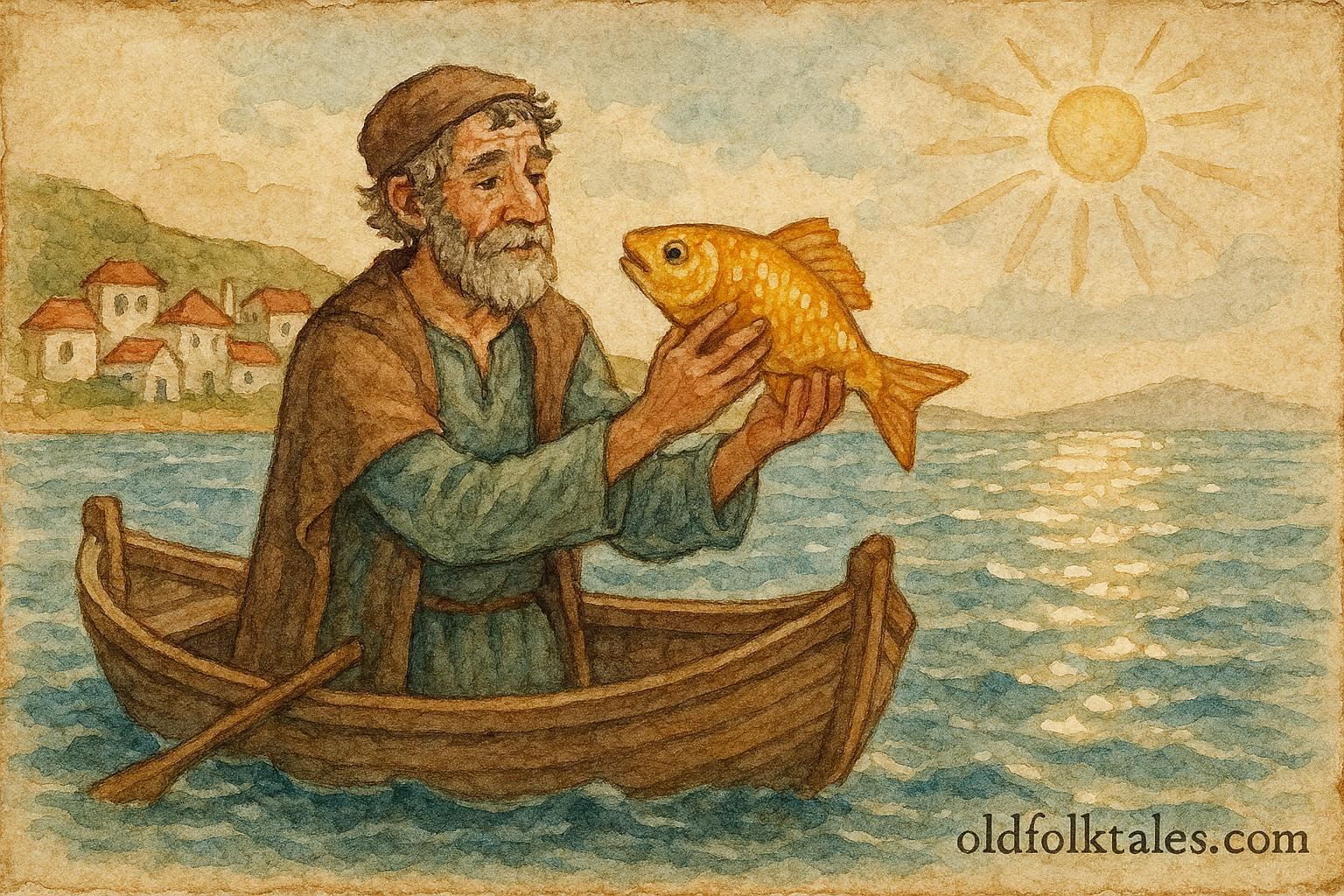
One early morning, when the sun had just begun to gild the waves with gold and the gulls circled lazily overhead, Nikolas set out for the day’s fishing. He hummed a soft tune as he rowed, feeling the pull of the current and the gentle sway of his boat. Hours passed, and his nets came up with the usual catch: small, silvery fish that would feed them for a few days.
But on this morning, when he cast the net one last time, something extraordinary happened. Struggling within the mesh was a fish unlike any Nikolas had ever seen. Its scales gleamed like burnished gold, and its eyes sparkled with an uncanny intelligence. To Nikolas’s astonishment, the fish spoke in a human voice:
“Kind fisherman, release me, and I will grant you three wishes. Choose wisely, for each wish carries consequences beyond your imagination.”
Nikolas fell to his knees, astonished. He had heard tales of magical creatures, of enchanted beings in the depths of rivers and seas, but never had he believed such wonders could exist. “Three wishes?” he stammered. “Anything I desire?”
“Yes,” said the fish, “but remember: greed and rashness can turn blessings into misfortune. Let humility guide your heart.”
Nikolas thought long and carefully. He thought of his modest home, his simple life, and the occasional hardships of hunger or illness that he and Eleni endured. Finally, he spoke with quiet humility:
“I wish for a warm, safe home for Eleni and myself, one that can shelter us through all seasons.”
The golden fish shimmered, and in an instant, their humble hut transformed. Stone walls rose from the earth, sturdy and whitewashed, with a roof of red tiles that glowed warmly in the sun. The hearth blazed brightly, and tables and chairs of polished wood filled the room. Eleni clapped her hands in delight, tears glistening in her eyes, while Nikolas, though proud, felt the caution of the fish’s warning deep in his heart.
For the second wish, Nikolas considered the needs of their daily life. Though he had food from the sea and the bounty of the land, he wished for comfort for Eleni, whose gentle hands had labored endlessly. “I wish,” he said, “for enough wealth to live without fear, to have food, clothing, and comfort for all days to come.”
Again, the golden fish shimmered. Silver coins and sparkling jewels appeared in their home. Eleni’s eyes widened at the sight of the treasure, and her joy was evident. Nikolas, however, felt a mixture of relief and unease. The gold was beautiful, but it was also heavy with responsibility. Wealth could bring security, yes, but it could also foster envy, tension, and desire beyond reason.
Days turned to weeks, and the couple lived comfortably. The villagers marveled at Nikolas and Eleni’s sudden fortune, whispering about the miraculous transformation of their home. But comfort bred temptation. Eleni’s heart, once satisfied with simplicity, began to yearn for more. She dreamed of palaces instead of houses, silk garments instead of linen, and titles of nobility instead of the quiet life she had always known.
“Nikolas,” she urged one morning, “we have lived in contentment long enough. Go back to the sea and summon the golden fish. Ask for a palace with servants, riches beyond imagination, and status to match our wealth.”
Nikolas’s heart sank. He knew the fish’s power was great, but he also remembered its warnings: greed and rash wishes could bring misfortune. Yet his love for Eleni and desire to see her happy compelled him. With a heavy heart, he rowed his boat to the open sea and called for the magical golden fish.
The fish emerged, golden scales glinting in the sun. Its voice was gentle yet firm: “Nikolas, why do you seek more when you already have comfort and safety?”
“My wife wishes for a palace and riches beyond our current wealth,” he said reluctantly. “Please, grant her wish.”
The fish shimmered, but there was a shadow in its eyes. It guided Nikolas back to the shore. When he returned, the village and their home had vanished. The sea had reclaimed the stone walls, the furniture, and the treasure. Only their small, fragile boat remained, bobbing gently in the waves. Nikolas and Eleni were left with nothing.
Eleni wept, realizing too late the cost of her desire. Nikolas held her close and spoke softly: “The fish gave us blessings when we were humble. It warned us that greed would undo all. We have learned our lesson.”
Together, they returned to the life they had known, mending nets and tending the modest home they could rebuild. Though they were poor again, Nikolas and Eleni discovered that contentment is not found in wealth or grandeur, but in shared work, respect for nature, and the quiet joy of simplicity. The golden fish never appeared again, but its lesson endured in their hearts: humility and gratitude are the truest treasures of all.
Over time, the story of Nikolas and the golden fish spread to other coastal villages. Parents told the tale to their children, fishermen sang songs of the enchanted fish, and elders reminded the young that desire without wisdom could destroy even the greatest blessings. The fish became a symbol of moderation, and the tale a cautionary reminder that greed could undo what contentment and humility could create.
Discover the spiritual depth and wisdom hidden in the ancient folklore of Eastern and Balkan Europe
Moral Lesson
True happiness is found in contentment and humility. Wealth and power are fleeting, and greed can undo even the greatest blessings. Appreciating what one has and using it wisely is the path to enduring joy.
Knowledge Check
- Who is the main character in The Fisherman and the Golden Fish?
Nikolas, a humble Greek fisherman living by the sea. - What magical creature grants Nikolas wishes?
A golden fish capable of granting three wishes. - What is Nikolas’s first wish?
A safe and comfortable home for him and his wife. - How does Nikolas’s wife’s desire affect the story?
Her growing greed leads them to ask for a palace and riches, causing them to lose all they had gained. - What lesson does the tale teach about wealth?
That wealth is fleeting, and greed can destroy even the greatest blessings. - What overarching moral does the story convey?
Contentment, humility, and gratitude are more valuable than gold or grandeur.
Source: Collected in Greek Folk Tales by Georgios A. Megas, 1970
Cultural Origin: Greece