In a serene valley of Serbia, where the hills rolled gently like the backs of sleeping giants and rivers wound through forests like silver ribbons, there lived a maiden named Milena. She was the youngest daughter of humble farmers, yet even as a child, she displayed an unusual attentiveness to the world around her. While other children ran through the meadows chasing butterflies or playing games, Milena would sit quietly at the forest’s edge, listening to the rustle of leaves, the chatter of birds, and the whispers of the wind.
The villagers often whispered about her peculiar ways. “She speaks to the birds,” they would murmur, half in awe, half in suspicion. Yet there was a gentle wisdom in her eyes that none could deny. Milena never sought attention or praise; she simply observed the world with patience, learning lessons from the animals she watched with such care.
One crisp spring morning, as dawn’s golden light spilled across the valley and the river shimmered like liquid sunlight, Milena discovered that her gift was far greater than she had imagined: she could understand the language of animals. The first revelation came from a sparrow perched on a blooming cherry tree. Its tiny voice, at first only faint chirps, became words in her mind: “Follow the brook, little one. There is something you must see.”
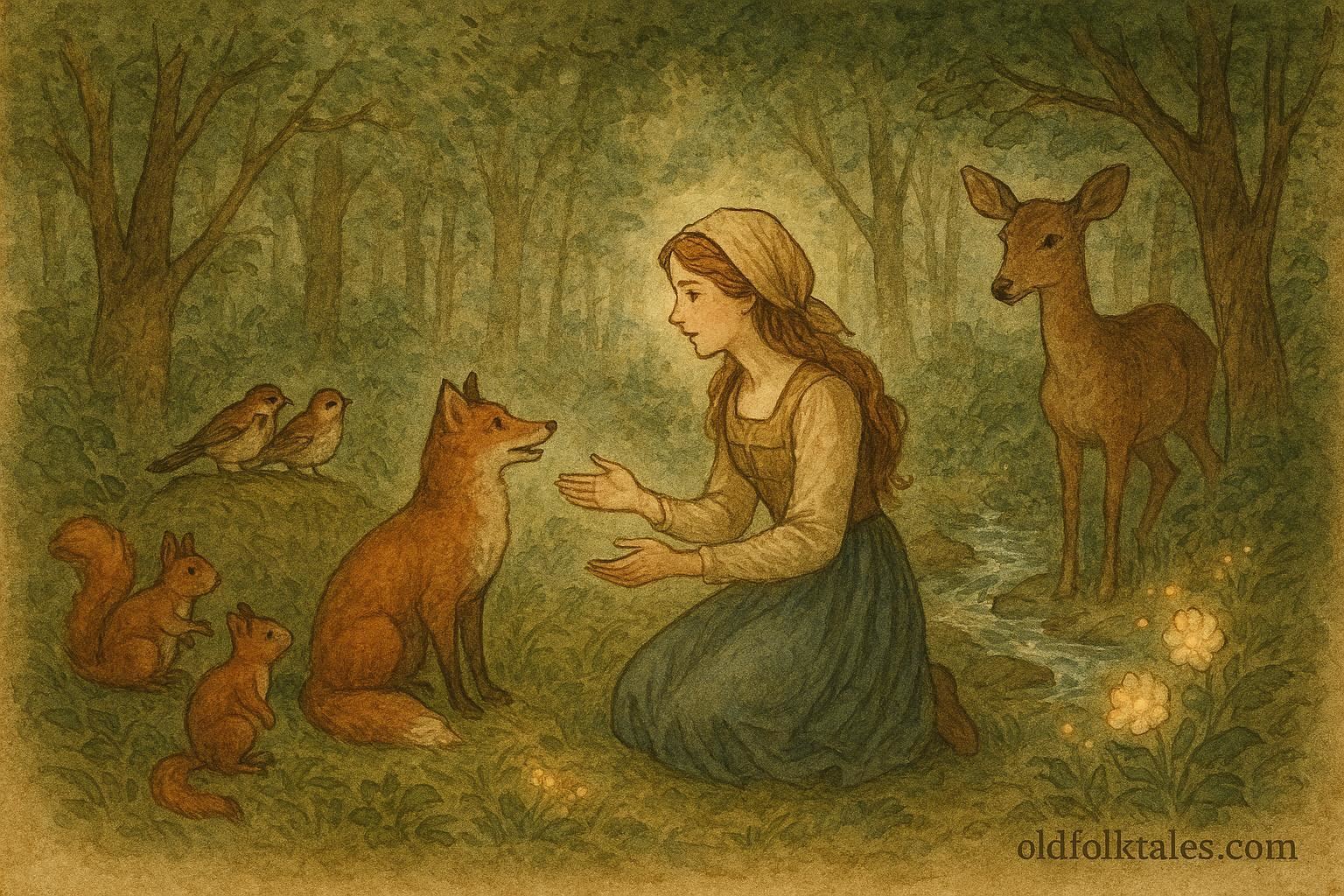
Milena blinked in astonishment but did as the bird suggested. She followed the winding brook deep into the forest, and there, at a sun-dappled clearing, a fox with fur like molten copper crouched, speaking in careful, measured tones: “You have the gift, child. Listen to the animals, and they will help you when wisdom is needed more than strength.”
From that day forward, Milena’s life changed. She spent her days wandering the forest, conversing with birds, deer, foxes, wolves, and even the shy squirrels and hedgehogs that darted through the undergrowth. She learned of hidden springs, secret paths, and dangers that threatened the village before humans could notice them.
The first real test of her gift came when a dispute arose between two neighboring farmers. A hidden spring, crucial to watering their fields, had changed its course. Crops were withering, and livestock grew thirsty. Accusations flew. The villagers gathered in the square, voices raised in anger, sticks and fists threatening one another. Milena, calm and composed, stepped forward.
She called upon the animals of the forest. Beavers, whose teeth and paws had shaped the river for generations, guided her to the fallen logs and mud banks that had redirected the water. Birds flew overhead, signaling hidden channels and pools, while squirrels led her to small hollows where water collected unseen. Following their guidance, Milena led the villagers in carefully redirecting the spring. Water flowed evenly to both farms, crops revived, and peace returned.
The villagers could not explain how a young girl had solved such a complex problem. They marveled at her cleverness, whispering, “It must be magic, or else wisdom beyond her years.” Milena only smiled and thanked the animals who had helped her, never seeking credit for herself.
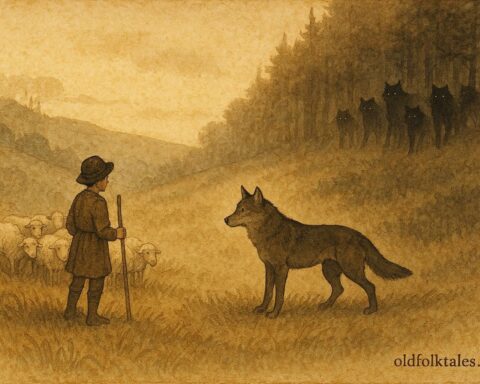
Word of her gift spread through the village, and soon other problems came to her for resolution. One harsh winter, a pack of wolves threatened the livestock. Milena spoke to the wolves, learning that they were desperate for food and did not wish to harm the villagers unnecessarily. She led the villagers to gather surplus game from the forest, offering it to the wolves in exchange for safety. Harmony was restored without bloodshed.
Later, Milena discovered hidden treasures buried under ancient oaks, long forgotten by her ancestors. Squirrels, who had watched the trees for generations, guided her paws to small mounds of coins, tools, and heirlooms. She used these treasures wisely, helping families in need and ensuring that none would be greedy or wasteful.
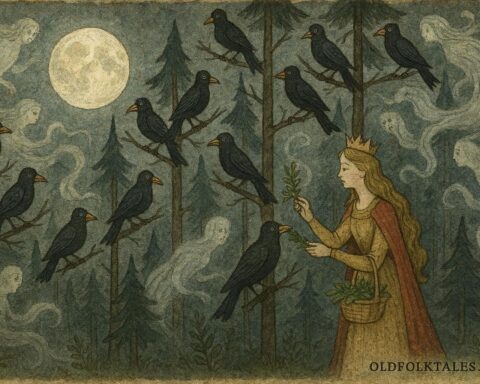
The greatest challenge came when greedy nobles arrived from the nearby city, seeking to seize the village’s crops and forests for themselves. They demanded tributes, threatened violence, and treated the villagers with disdain. The villagers were terrified, powerless against the men and their soldiers. Milena, however, remained calm. She turned to the forest, calling upon her allies: the ravens who scouted the skies, the foxes who knew every hidden path, the wolves who patrolled the outskirts, and even timid deer who could guide children and elders to safety.
Together, they devised clever strategies. Ravens would drop warning messages into the villagers’ hands, foxes would create diversions and lead soldiers into harmless traps, and wolves patrolled silently, ensuring the safety of everyone. When the nobles attempted to steal the harvest, they were met with a confusing forest full of obstacles, illusions, and misdirection. By the end of the week, the nobles fled in frustration and fear, never to return.
Milena’s gift, however, was not merely a tool for protection or treasure-finding, it was a means of teaching understanding and empathy. She explained to the villagers that animals were not merely creatures to be hunted or ignored. By observing their behavior and listening to their needs, humans could live in harmony with nature, anticipate danger, and solve problems that seemed impossible. Children learned to watch the birds for changes in weather, to notice the tracks of animals for safety, and to appreciate the quiet wisdom that existed all around them.
Over time, Milena became a revered figure not only in her village but in surrounding towns as well. People came from miles around seeking her counsel on disputes, lost objects, or advice in times of hardship. Yet she remained humble, always retreating to the forest to speak with her animal friends, understanding that her gift was as much a responsibility as a blessing.
She even taught her lessons to those who were skeptical. A stubborn nobleman once challenged her, mocking her ability. Milena led him into the forest, where a flock of geese guided them to a hidden grove filled with herbs that could heal his ailing horses. The man returned, humbled, and praised the girl who could speak to animals.
Years passed, and Milena’s story became legend. Parents would tell their children about the girl who listened to the forest, teaching them that true wisdom came from observing, understanding, and acting with empathy. Her tale became a symbol that cleverness, kindness, and patience were more powerful than brute strength or wealth. And in the valley where the hills rose like silent guardians and the rivers wound like silver threads, her gift endured in the hearts of those who remembered her.
Moral Lesson
Empathy, intelligence, and patience are gifts more powerful than strength or wealth. Understanding others—human or animal—and acting with compassion can solve problems, restore harmony, and reveal the true measure of character.
Knowledge Check
- Who is the main character of this folktale?
Milena, a young Serbian maiden with the gift of understanding animals. - What special ability does Milena possess?
She can speak to and understand animals, gaining insight and guidance. - How does she use her gift to help her village?
By resolving disputes, finding hidden treasures, warning of danger, and outsmarting greedy nobles. - What lesson does the folktale emphasize about empathy?
Listening and understanding others, even animals, leads to wise and fair outcomes. - Which animals assist Milena in the story?
Birds, foxes, wolves, deer, and squirrels, each providing guidance or protection. - What is the cultural origin of this story?
Serbian folklore, reflecting rural communities and traditional values of wisdom and empathy.
Source: “Serbian Folk Tales” collected by Petar II Petrović Njegoš, 1851
Cultural Origin: Serbia