In a quiet village nestled among the rolling hills and golden fields of Ukraine, there lived a poor girl whose life was shaped by hardship. Her home was a small, thatched cottage at the edge of the village, and her days were filled with labor, fetching water from the distant well, tending to a tiny garden, and helping her neighbors whenever she could. Despite the difficulties of her life, her heart remained warm, full of kindness and hope.
One spring morning, as the sun rose over the fields and dew sparkled on the grass like countless tiny diamonds, the girl found something unusual while tending her garden. Among the simple vegetables and herbs, a single, brilliant poppy seed lay in her palm. Its color glimmered with a faint golden hue, as if the sun itself had blessed it. She did not know from where it had come, but something about it felt magical.
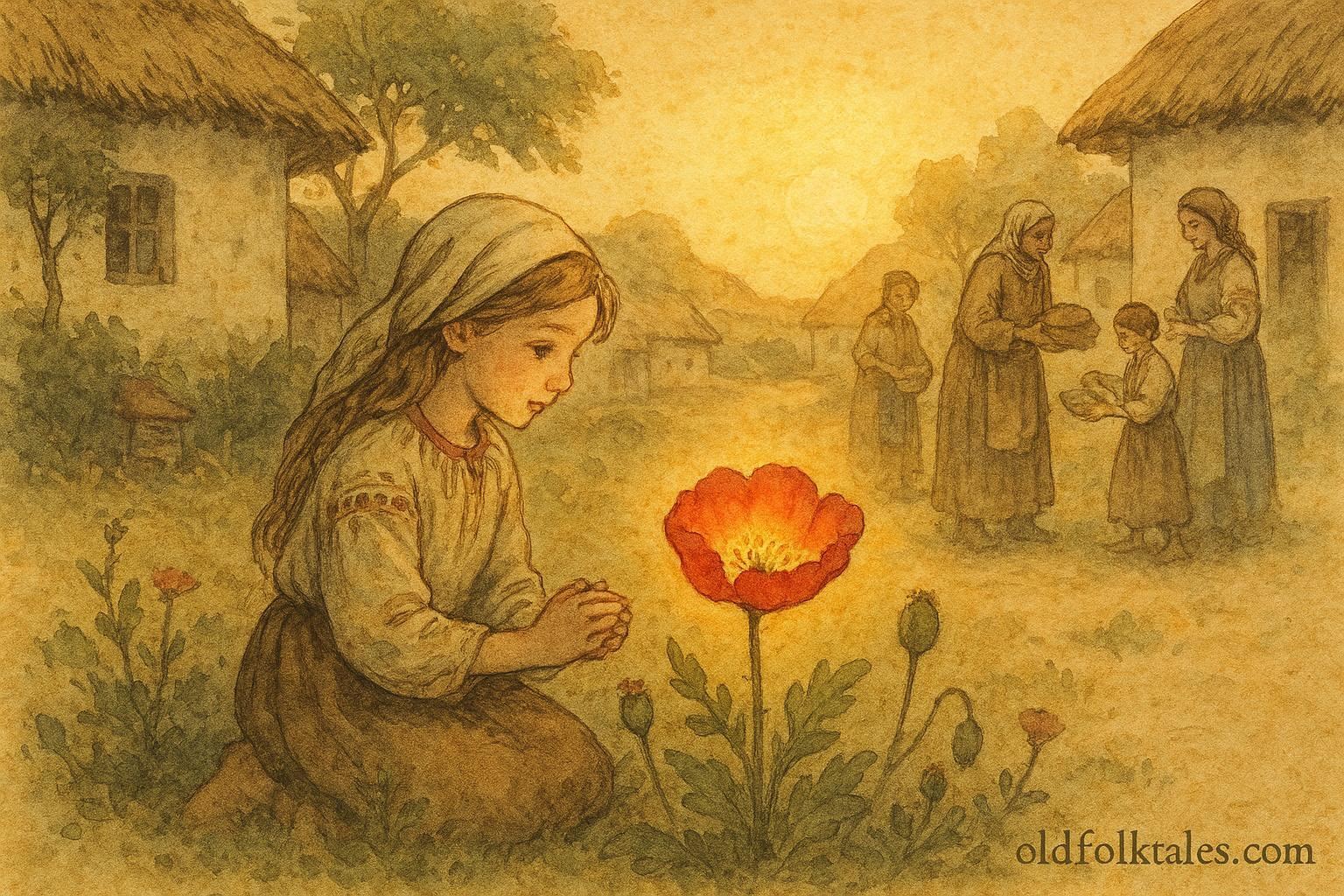
With care, she planted the seed in the center of her small plot, watering it gently and speaking softly to it as she would to a living friend. Days passed, and the seed sprouted quickly into a vibrant poppy, its petals shimmering like flames in the sunlight. The village watched with curiosity and wonder, for no flower had ever grown so beautifully or mysteriously.
Soon, the girl noticed the first signs of the poppy’s magic. Each morning, tiny golden grains appeared at its base, enough to feed her and her family comfortably. She realized that the plant could provide for more than just herself, and her heart filled with both gratitude and caution. She understood that such a gift must be used wisely.
At first, she used the golden grains modestly, buying food and clothing for her family, repairing her small home, and sharing with neighbors in need. The villagers were amazed at the sudden relief and joy that spread through their community. Hunger eased, clothes were mended, and even the local school received supplies so that children could learn without worry.
But the magic poppy tested her resolve. With each passing day, it seemed to offer more, more grains, more gold, more temptation. And with this abundance came whispers of what she might gain if she used the poppy selfishly. Perhaps she could become the wealthiest in the village, own all the land, and live a life free of toil forever.
The girl felt the pull of greed. She considered keeping all the poppy’s gifts for herself, hiding them away so that no one else could benefit. Yet, each time she looked into the faces of her neighbors, the hungry children, the elderly couple struggling to gather firewood, her resolve returned. She remembered her mother’s lessons about humility and the importance of sharing what she had.
One evening, as the sun dipped behind the hills and painted the sky in shades of pink and gold, the girl heard a whisper in the wind, gentle yet insistent. It came from the poppy itself, as though the flower could speak.
“Use me wisely, child,” it said. “Generosity brings life; greed brings ruin.”
The words strengthened her heart. She decided then that she would continue to share the magic, even when it was tempting to keep more than her share. She used the poppy to repair the village well so that water flowed freely for all, to provide seeds for other gardens, and to ensure that no family went hungry. Her acts of kindness and foresight transformed the village into a place of prosperity and warmth.
However, the poppy’s magic was not endless without care. Once, in a moment of weariness, the girl allowed herself to be tempted by thoughts of personal wealth. She took more than was needed, and soon the golden grains diminished. The villagers noticed the change and expressed their concern. She realized the consequence of her momentary greed.
Feeling sorrowful, she knelt before the poppy, tending it with renewed care, speaking words of apology, and promising to serve the village selflessly. Miraculously, the poppy flourished once more, offering its golden grains generously, but only when used to benefit others. The girl had learned that wealth and happiness were not rewards for selfishness but blessings earned through compassion and moral integrity.
As years passed, the village thrived. The girl, now grown, became known not for her riches alone but for her wisdom, generosity, and fairness. People traveled from distant villages to see the magical poppy and learn the lessons it had taught. It stood as a reminder that true prosperity was not measured by gold alone but by the good one did for others.
And so, the magical poppy remained, a symbol of humility, generosity, and the enduring power of moral choice.
Moral Lesson
True wealth comes not from selfish accumulation but from generosity, humility, and using one’s gifts to help others. Greed brings loss, while selflessness brings lasting happiness and prosperity.
Knowledge Check
- Who discovered the magic poppy?
A poor young girl tending her small garden discovered the magical seed. - What was the first sign of the poppy’s magic?
Golden grains appeared at its base, enough to feed her family. - How did the girl use the poppy’s gifts?
She shared them with her family and village, helping with food, clothing, repairs, and seeds. - What temptation did the poppy present?
The chance to use its wealth selfishly and keep all for herself. - What happened when she gave in to greed?
The golden grains diminished, showing that selfish use of magic had consequences. - What is the origin of this folktale?
It is a Ukrainian folktale, collected by Petro Tolochko in 1912.
Source: Ukrainian Folk Tales, collected by Petro Tolochko (1912)
Cultural Origin: Ukrainian folklore