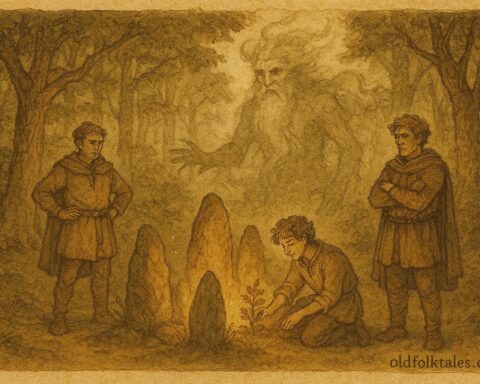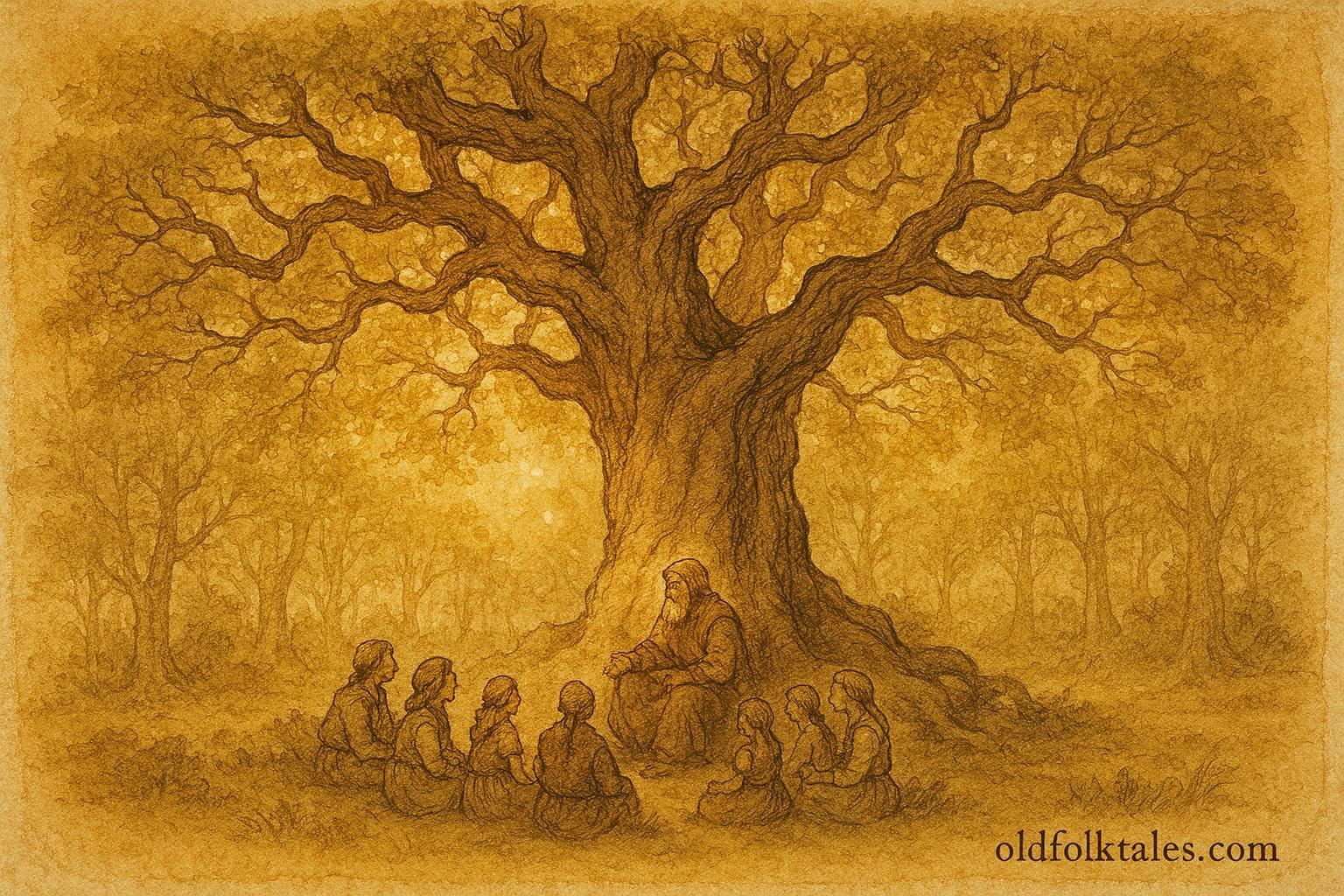
Deep within the dense, northern forests of Croatia, where sunlight filtered through layers of thick green leaves and the air smelled of moss and pine, there stood an ancient oak. Its trunk was gnarled and wide, its branches stretched like welcoming arms toward the sky, and its roots seemed to drink from the earth itself as if they had been there since time began.
The villagers who lived nearby called it the Wise Old Oak. They said the tree could speak, offering counsel to those who sought its guidance. Yet, as with all things of the natural and supernatural world, it demanded respect and humility. Those who approached with arrogance or greed often left empty-handed, or worse, faced misfortune.
Explore the warmth and wit of Mediterranean storytelling, where love and wisdom intertwine
One crisp morning, the villagers gathered at the edge of the forest. A dispute had arisen over a piece of land that two families claimed as their own. Tempers flared, voices raised, and pride threatened to undo the harmony of the small village.
A respected elder stepped forward. “Let us ask the Wise Old Oak,” he suggested. “Perhaps it will guide us toward justice and clarity.”
The villagers nodded, and slowly they walked beneath the dense canopy, the sun casting dappled patterns across the forest floor. The elder reached the oak first.
“Wise Oak,” he began, bowing slightly, “we come seeking guidance. Two families claim the same land. How should we resolve this dispute?”
The oak’s deep, resonant voice echoed through the clearing. “Approach with patience and listen with open hearts. The land is not merely soil and stone; it is a gift of the earth. Share it, and you will honor the life it sustains. Quarrel, and you will know only strife.”
The villagers were quiet, absorbing the oak’s words. One of the families bowed, showing humility. “We will share the land,” they said.
The other family hesitated, pride twisting their faces. “And what if we wish to keep it all?” one of them asked, their voice sharp.
The oak’s branches swayed, as though stirred by an unseen wind. “Arrogance brings only shadows,” it said solemnly. “Those who refuse to respect the gifts of the earth will find sorrow in their refusal.”
The family who had resisted felt a chill. Their crops withered, small misfortunes seemed to follow them for weeks, and slowly they came to understand the oak’s warning. Humble and contrite, they joined the others in sharing the land, restoring balance to the village.
The Wise Old Oak was not only consulted for disputes. Villagers sought its counsel for decisions about marriages, journeys, and harvests. A young man considering a distant trade venture once approached the oak.
“Wise Oak,” he said, “should I leave the village to seek my fortune?”
The oak’s voice rumbled like distant thunder. “Fortune comes to those who prepare wisely and respect the journey. Go, but heed the signs of the forest, honor the paths of the earth, and act with integrity. Greed and haste will bring only loss.”
The young man listened, taking note of every word. He prepared for his journey carefully, treated all he met with respect, and when he returned years later, he had prospered, not just in wealth, but in knowledge and character.
Yet not everyone fared as well. A merchant, arrogant and self-important, once sought the oak’s advice for how to increase his profits at the expense of others.
“I wish only to gain more, even if it means deceiving my neighbors,” he said, his voice filled with certainty.
The oak’s branches twisted, leaves rattling like warning bells. “Greed blinds the heart,” it intoned. “Those who seek to harm others for their gain shall find misfortune follows them like a shadow.”
The merchant ignored the warning. Soon, his goods spoiled, his trades failed, and the villagers avoided him. In time, he returned to the oak, humbled and repentant, realizing that wisdom must be earned with humility, not arrogance.
Years passed, and generations of villagers grew up knowing the value of the Wise Old Oak. Children were taught to approach it with respect, and the forest itself seemed to thrive under the villagers’ care. The oak’s guidance preserved harmony in the community, and the people flourished not only in material wealth but in unity, kindness, and understanding.
In time, the legend of the Wise Old Oak spread beyond the forest, carried by travelers and storytellers. They spoke of a tree that taught respect for nature, humility in heart, and wisdom in decisions. And though centuries passed, the ancient oak remained, its roots deep, its branches wide, a living testament to the importance of listening, learning, and honoring the gifts of the earth.
Moral Lesson
This Croatian folktale teaches that respect, humility, and attentiveness to wisdom, whether from nature or elders, bring harmony and success, while arrogance and greed lead to misfortune. True guidance rewards those who listen with open hearts.
Knowledge Check
- Who is the central figure in the folktale?
The Wise Old Oak, a talking tree that offers guidance to villagers. - What must villagers demonstrate to receive the oak’s counsel?
Humility, respect, and willingness to listen. - What happens to those who approach the oak arrogantly?
They face misfortune, loss, or difficulty until they show humility. - What types of advice does the oak provide?
Guidance on disputes, life decisions, trade, marriages, and journeys. - What is the main theme of the story?
Respect for nature, humility, communal values, and wisdom. - Where in Croatia does this folktale originate?
Northern forested regions of Croatia.
Source: Tales of the Croatian Forests (1911)
Cultural Origin: Croatia, northern forested regions