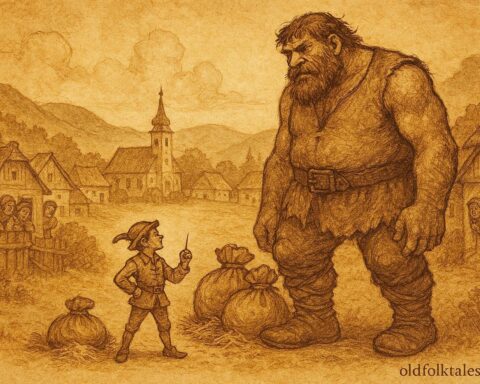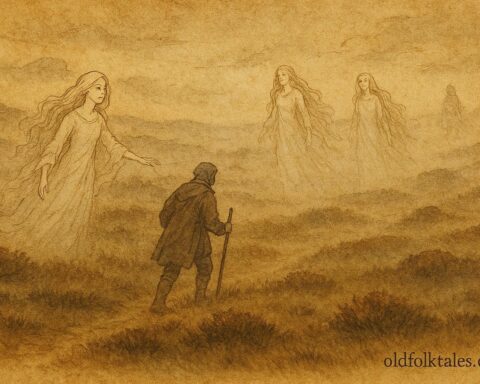
In the rolling hills and dense forests of Transylvania, a small village lay under a shadow of fear. For generations, the villagers had lived in harmony with the land, tending their fields, raising livestock, and celebrating the turning of the seasons. But recently, a dark cloud had settled over the community, literally and figuratively. A malevolent witch had made her lair in the forested mountains, and her curses had begun to strike the village. Crops withered, wells ran dry, and strange misfortunes befell every home.
The villagers, desperate and fearful, convened in the main square. Among them were three brothers, renowned in the village for their bravery, skill, and loyalty. The eldest was strong and confident, the middle brother clever but proud, and the youngest, small, gentle, and thoughtful, had a quiet intelligence that often went unnoticed.
The mayor addressed the brothers. “Only someone courageous and clever may defeat this witch. If she is not stopped, our village will fall into despair.”
The three brothers, determined to save their home, accepted the challenge. With provisions and swords in hand, they set out toward the dark, forested hills where the witch was said to dwell. The villagers watched them disappear into the shadows of the trees, hearts heavy with hope and fear.
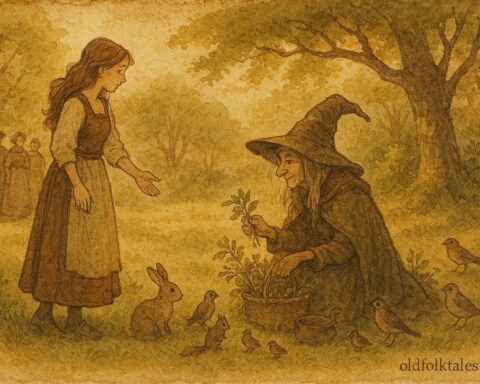
As the brothers journeyed deeper into the forest, the paths grew wild and treacherous. Twisting roots and thick underbrush slowed their progress, and the wind seemed to whisper warnings through the trees. Soon, the three reached the foot of a jagged hill where the witch’s dwelling, a hut of twisted timber and stones, surrounded by thorny brambles, loomed ominously.
The eldest brother, strong and bold, charged forward with his sword raised, ready to confront the witch directly. But as he approached, the witch appeared at the doorway. With a voice like rattling bones, she spoke:
“Who dares approach my home? Only those who can prove their wisdom may pass.”
Without hesitation, the eldest brother attempted to force his way in, but the door slammed shut magically. The witch cackled as vines shot out from the ground, ensnaring him until he barely escaped with his life. Humiliated but unharmed, he retreated, shaking his head at the cunning of the witch.
The middle brother then tried. He approached with confidence, armed with clever tricks and a few minor charms. The witch presented him with riddles and challenges: to balance stones upon one another without them toppling, to fetch water from an invisible spring, and to light a candle without fire. Though he succeeded in some tasks, his pride and impatience led him to fail at others. The witch, smiling cruelly, expelled him from her domain, and he returned to his brothers, frustrated and ashamed.
Finally, it was the youngest brother’s turn. He approached quietly, listening to the wind and observing the witch’s movements. When she emerged and demanded he prove his worth, he bowed humbly and replied, “I seek not to challenge you with force, but to restore peace to my village. I will do as you ask, with care and attention.”
The witch’s eyes narrowed. “We shall see,” she said, presenting him with a series of tasks.
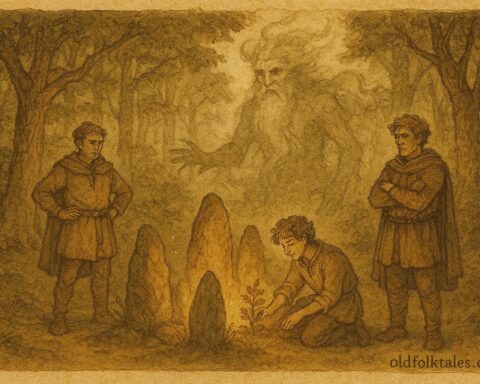
First, she laid out a path of enchanted stones. “Step upon these stones without disturbing their magic, or face endless wandering in my forest,” she warned. The youngest brother observed the stones, noting their faint shimmer and subtle patterns. With careful steps and slow, deliberate movements, he crossed without incident.
Next, she demanded he solve three riddles. The first: “I speak without a mouth, hear without ears, and vanish when touched. What am I?” The boy thought, recalling the whispering wind and his many hours listening in the forest. “An echo,” he answered. The witch’s eyes widened, but she continued.
The second riddle: “I am lighter than a feather but the strongest man cannot hold me for long. What am I?” The boy considered the labored breathing of men climbing hills. “Breath,” he replied. Once more, the witch nodded with restrained approval.
The third riddle: “I can build bridges and destroy walls, I flow and yet am not alive. What am I?” The youngest thought of rivers, streams, and the floods that had once reshaped the land. “Water,” he answered clearly.
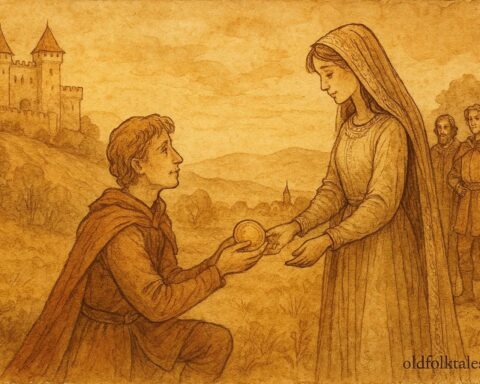
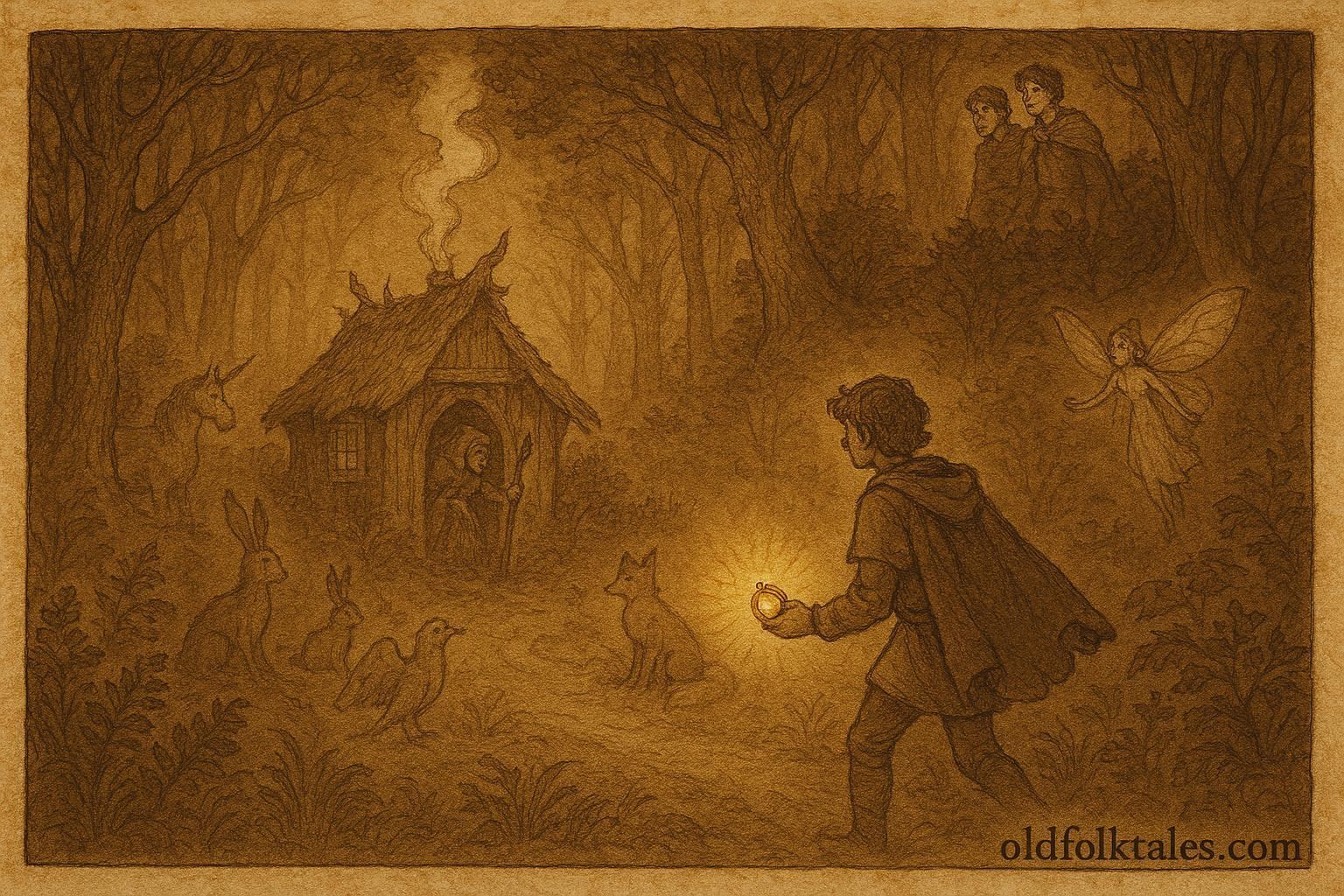
The witch scowled but said nothing, leading him to the final trial: to retrieve a golden amulet hidden in a glen guarded by her magical creatures. The boy moved quietly, offering small gifts of bread and flowers to the creatures, showing respect and humility. In return, they allowed him passage. At last, he retrieved the amulet, holding it carefully in his hands.
Returning to the witch’s hut, the youngest brother presented the amulet. The witch, unable to find fault in his careful, respectful behavior, finally relented. With a wave of her gnarled hand, the curse over the village was lifted. Crops began to flourish, water returned to the wells, and misfortunes ceased.
The eldest and middle brothers watched in awe, realizing that courage alone or cleverness without humility was insufficient. Only the youngest brother’s combination of kindness, wisdom, and patience had prevailed.
When the brothers returned to the village, they were hailed as heroes. The youngest brother, though quiet and humble, was celebrated above all. He taught the villagers that true strength lies not only in might or pride but in patience, cleverness, respect, and integrity.
From that day onward, the tale of the witch and the three brothers was told across Transylvania, a story of courage, cleverness, and the triumph of goodness over evil. Children learned that the smallest and seemingly weakest among them could achieve greatness through thought, care, and perseverance.
Moral Lesson
This Hungarian folktale teaches that true heroism combines intelligence, humility, and kindness. Goodness and cleverness can triumph over evil, and patience and respect are as powerful as courage in overcoming challenges.
Knowledge Check
- Who are the main characters of the story?
Three brothers, eldest, middle, and youngest, who seek to defeat a malevolent witch in Transylvania. - What threat does the village face?
A witch who curses the village, causing misfortune, crop failure, and fear among the people. - How does the youngest brother succeed?
By solving riddles, performing tasks with humility and cleverness, and respecting magical creatures. - What lessons does the story teach?
Goodness triumphs over evil; intelligence, patience, and humility are key virtues. - What happens to the village after the witch’s spell is broken?
Crops flourish, water returns, and misfortunes cease, restoring peace and prosperity. - From which region of Hungary does this folktale originate?
The Transylvanian region, known for its forests, mountains, and rich folklore traditions.
Source: Hungarian Folk Tales for Children (1888)
Cultural Origin: Hungary, Transylvanian region