In a sun-drenched valley in Sicily, surrounded by rugged hills and olive groves, there lay a small village whose people lived simple lives. They tilled the land, tended goats, and harvested citrus fruits that perfumed the air. Life was often harsh, yet the villagers endured with patience, hospitality, and strong community bonds.
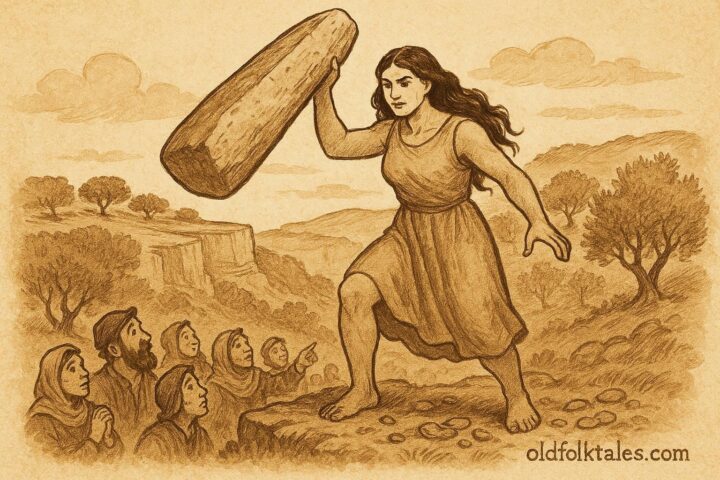
But one season, misfortune descended. A monstrous ogre, taller than a tower and stronger than ten men, had emerged from the hidden caves in the nearby mountains. His shadow fell over the village, and his roar echoed across the valley like thunder. The ogre demanded tribute: livestock, food, and gold. Those who refused were carried away to his lair, never to return. Fear gripped the villagers, who whispered prayers for deliverance and hid their most precious possessions.
Among them lived a peasant named Matteo. Unlike the village’s wealthier men, he owned nothing but a modest hut and a small patch of land. Yet Matteo was known for his sharp mind and clever tongue. Where others saw fear and despair, Matteo saw opportunity to protect his people using intelligence rather than brute force.
One evening, as the villagers huddled in their homes, Matteo devised a plan. “The ogre is strong,” he said to himself, “but he is not clever. Strength without wit is easily outwitted. If I can use riddles and cunning, I can defeat him and save our village.”
Armed only with a bag of simple tools, a rope, a sharp sickle, and a pouch of stones, Matteo ventured toward the ogre’s lair. The path wound through craggy hills and dense groves, where shadows twisted and the wind whispered warnings. Matteo’s heart pounded, but he pressed on, remembering the eyes of the villagers and the hope they had placed in him.
When he arrived at the ogre’s cavern, a great maw of stone flanked by jagged cliffs, the monster emerged with a deafening roar. “Who dares enter my domain?” the ogre bellowed, shaking the trees with each step.
“I am Matteo, a humble peasant of the valley,” he said, bowing respectfully. “I have come to challenge you, but not with violence. I bring riddles and a test of cleverness.”
The ogre laughed, a sound like rolling boulders. “Ha! You, a mere man, wish to outsmart me? Very well, I accept your challenge. Fail, and you shall become my dinner.”
Matteo smiled inwardly, then laid out his first plan. He produced a small bag of stones and asked the ogre to count them while blindfolded. “If you make a mistake,” Matteo said, “you must leave the valley forever.”
The ogre, overconfident in his size and strength, accepted. Matteo scattered the stones across the ground, some hidden behind rocks and among the bushes. When the ogre, eyes covered, attempted to count, he stumbled, miscounting several times. Matteo called out, “You have failed, great ogre! Now leave my village or face cleverer tricks.”
The ogre, enraged, stomped the ground, creating small tremors. “You dare cheat me, little man?” he growled.
Matteo shook his head. “I do not cheat; I simply use the power of wit. Strength alone is not victory.”
The ogre, determined to capture Matteo, lunged forward. But the peasant had anticipated this. He pulled a rope from his bag, snaring the ogre’s legs around a boulder. The monster tumbled but quickly regained balance. Matteo then challenged him to a contest of riddles.
“I will ask you three riddles,” Matteo said. “Answer them, and you may claim your meal. Fail, and you must depart the valley forever.”
The first riddle: “I move without legs, I roar without a mouth, and I vanish at the touch of the sun. What am I?”
The ogre thought, scratching his enormous head, but could not answer. Matteo smiled. “A shadow,” he said. The ogre growled in frustration.
The second riddle: “I am taken from the earth, shaped by fire, and yet I may break with a single blow. What am I?”
The ogre bellowed and stomped, but no answer came. “Clay or pottery,” Matteo answered calmly.
For the third riddle, Matteo chose a puzzle of cunning: “I have keys but no locks, I make music but have no voice. What am I?”
The ogre growled, twisted, and tried to reach an answer with brute force, but none came. “A piano,” Matteo declared. The ogre, seeing the peasant’s cleverness, felt a strange mixture of awe and rage.
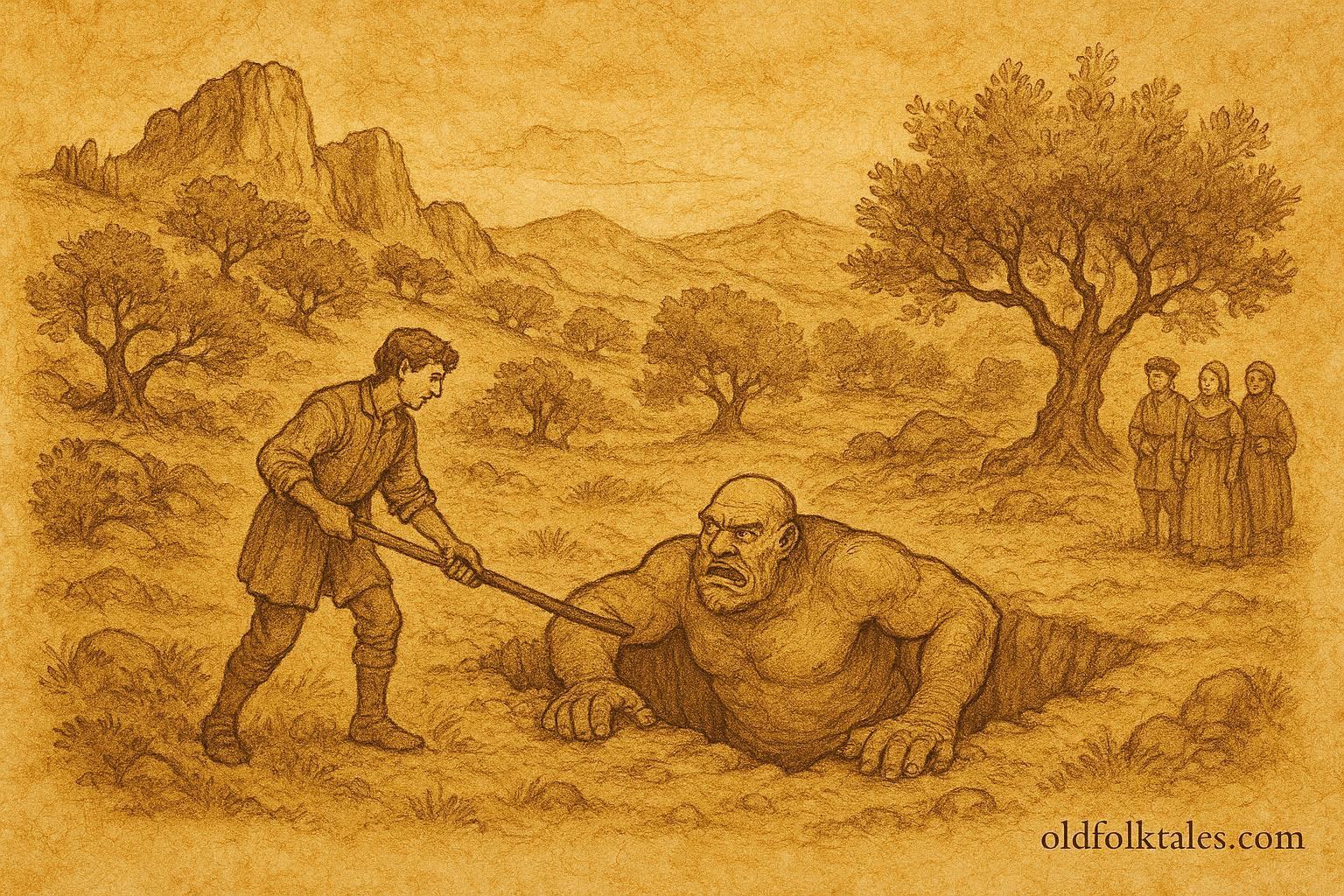
Finally, Matteo unveiled his most daring trap. He led the ogre to a clearing surrounded by olive trees and deep ditches, carefully hidden beneath leaves and branches. “Step here, and I promise you a treasure,” he said, baiting the monster’s curiosity.
The ogre, blinded by greed, took the bait. With a mighty crash, he fell into the concealed pit, unable to climb out. Matteo laughed, but not cruelly. “I sought not your death, only your removal from our lands.”
The monster roared and threatened, but Matteo’s cleverness and foresight had secured him. The villagers, having observed from a distance, rushed to the pit, ensuring the ogre could not escape. For the first time in years, the valley breathed freely.
Matteo became a hero. The village celebrated not only his bravery but also his intelligence, teaching that courage combined with cleverness could triumph over even the most terrifying adversary. The peasants rebuilt their homes and fields, and Matteo, though humble, gained wealth and respect from all around.
From that day forward, stories of Matteo and the ogre were told in kitchens, town squares, and by traveling merchants. Children learned that brawn alone could not protect a community, but wit, planning, and courage could preserve it. And Matteo, ever modest, credited the village’s safety to cleverness used for justice, not for personal glory.
Moral Lesson
This Sicilian folktale shows that intelligence, careful planning, and courage can overcome even overwhelming strength. True heroism lies in protecting one’s community and using wit to achieve justice without unnecessary violence.
Knowledge Check
- Who is the main hero of the story?
Matteo, a clever peasant from a Sicilian village. - What threat faces the village?
An ogre terrorizing the countryside, demanding food, livestock, and gold. - How does Matteo defeat the ogre?
By using riddles, traps, and clever strategies rather than brute force. - What qualities help Matteo succeed?
Cleverness, courage, humility, foresight, and intelligence. - What lesson does the folktale teach about strength and wit?
Brains and cleverness can triumph over physical power when used wisely. - From which region of Italy does this folktale originate?
Sicily, particularly rural communities in the countryside.
Source: Sicilian Folk Tales (1883)
Cultural Origin: Italy, Sicily