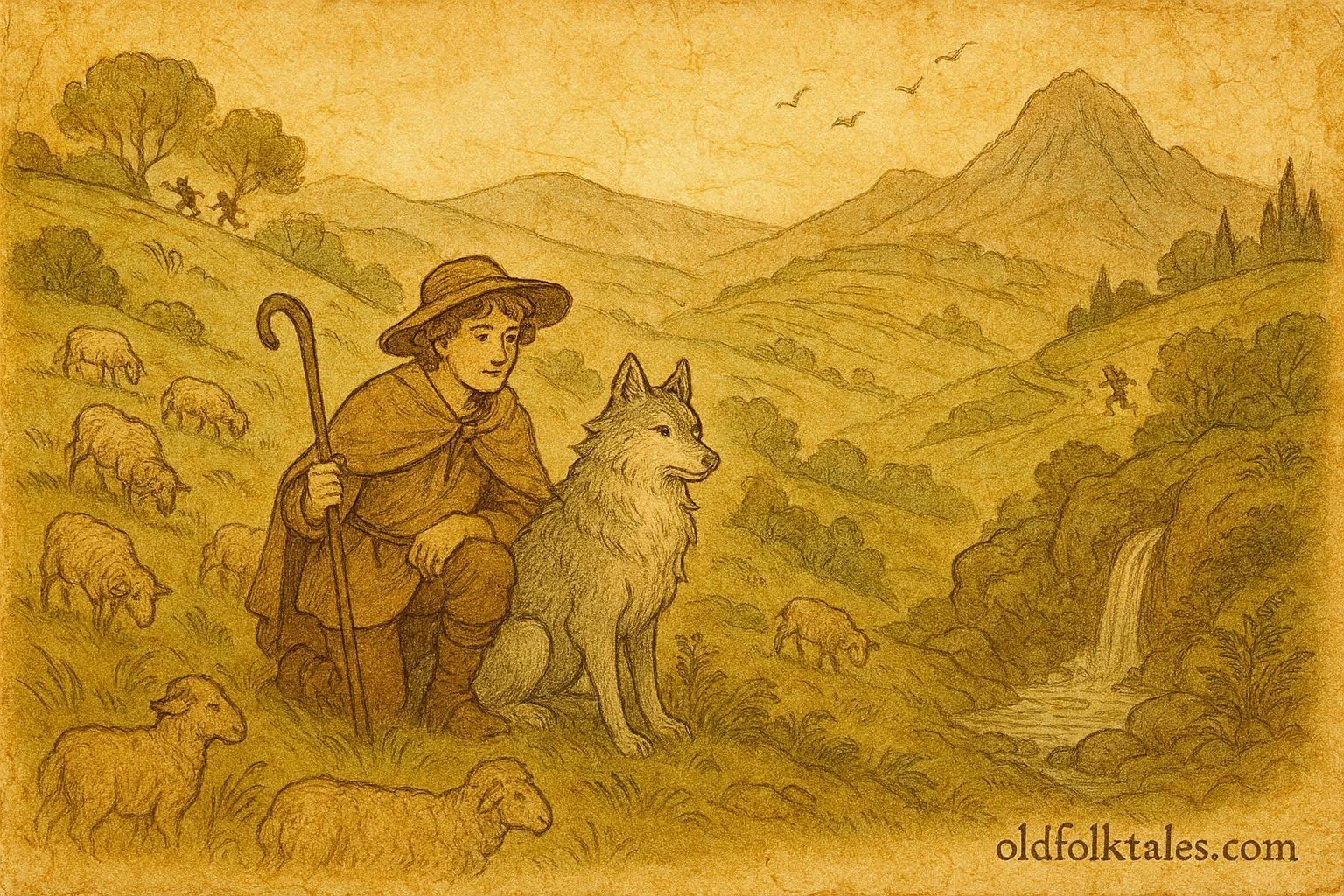
In the rolling hills of northern Portugal, where green pastures stretched beneath the golden sun and winding streams reflected the sky, lived a young shepherd named Diogo. His life was simple: he tended his family’s flock of sheep, led them to fresh pastures, and protected them from wolves and thieves. Though he was skilled with his sling and staff, Diogo was humble, careful, and respectful of the land he walked each day.
The villagers often warned that the mountains and forests held unseen powers, spirits that tested those who wandered too boldly or too carelessly. Diogo had heard the tales since he was a boy, yet he never feared the wild. Instead, he treated every living creature with kindness, offering water to thirsty lambs and leaving small morsels for the birds.
Discover the moral heart and wild spirit of the north through timeless Nordic storytelling
One misty morning, as the sun barely kissed the horizon, Diogo led his flock to a secluded valley surrounded by thick pines and rocky outcrops. Suddenly, he noticed a large wolf standing apart from the trees. Its fur glistened silver in the early light, and its amber eyes were intelligent, almost human.
Diogo froze, gripping his staff. “Stay calm,” he whispered to himself. Wolves were cunning and dangerous, especially in packs. But this one did not move closer with aggression. Instead, it approached with a deliberate grace, stopping a few paces from him.
To his astonishment, the wolf spoke. “Do not fear me, young shepherd. I am no ordinary wolf. I have wandered these hills for many years, guarding the secrets of the forest and protecting those who respect it.”
Diogo’s eyes widened. “A talking wolf? Then the tales are true!”
The wolf’s voice was low but kind. “I seek a companion who will prove loyalty, bravery, and wisdom. If you are that shepherd, together we can protect more than just your flock, we can defend the village itself.”
From that day forward, Diogo and the enchanted wolf became inseparable. He named the wolf Lobo, which simply meant “wolf” in the villagers’ tongue, though the boy always added the honorific “Enchanted Lobo” when speaking of him. They patrolled the hills together, their senses attuned to the wind, the rustle of leaves, and any sign of danger.
One evening, as the sun dipped behind the mountains and painted the sky in shades of amber and violet, Lobo spoke gravely. “Diogo, I sense a threat. A band of thieves from the southern valleys has been plotting to steal the village’s livestock. They move silently and with cunning, but they do not know the forest as we do.”
Diogo nodded. “Then we must act. The villagers rely on these sheep for their livelihood, and I cannot allow them to be harmed.”
The next night, Diogo and Lobo hid near the edge of the village, listening to the murmur of the thieves as they crept toward the pens. Diogo felt a chill, but the wolf whispered: “Trust in me. Courage does not mean absence of fear, only the will to act rightly despite it.”
When the thieves reached the enclosures, Lobo leapt from the shadows with a fearsome howl, startling the men and scattering the flock. Diogo followed, hurling stones and swinging his staff with precision. The thieves, overwhelmed by the sudden resistance and terrified by the silver-eyed wolf, fled into the woods, never to return.
The villagers awoke to find their livestock safe, their pens unbroken. Whispers spread quickly about the mysterious wolf and the brave young shepherd. Many came to thank Diogo, yet he only smiled, pointing to Lobo. “It was not my strength alone, but the wolf’s cunning and our trust in each other.”
Days turned into weeks, and Diogo’s bond with Lobo deepened. The enchanted wolf taught him the language of the forest: which herbs could heal, how to read the signs of weather in the clouds, and how to track movement without leaving a trace. In return, Diogo shared bread, milk, and gentle words, honoring the wolf as both guardian and friend.
One afternoon, as they rested near a crystal-clear stream, Lobo spoke solemnly. “Diogo, true courage is not only in battle, but in understanding when to act and when to wait. There are more dangers in life than thieves or wolves; sometimes it is pride, fear, or selfishness that leads men astray.”
Diogo reflected deeply. “I understand. It is not enough to defend the flock. I must protect the heart of the village too, through wisdom and fairness.”
The ultimate test came when a drought struck the region. Streams ran dry, grass withered, and the villagers’ flocks suffered. Fear and tension grew, and whispers of leaving the hills for greener pastures stirred among them.
Diogo knew he had to act. With Lobo at his side, he ventured into the mountains, following the wolf’s guidance to a hidden spring. The waters were cool and pure, flowing from deep underground. With care, they led the villagers to the source and helped them build channels and troughs for the livestock.
For days, they worked tirelessly, the wolf watching over all. The villagers marveled at Diogo’s courage, patience, and dedication. Even those who had doubted him now praised his wisdom, realizing that strength alone could not have saved them, their survival depended on respect for nature and trust in one another.
When the spring finally nourished the village’s flocks and fields, the enchanted wolf revealed its final lesson. “Diogo, you have shown bravery, loyalty, and humility. The hills and forests recognize your heart. Care for this land as you care for your flock, and it will care for you in return.”
Diogo bowed deeply. “Thank you, Lobo. I have learned that courage without wisdom is folly, and that trust and respect for all creatures bring true security.”
With that, the wolf vanished into the trees, leaving only a faint silver shimmer in the sunlight. Though Diogo missed his friend, he carried Lobo’s teachings in his heart. He led the village with fairness, guided the young shepherds, and ensured that the livestock thrived alongside the land.
Generations later, villagers still told the story of the young shepherd and the enchanted wolf, a tale of courage, loyalty, and the wisdom to respect both nature and community. The hills of northern Portugal remained verdant and alive, a testament to the partnership of a boy and a magical wolf, and to the enduring power of trust and bravery.
Moral Lesson
This Portuguese folktale teaches that courage and loyalty, combined with wisdom and respect for nature, can protect both people and community. Trust, humility, and attentive care are as important as bravery, and selfishness or pride may lead to danger.
Knowledge Check
- Who is the main hero of the story?
Diogo, a young shepherd from northern Portugal. - What magical creature aids Diogo?
An enchanted wolf named Lobo. - How does the wolf help the village?
By alerting Diogo to threats, guiding him to hidden water sources, and assisting in protecting livestock from thieves. - What qualities are rewarded in the tale?
Bravery, loyalty, humility, wisdom, and respect for nature. - What is the ultimate lesson Diogo learns?
Courage alone is insufficient; trust, respect, and wisdom are essential for protecting the community and the natural world. - From which region and culture does this folktale originate?
Rural northern regions of Portugal.
Source: Portuguese Folk Tales (1885)
Cultural Origin: Portugal, rural northern regions