In the sun-drenched hills of Andalusia, where olive trees swayed in the gentle breeze and whitewashed villages clung to rocky cliffs, lived a poor musician named Diego. His life was modest: he earned a living playing for travelers, festivals, and local gatherings. Though his hands were calloused from strumming the guitar, Diego’s music was filled with warmth, soul, and a joy that made even the weariest heart smile.
One evening, after a long day wandering through the dusty streets of his village, Diego rested beneath a centuries-old cork oak near a forgotten well. He had almost given up hope of finding a better livelihood when something glimmered in the twilight shadows. Half-buried beneath the roots, he uncovered a guitar unlike any he had ever seen. Its wood shimmered with a golden hue, and intricate carvings of dancing figures and swirling vines adorned its surface. As Diego touched the strings, a soft hum filled the air, and he felt a strange, vibrant energy flow through his fingertips.
Uncertain at first, he plucked a gentle chord. To his astonishment, a nearby sparrow hopped to the rhythm, bobbing its tiny head as though enchanted. Diego’s heart leapt. Could this guitar truly be magical?
Over the following days, Diego experimented carefully. He discovered that with each strum, the guitar could cause people to dance uncontrollably or reveal hidden truths they could not speak aloud. When he played a lively tune, even the grumpiest villagers twirled and clapped with glee. When he plucked soft, mysterious chords, secrets long kept in silence were gently revealed.
Diego understood immediately that such power carried responsibility. He did not wish to exploit the guitar for wealth or fame; instead, he wanted to bring harmony and fairness to his village.
The first test came sooner than he expected. In the village market, two families, neighbors for generations, were embroiled in a bitter dispute over the boundary of a small olive grove. Voices rose, tempers flared, and insults flew as the crowd gathered. Diego, observing quietly, realized that the quarrel could escalate into violence.
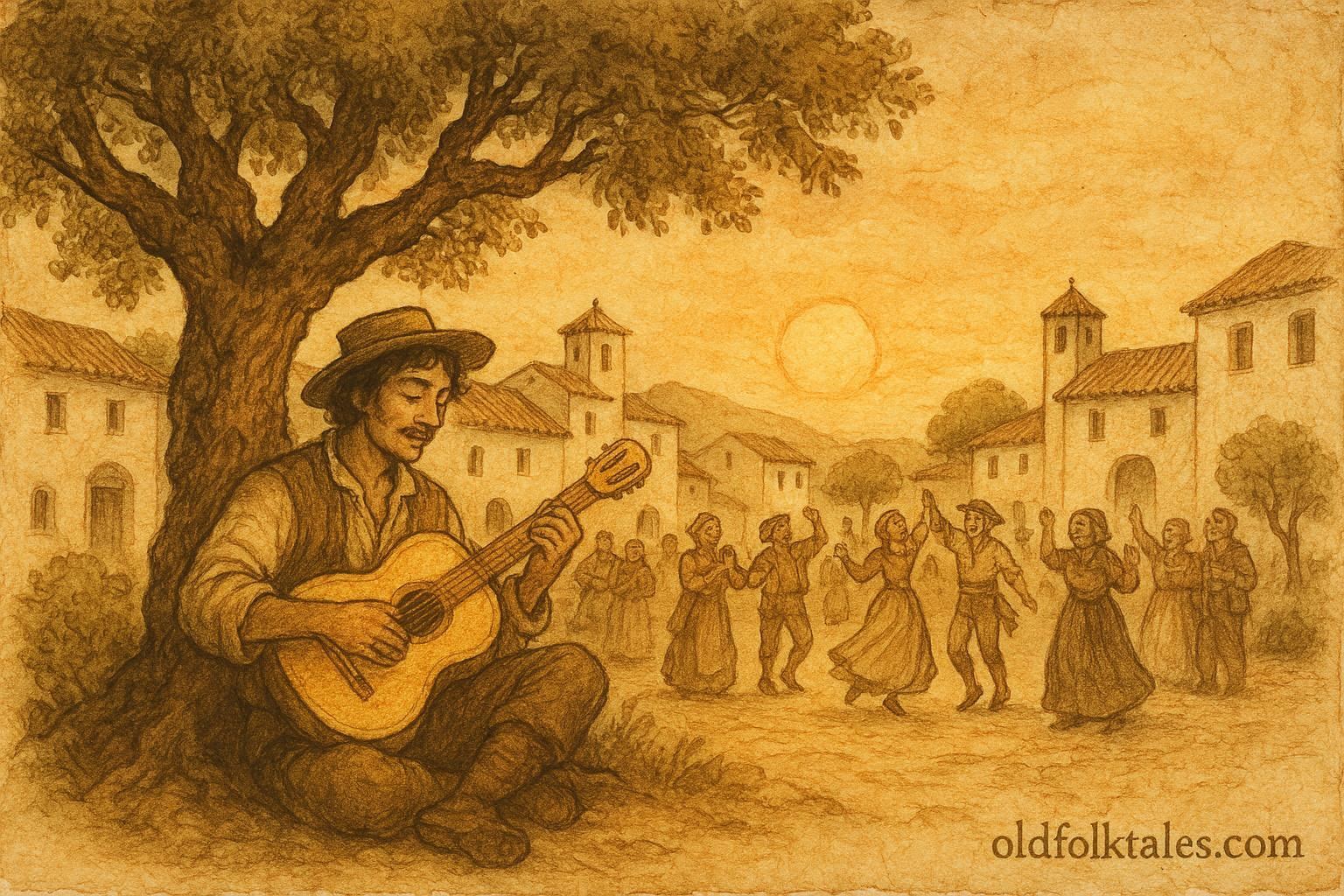
He carried his magical guitar to the market square and played a lively, rhythmic tune. Slowly, the tension lifted. Children began to dance in circles, elders tapped their feet, and the angry men found themselves moving to the music. As they danced, the villagers laughed at their own stubbornness and realized the foolishness of their quarrel. When the music softened, the truth became clear: a small error in measuring had caused the disagreement, and both families agreed to divide the grove fairly.
Diego smiled, knowing that music, when wielded wisely, could heal not only hearts but communities.
Word of the magical guitar spread, and soon, the villagers brought their troubles to Diego. One woman suspected her husband of hiding money, and he had long denied it. Diego played the guitar gently, weaving a melody that was soft yet insistent. Hesitantly, the truth was revealed: the husband had been saving to repair their roof, not hiding wealth for selfish gain. The wife’s anger melted, replaced by understanding and gratitude.
Another day, a young man accused of cheating in a local card game claimed innocence. Diego strummed the enchanted strings, and the man’s heart spoke through the music: he had taken the coin but intended to return it. The villagers, guided by the guitar’s gentle wisdom, chose forgiveness, teaching a lesson in honesty and trust.
Diego also learned that the guitar required humility and caution. Once, tempted by curiosity, he tried to use it for personal gain, attempting to force the village mayor to give him a larger share of the festival earnings. The guitar’s strings vibrated violently, the notes jarring and discordant. A wind swept through the square, scattering papers and upsetting stalls. Diego realized instantly that magic could not serve selfish desires. Shaken, he vowed never to misuse it again.
Years passed, and Diego became not only a musician but a wise counselor and peacemaker. He would sit beneath the cork oak, playing tunes that echoed through the olive groves, teaching children the joy of music, the power of truth, and the importance of compassion. The village thrived, not from wealth or conquest, but from harmony, justice, and shared laughter.
Travelers who passed through Andalusia often spoke of the magical guitar and the musician who could make truth sing. Diego never sought fame; he only wished to serve his community with the gift he had been entrusted. In the evenings, as the sun dipped into the horizon, painting the sky with gold and crimson, he would strum one final chord, feeling the pulse of his village’s hearts in perfect rhythm.
And so, through wisdom, responsibility, and music, Diego and his magical guitar reminded all who listened that power is best measured by the good it can bring, and that harmony is the greatest treasure of all.
Moral Lesson
This Andalusian folktale teaches that true wisdom lies in using gifts responsibly. Greed or selfishness can corrupt, but cleverness, humility, and fairness can create harmony, strengthen community, and reveal the truth.
Knowledge Check
- Who discovers the magical guitar?
Diego, a poor musician from Andalusia, Spain. - What powers does the magical guitar have?
It can make people dance or reveal hidden truths. - How does Diego use the guitar for the village?
To solve disputes, reveal truths, and bring harmony to the community. - What happens when Diego tries to use the guitar selfishly?
The music becomes discordant, and chaos ensues, teaching him a lesson in humility. - What moral values does the story emphasize?
Responsibility, fairness, cleverness, humility, and the power of community. - From which region and culture does this folktale originate?
Andalusia, southern Spain.
Source: Spanish Folk Tales and Legends (1877)
Cultural Origin: Spain, Andalusia region