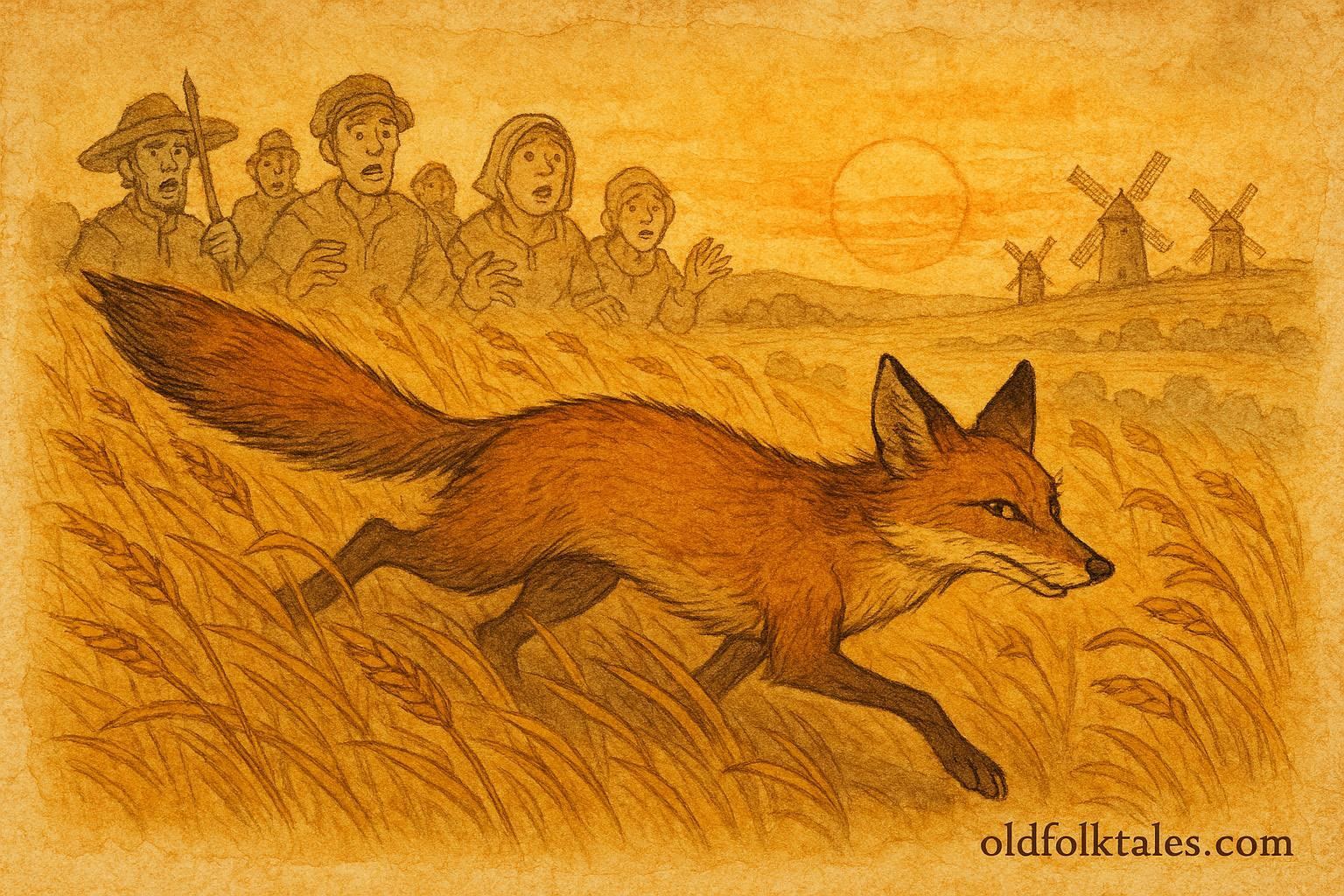
In the sunbaked plains of La Mancha, where golden fields of grain rippled in the breeze and windmills turned slowly on the horizon, lived a fox whose cunning was whispered about in every village. No ordinary fox, this one had a sharp mind, keen eyes, and a sly smile that seemed almost human. He prowled the countryside at dawn and dusk, slipping silently through orchards, vineyards, and wheat fields, always a step ahead of farmers and hunters alike.
The villagers, proud and hardworking, had long relied on strength and persistence to guard their flocks and crops. Yet the fox, light-footed and clever, turned their expectations upside down. Whenever they tried to trap him with nets, snares, or clever tricks of their own, he found a way to escape, often leaving a small gift of mischief behind, a stolen apple, a scattered bundle of wheat, or a cleverly overturned basket.
One spring morning, as the fields shimmered under the bright sun and the scent of wild thyme filled the air, the villagers gathered for the weekly market. Conversations buzzed with worry over the fox that had been stealing chickens and rabbits. Don Alonso, the wealthiest farmer in the district, proclaimed, “This fox will ruin us all! We must catch him by any means!”
The hunters nodded in agreement, sharpening their spears and plotting traps. But the fox, ever vigilant, watched from the edge of the forest. He knew their plan would rely on force and greed, and he had a mind of his own to protect.
That very evening, the fox began his work. He crept into Don Alonso’s yard and, with nimble paws, freed a few chickens from their pen. Instead of devouring them, he led them to a neighboring field, just out of reach of the farmer’s grasp. The next day, Don Alonso’s dogs and hunters ran in circles, confused by the trail that seemed to vanish like smoke.
The fox chuckled under his whiskers. He had no desire to harm the villagers unnecessarily; he only wished to teach them a lesson about patience, cleverness, and the folly of greed.
Word of the fox’s antics spread quickly. Villagers debated whether to curse him or admire his intelligence. A group of children, intrigued by his cleverness, began to watch from afar, fascinated by his tricks. They noticed that the fox never harmed the weak or the young; he only outsmarted those who sought to control or exploit him.
One day, a particularly ambitious hunter set a trap with baited meat. He believed the fox could not resist and would fall into the snare. But the fox, anticipating the hunter’s plan, disguised himself as a harmless rabbit using leaves and mud. When the hunter lunged, he caught only a pile of leaves. Laughter erupted from the watching children, while the hunter stomped angrily, realizing that cunning could outmatch brute strength.
The fox’s most legendary feat occurred during harvest season, when the villagers gathered wheat and olives. Don Alonso, determined to claim victory, set his largest trap yet: a deep pit covered with woven branches and leaves. The fox, however, was already two steps ahead. He gathered his animal friends, the roosters, a clever crow, and even a timid hare—and led them to the trap. Together, they overturned it, causing a heap of straw and branches to collapse in the pit, while the fox danced around in triumphant circles.
The villagers arrived to see the fox perched atop the pit, looking down at them with bright, mocking eyes. Don Alonso realized that no amount of strength, force, or anger could overcome the fox’s mind.
With time, the villagers’ attitudes began to change. They learned to respect the fox’s cleverness and the balance of nature. Instead of pursuing him with anger, they planted extra crops near the forest edges, leaving small rewards of fruit and grain as gestures of goodwill. In return, the fox avoided destroying their fields, guiding lost animals away from harm, and even helping to uncover hidden dangers like lurking snakes or wolves.
The children, who once giggled at the fox’s tricks, now grew to admire his intelligence. They whispered to each other, “Strength is not always the answer; sometimes the mind is sharper than the sword.” And indeed, through the fox, they learned lessons of patience, ingenuity, and the consequences of greed.
Seasons turned, and the fox of La Mancha became a legend. Hunters told tales of his clever escapes, and farmers taught their children to observe the world with eyes open and minds sharp. The plains, once dominated by brute force and stubborn pride, now hummed with respect for both animals and intelligence.
In time, the fox disappeared into the forests, leaving behind a legacy of wit, balance, and moral wisdom. His story endured in the songs of the villagers, in the laughter of children, and in the gentle understanding that cleverness and respect for nature could restore harmony where greed once ruled.
Moral Lesson
This Spanish folktale teaches that intelligence and cleverness can triumph over brute strength. Greed and pride lead to failure, while respect for nature, patience, and ingenuity create harmony and lasting wisdom.
Knowledge Check
- Who is the main character of the story?
A clever fox living in the plains of La Mancha, Spain. - What does the fox teach the villagers?
The value of intelligence, patience, and respect for nature. - How does the fox avoid traps set by hunters?
By anticipating their plans, using disguises, and clever teamwork with other animals. - What causes the villagers to change their behavior?
They learn that force cannot overcome cleverness and begin respecting the fox and nature. - What themes are central to this folktale?
Cleverness over strength, consequences of greed, respect for nature, and ingenuity. - From which region and culture does this folktale originate?
La Mancha, Spain.
Source: Traditional Spanish Tales (1880)
Cultural Origin: Spain, La Mancha region