Along the rugged coast of West Flanders, where the North Sea roared against jagged rocks and gray skies stretched endlessly above, fishermen lived lives shaped by wind, tide, and fate. The sea gave generously, but it also took without warning. Every man who cast his nets knew that respect for the waters was not a choice, it was survival.
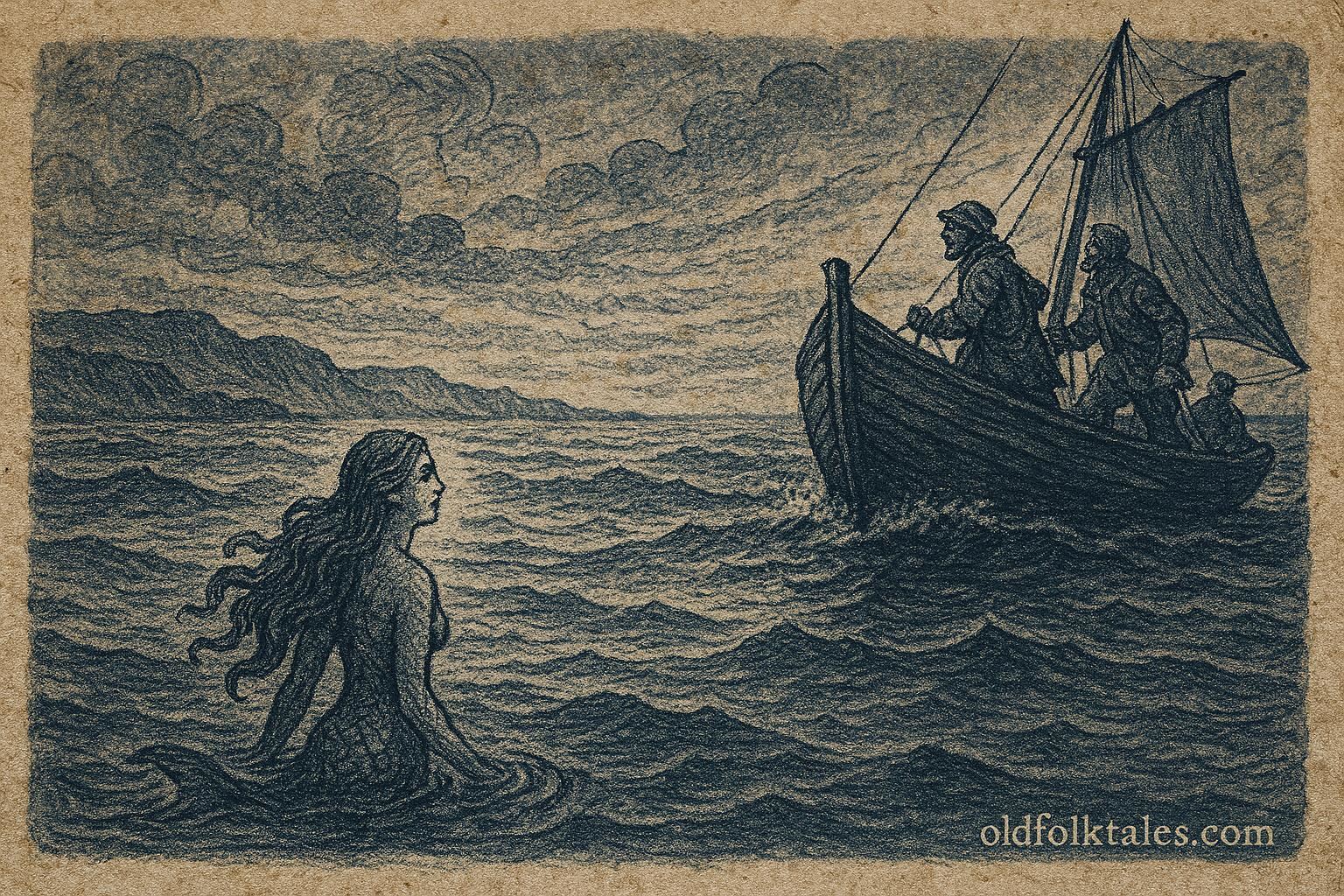
Yet among these fishermen, whispers carried on the salty air told of something more than storms and shifting tides. They spoke of a mermaid, a mysterious being who rose from the depths during tempests, her voice woven into the wind, her presence both beautiful and terrifying.
Some said she was a guardian of the sea. Others claimed she was a spirit of judgment. But all agreed on one thing: she rewarded kindness and punished greed.
One cold autumn evening, as clouds gathered like dark sails across the sky, a group of fishermen prepared to set out despite warnings of a coming storm. Among them were two men whose hearts could not have been more different.
Pieter was known for his generosity. Though poor, he often shared his catch with widows and hungry children in the village. He spoke to the sea as though it were alive, thanking it for every safe return.
In contrast stood Hendrik, a man driven by ambition. He sought not just survival, but wealth, fish, more profit, more than any other fisherman. He laughed at old tales and dismissed the warnings of elders. “The sea belongs to those bold enough to take from it,” he would say.
That night, both men boarded the same boat.
As they sailed farther from shore, the winds began to howl. Waves rose like towering walls, crashing against the vessel with relentless force. Rain lashed at their faces, and the lantern flickered wildly, threatening to go out.
Then, through the chaos of wind and water, a voice emerged. Soft at first, almost like a song carried by the storm, yet unmistakably clear.
The fishermen froze.
From the crest of a wave, illuminated by a flash of lightning, she appeared. Her long hair flowed like seaweed in the current, and her eyes shimmered with an otherworldly glow. Her tail, glistening like silver under the storm’s fury, moved with effortless grace.
The mermaid had come.
“Why do you challenge the sea on such a night?” she asked, her voice echoing across the roaring waves.
The men trembled, unsure whether to flee or listen. Hendrik stepped forward, his voice defiant. “We fish because we must. The sea is ours to conquer.”
The mermaid’s gaze darkened.
Pieter, however, lowered his head. “We do not seek to conquer,” he said quietly. “We ask only for safe passage and enough to feed our families.”
The sea seemed to pause, as though listening.
The mermaid raised her hand, and the storm grew even fiercer. Waves crashed over the boat, nearly capsizing it. Nets tore loose, and barrels rolled wildly across the deck. Panic spread among the crew.
Then she spoke again.
“Each man shall face the truth of his heart.”
Hendrik, determined not to lose, grabbed the nets and tried to secure them, shouting orders and curses at the others. He refused to abandon the catch, even as the storm threatened to swallow them whole. His greed blinded him to the danger, and in his desperation, he slipped on the wet deck, barely catching himself before falling into the raging sea.
Pieter, on the other hand, made a different choice. He cut the nets loose, allowing the sea to reclaim what it had given. He helped the others steady the boat, urging them to work together instead of fighting the storm.
“Let it go,” he said. “Our lives matter more than the catch.”
The mermaid watched silently, her expression unreadable.
Slowly, as if responding to Pieter’s actions, the storm began to calm. The winds softened, and the towering waves shrank to gentle swells. A pale moon broke through the clouds, casting a silvery light across the water.
Hendrik collapsed to his knees, shaken and humbled. The empty nets lay at his feet, a stark reminder of his choices.
The mermaid turned to Pieter.
“You understand the sea,” she said. “It gives, but it must also be respected.”
With a graceful motion, she touched the water beside the boat. Moments later, fish began to gather around them in abundance, filling the waters as far as the eye could see.
“To those who respect the balance,” she continued, “the sea provides.”
As dawn broke, the fishermen returned to shore with a catch greater than they had ever known. But more importantly, they carried with them a story, a lesson that would echo through generations.
Hendrik was never the same. He no longer chased wealth with blind ambition but worked alongside the others, mindful of the sea’s power and mystery.
Pieter remained as he always had been: humble, kind, and deeply respectful of the waters that sustained him.
And the mermaid?
She was never seen clearly again, yet her presence lingered in every storm, in every whisper of wind, in every wave that rose against the shore. Fishermen would sometimes claim to hear her song in the distance, a reminder that the sea was alive, watching, and judging the hearts of those who dared to cross it.
Moral Lesson
This Flemish folktale teaches that respect for nature and humility are essential for survival. Greed and arrogance lead to downfall, while kindness, cooperation, and wisdom bring safety and reward.
Knowledge Check
- Where does the story take place?
Along the coast of West Flanders in Belgium. - Who are the two contrasting fishermen?
Pieter, who is kind and respectful, and Hendrik, who is greedy and ambitious. - What does the mermaid represent?
A guardian or spirit of the sea who judges human behavior. - How does Pieter survive the storm?
By valuing life over profit, letting go of the catch, and working with others. - What happens to Hendrik?
He is humbled by the storm and learns the consequences of greed. - What is the main message of the story?
Respect nature, act with kindness, and avoid greed to achieve harmony and survival.
Source: Flemish Folk Tales (1918)
Cultural Origin: Belgium, West Flanders