In the ancient kingdom of Britain, where misted hills rose above silver rivers and forests whispered with old magic, Branwen, daughter of Llŷr, was known for her extraordinary beauty, wisdom, and noble bearing. Her presence inspired loyalty, and her gentle demeanor earned admiration from every corner of the realm. She was beloved not only for her noble lineage but for her thoughtful nature, a princess whose voice and counsel carried weight among kings and nobles alike.
To secure peace and alliance between kingdoms, Branwen was married to Matholwch, the King of Ireland. The union was a political necessity, arranged by her brother, Bran the Blessed, a giant among men and the leader of Britain’s forces. Though she entered her new home with hope, eager to honor her family and uphold her role as queen, the marriage soon became fraught with sorrow. Misunderstanding and dishonor on the part of Matholwch’s court led to Branwen’s mistreatment. She was subjected to humiliation and marginalization, her dignity challenged in ways that wounded both heart and spirit.
Step into the enchanted forests and mystical realms of the Slavic imagination
Despite the hardship, Branwen endured with quiet strength, her heart filled with sorrow for the dishonor that had befallen her family. She sent a message to her brother Bran, pleading for help. Bran, moved by both familial loyalty and righteous anger, gathered the might of Britain to rescue his sister and restore her honor. His army crossed the sea to Ireland, prepared to confront the injustice and demand restitution.
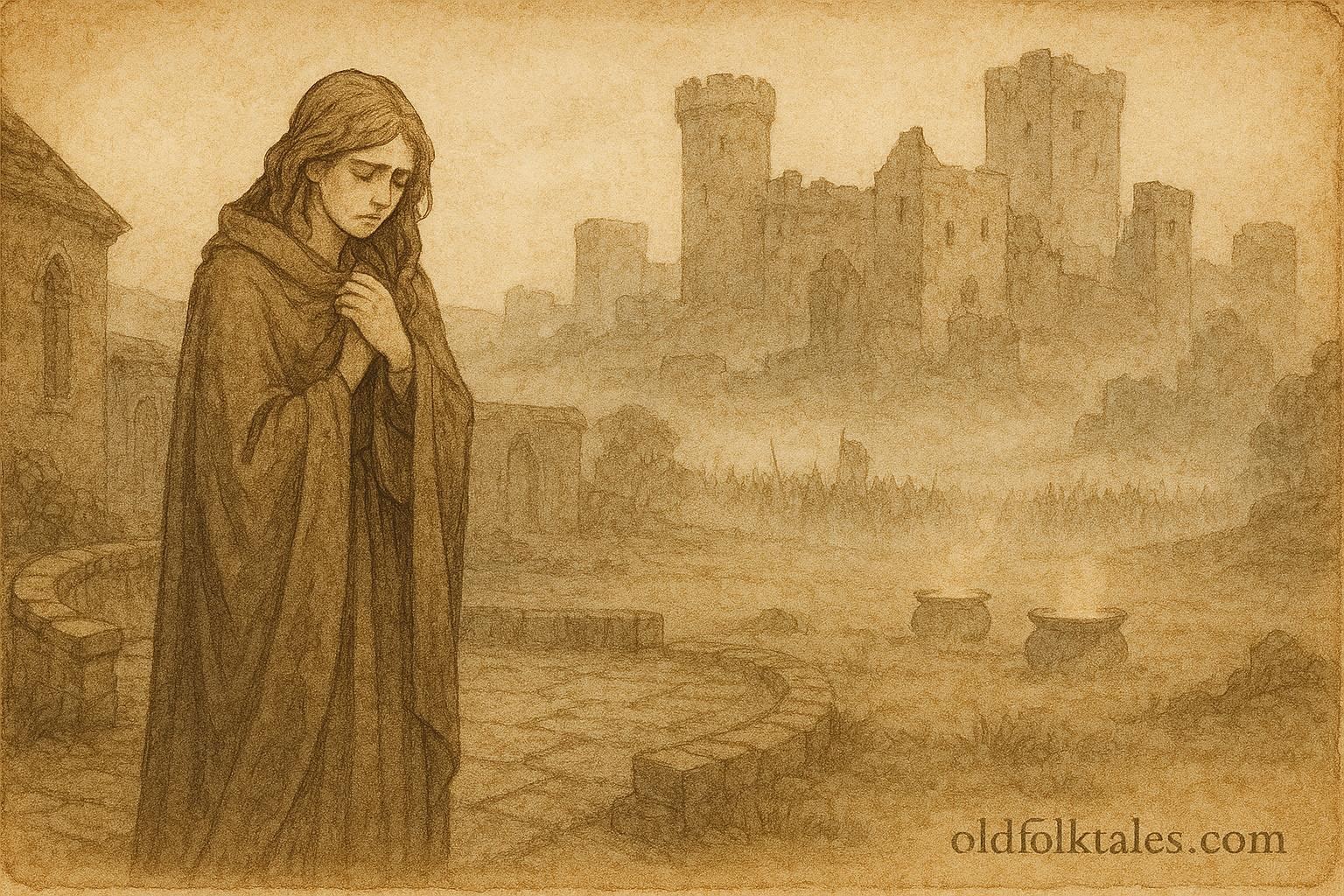
What began as a mission to defend a sister’s dignity escalated into full-scale war between the nations. The armies met on the fields of Ireland, and the clash of swords and cries of men echoed through valleys and over hills. Amid the chaos, magic played a terrifying role. Bran had brought with him enchanted cauldrons, capable of reviving the dead. Yet even these gifts, meant as instruments of protection, revealed the grim reality of conflict: those restored to life were still wounded and bereft of speech, animated shells of the fallen, a haunting testament to the cost of war.
Battles raged with ferocity and cunning. Leaders and warriors on both sides fell, their valor and loyalty tested to the limits. Branwen witnessed the devastation with a heart heavy for the loss of life and the desecration of the bonds that had once united families and kingdoms. She sought to mediate, to soften the fury of men, but in an age dominated by pride and vengeance, even a princess of magic and wisdom found her counsel limited against the tide of wrath.
As the war drew on, the toll of dishonor and pride became undeniable. Whole battalions were destroyed, castles burned, and the very land itself seemed to mourn under the weight of bloodshed. By the war’s end, nearly every combatant had perished, leaving only a handful of survivors to bear witness to the tragedy. Branwen herself suffered immeasurably, mourning her husband, her homeland, and the innocence lost to the inexorable drive for vengeance. Even Bran, her brother, was gravely wounded in sorrow, his strength and power insufficient to prevent the immense suffering brought about by dishonor and human folly.
In the final reckoning, the surviving members of both nations mourned deeply. Ireland and Britain alike were left fractured, the bonds of kinship and alliance strained beyond repair. The cauldrons, symbols of magic’s double-edged power, remained as silent reminders of both the hope and horror of resurrection. Branwen, whose patience and endurance had been tested beyond measure, survived but at great personal cost. She returned home carrying grief as a constant companion, a witness to the high price of pride, dishonor, and war.
Thus, the tale of Branwen became a lasting memory of the tragic consequences that follow the failure of respect and honor between nations. Political marriages, even when intended to forge peace, could become sparks for conflict if dignity was compromised. The story reminded all who heard it that loyalty, honor, and the protection of those vulnerable were obligations not lightly borne. Even magical powers could not prevent the devastation wrought by human pride and cruelty, nor could any army fully erase the sorrow left in the wake of betrayal.
Generations remembered Branwen as a figure of grace and endurance. Her suffering, while immense, became a moral lesson: that even in the face of dishonor, patience and steadfastness define true nobility. And yet, the destruction surrounding her served as a caution: pride, vengeance, and the disregard for human dignity can bring calamity not only to kings but to entire nations. Branwen’s tragedy was not only personal, it was a reflection of the wider cost of conflict when empathy and honor are abandoned.
Moral Lesson
Branwen’s story teaches that dishonor and pride can spark calamity, affecting not just individuals but entire communities. Patience, dignity, and loyalty can preserve one’s integrity, but the consequences of inter-kingdom conflict and the failure to respect others are often irreversible.
Knowledge Check
1. Who is Branwen in Welsh folklore?
Branwen is a noblewoman of magical bearing, daughter of Llŷr, whose mistreatment triggers a war between nations.
2. Why is Branwen married to the King of Ireland?
To forge political alliance and strengthen ties between Britain and Ireland.
3. How is Branwen treated in Ireland?
She is humiliated and mistreated by her husband’s court, sparking the conflict.
4. What magical object plays a role in the war?
Enchanted cauldrons capable of reviving the dead are used in battle.
5. What is the outcome of the war?
Devastation for both nations, with nearly all combatants dead and only a few survivors left.
6. What lesson does Branwen’s tale teach?
That dishonor and pride can have irreversible consequences, and patience, dignity, and loyalty define true nobility.
Source & Cultural Origin
Source: The Mabinogion, translated by Lady Charlotte Guest (1849)
Cultural Origin: Wales (Brythonic Celtic tradition)