In the heart of Bulgaria, where cobbled village streets wound between sunlit fields and the air carried the scent of hay and bread from open hearths, there lived a man known far and wide for his cunning and sharp wit. His name was Cunning Peter, a peasant whose laughter could fill a tavern, and whose quick mind often humbled even the proudest of townsfolk. Though Peter had little more than a patched coat and well-worn shoes, his wit was worth more than gold in a world where many believed only riches commanded respect.
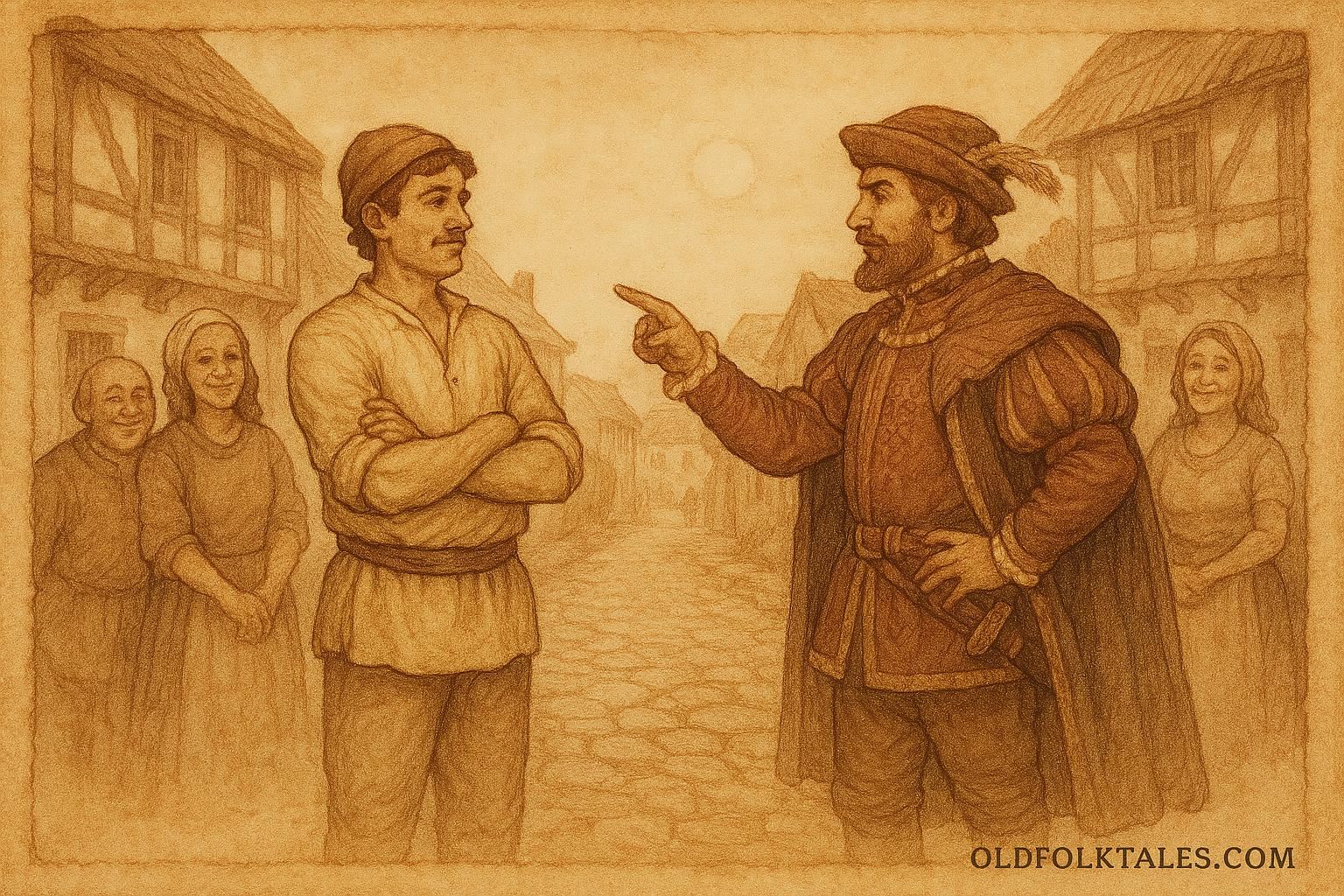
One fine morning, as Peter strolled through the market square, he crossed paths with a rich man. The man was dressed in fine silks and glittering rings, his boots polished so brightly they mirrored the sunlight. His heavy purse clinked with every step, and pride gleamed in his eyes as though he owned not just the coins in his pocket but the very earth beneath his feet.
When he saw Peter walking past without so much as a bow or a nod, his face flushed with indignation. He stopped in the middle of the road and shouted,
“Hey, you there! Why didn’t you bow to me?”
Peter turned his head, a half-smile playing on his lips.
“And why should I bow to you, sir?” he asked calmly.
The rich man puffed out his chest.
“Because I am rich! I have one thousand gold coins!”
Peter chuckled softly, his eyes twinkling with amusement.
“Indeed, you have one thousand gold coins. They belong to you and not to me. But tell me, why should your coins make my back bend?”
The rich man frowned. He was not used to being spoken to so boldly. Determined to prove his superiority, he reached into his purse and said,
“What if I give you five hundred coins? Then will you bow to me?”
Peter tilted his head thoughtfully.
“If you give me five hundred coins,” he said, “then you’ll have five hundred left, and so will I. We would be equals. Tell me then, why should one equal bow to another?”
The onlookers in the marketplace began to murmur and smile. The rich man’s face grew redder still. He was unused to such reasoning, and it vexed him to be outwitted by a man with torn sleeves.
After a pause, he tried again.
“What if I grow weary of riches and give you all my gold, every last coin? Then would you bow to me?”
Peter grinned, his answer swift as ever.
“Ah, if you gave me all your gold, then I would have one thousand coins, and your pockets would be empty. And tell me, good sir, why would I bow to a poor man?”
The crowd burst into laughter. The rich man stood speechless, his pride shrinking smaller than his purse. Peter tipped his hat, turned on his heel, and continued down the road, his laughter echoing behind him.
And so it was that in a single morning, the man with no gold but a quick mind taught the man with a thousand coins the true measure of worth.
Moral of the Story
Wisdom and dignity are riches no coin can buy. Respect should be earned through honour and humility, not demanded through wealth or power.
Knowledge Check
1. Who is the main character in the Bulgarian folktale “Cunning Peter and the Rich Man”?
The story’s main character is Cunning Peter, a clever peasant known for his wit.
2. What lesson does Peter teach the rich man?
He shows that true worth lies in wisdom and dignity, not in wealth or social status.
3. Why does the rich man believe Peter should bow to him?
He expects respect because of his wealth and pride in owning a thousand gold coins.
4. How does Peter outsmart the rich man?
By using logical reasoning to show that money cannot buy respect or equality.
5. What does this story reveal about Bulgarian folklore?
It reflects the traditional Bulgarian admiration for cleverness, fairness, and moral intelligence.
6. What is the main moral of “Cunning Peter and the Rich Man”?
That wisdom and self-respect outweigh material riches and vanity.
Source: Adapted from the Bulgarian folktale “Cunning Peter and the Rich Man” in Bulgarian Fairy Tales, detskie-skazki.com/en/bulgarian-fairy-tales/.
Cultural Origin: Bulgaria (Bulgarian folklore)