Long before Gerda began her journey, before the snow learned her name and the wind carried her tears across frozen plains, there existed a mirror unlike any other.
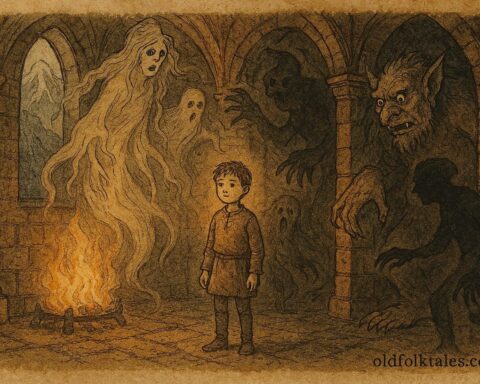
It was said to have been fashioned by wicked hands, some claimed by a demon, others by a spirit of mockery, its surface warped so that everything good appeared small and ugly, and everything cruel appeared sharp and beautiful. When kind faces looked into it, their smiles twisted. When warm hearts were reflected, they appeared foolish and weak.
One day, the mirror shattered.
Its fragments scattered across the world like invisible snowflakes. Some lodged in eyes, turning sight cold and cruel. Others pierced hearts, freezing love into indifference.
And so it was that Kay, a gentle boy who once laughed beside Gerda beneath their shared roses, became changed forever.
Gerda and Kay
Gerda and Kay lived in neighboring attics, their windows joined by flower boxes where roses bloomed each summer. They were not bound by blood, but by something stronger, shared stories, shared laughter, shared silence.
They listened to old women speak of the Snow Queen, ruler of the frozen North, whose palace lay beyond reason and warmth.
“She rides on the winter wind,” the stories said.
“Where she kisses, hearts turn to ice.”
Kay laughed at such tales.
But one winter evening, as snow fell softly over the rooftops, Kay cried out in pain. A shard of glass, a fragment of the cursed mirror, had entered his eye. Another pierced his heart.
From that moment, the world changed for him.
The roses seemed ugly. Gerda’s kindness annoyed him. He mocked what he once loved.
Soon after, Kay vanished.
The Snow Queen’s Kiss
It was whispered that the Snow Queen herself had come for him.
Riding her sleigh through the frozen streets, she kissed Kay on the forehead. Her kiss erased his memory of warmth, of love, of Gerda. A second kiss numbed his body to cold, and he followed her willingly into the endless white.
Gerda was left behind, standing alone in falling snow.
No one believed Kay could still be alive.
But Gerda did.
The Beginning of the Journey
Gerda was small, young, and unarmed, but her love was not.
She set out barefoot in her grief, asking the river if it had carried Kay away. She offered it her red shoes in hope of an answer. The river took the shoes but gave none.
Yet Gerda did not turn back.
She walked on.
The Garden That Tried to Make Her Forget
Her first shelter was a garden where flowers spoke in soft voices. An old woman with a crooked smile welcomed her and brushed her hair with a golden comb.
In that garden, time blurred. The flowers told stories of themselves, but none spoke of Kay. Slowly, Gerda forgot why she had come.
But when she noticed roses missing from the beds, her memory returned like a flame.
Roses meant Kay.
She fled the garden, weeping but resolute.
The Crow and the Princess
Gerda next met a clever crow who spoke of a boy at a royal court, perhaps Kay. Hope returned to her heart.
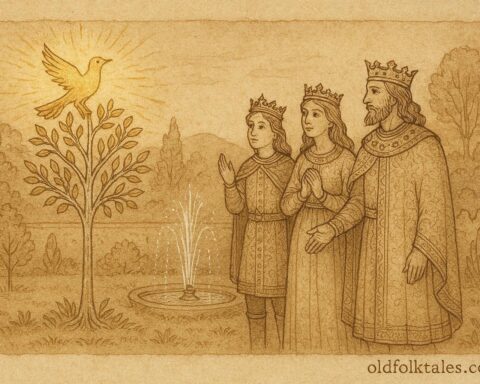
She was brought before a princess and prince, kind and generous, who listened to her story. Though the boy was not Kay, the princess admired Gerda’s devotion.
“She is strong in a way armor cannot protect against,” the princess said.
They clothed Gerda warmly, gave her food, and sent her onward in a golden carriage.
Captured by Cold Hands
The journey grew harsher. Snowstorms roared like beasts. At last, Gerda was seized by a band of robbers and taken into the forest.
There, among cruelty and wild laughter, she met a robber girl, fierce and untamed. Though dangerous, the girl was moved by Gerda’s story.
“You may go,” the robber girl said at last, handing her a reindeer.
“But don’t turn back.”
The reindeer carried Gerda northward, across frozen plains and beneath skies that shimmered like crystal.
Lapland and Finland
In Lapland, Gerda found wisdom written on dried fish skins. In Finland, an old woman told her the truth.
“You ask for strength,” the woman said. “But you already possess it. Love is your power. Innocence is your shield.”
No spell could help her more.
The Palace of Ice
At last, Gerda reached the Snow Queen’s palace.
It was vast and hollow, built of snowflakes locked into impossible geometry. Inside, Kay sat motionless, arranging shards of ice into patterns, trying endlessly to spell the word eternity.
His eyes were cold. His heart frozen.
Gerda ran to him.
She wept, not in despair, but in love.
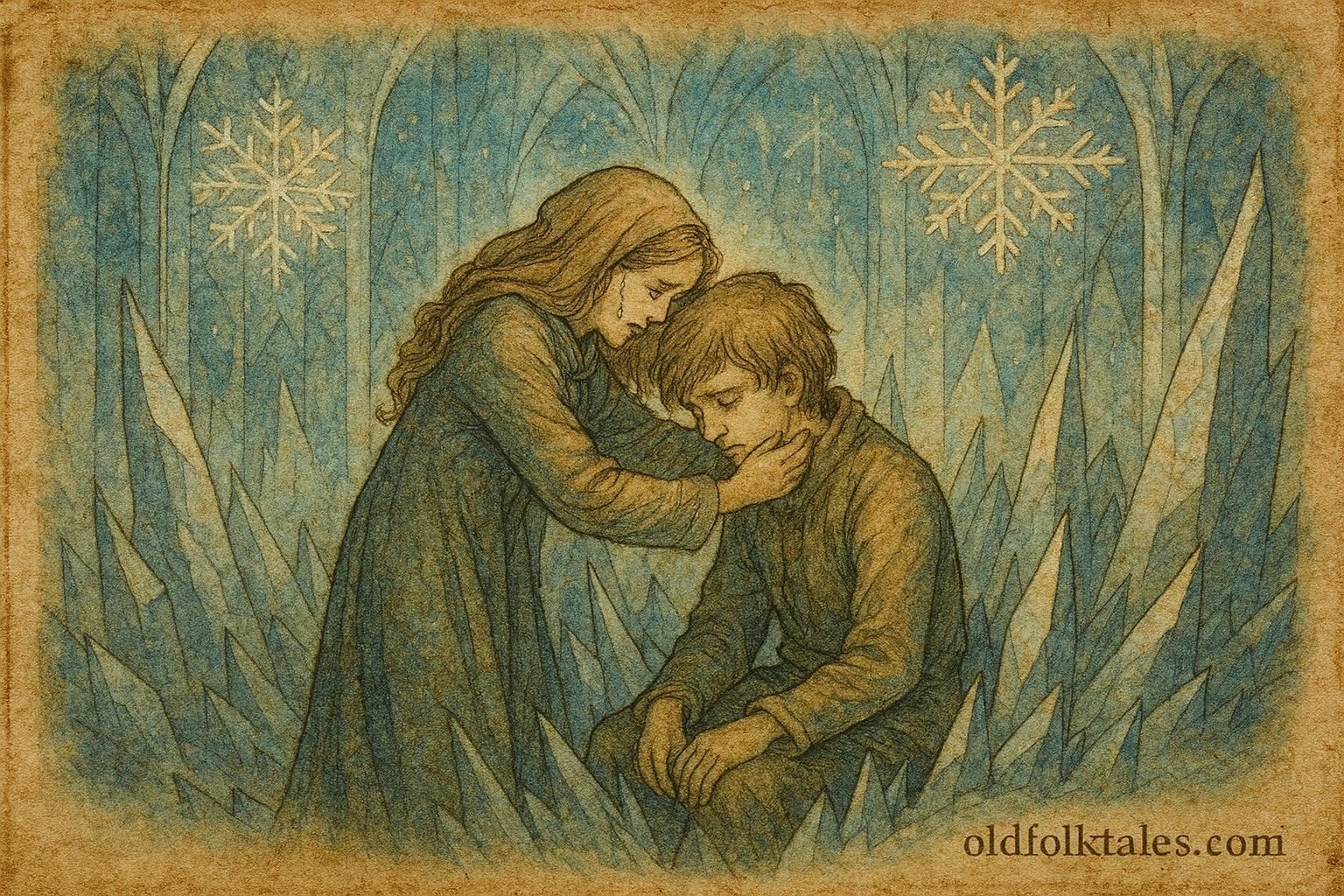
Her tears fell upon Kay’s chest, melting the shard within his heart. She sang the hymn they had learned as children, and warmth returned to his eyes.
The mirror shard fell away.
Kay wept.
The spell was broken.
Return and Renewal
Together they left the palace. The Snow Queen did not stop them, for love had already defeated her.
They returned home grown, not in years, but in understanding. The roses bloomed again.
Winter passed.
Moral Lesson
Love sees what coldness hides. Innocence is not weakness. And a faithful heart can journey where strength alone cannot.
Knowledge Check
1. What causes Kay’s heart to turn cold in The Snow Queen?
A shard of a cursed mirror enters his heart, distorting his emotions and perception.
2. Why does Gerda succeed where others fail?
Her innocence, persistence, and unconditional love give her strength beyond magic.
3. What does the Snow Queen symbolize?
Emotional coldness, isolation, and corrupted reason without compassion.
4. What role do helpers play in Gerda’s journey?
They represent kindness, human connection, and guidance at moments of hardship.
5. How does love break the Snow Queen’s power?
Gerda’s tears and song melt the frozen shard in Kay’s heart.
6. What cultural values does the tale reflect?
Danish and European ideals of empathy, moral purity, and emotional resilience.
Source: The Snow Queen by Hans Christian Andersen, 1844
Cultural Origin: Denmark (Danish literary fairy tale tradition)