In a bustling Sicilian village where the sun poured gold over tiled rooftops and narrow stone streets, there lived a young man named Giufà. Everyone knew him. Some called him foolish. Others called him harmless. Children followed him through the marketplace, giggling at his literal answers and peculiar logic. Elders shook their heads and muttered that he would never amount to much.
Yet Giufà possessed a curious gift: he took words exactly as they were spoken. He did not twist them to suit convenience, nor did he assume what others meant but failed to say. In a world where people relied on implication and habit, this trait made him appear absurd. But it also made him dangerous in ways few recognized.
One summer afternoon, a dispute erupted that would bring Giufà before the village judge.
A wealthy merchant claimed that Giufà had wronged him. According to the merchant, Giufà had been entrusted with a task, simple, straightforward, and had carried it out in such a foolish manner that it caused damage. Outraged and eager to make an example of him, the merchant demanded justice.
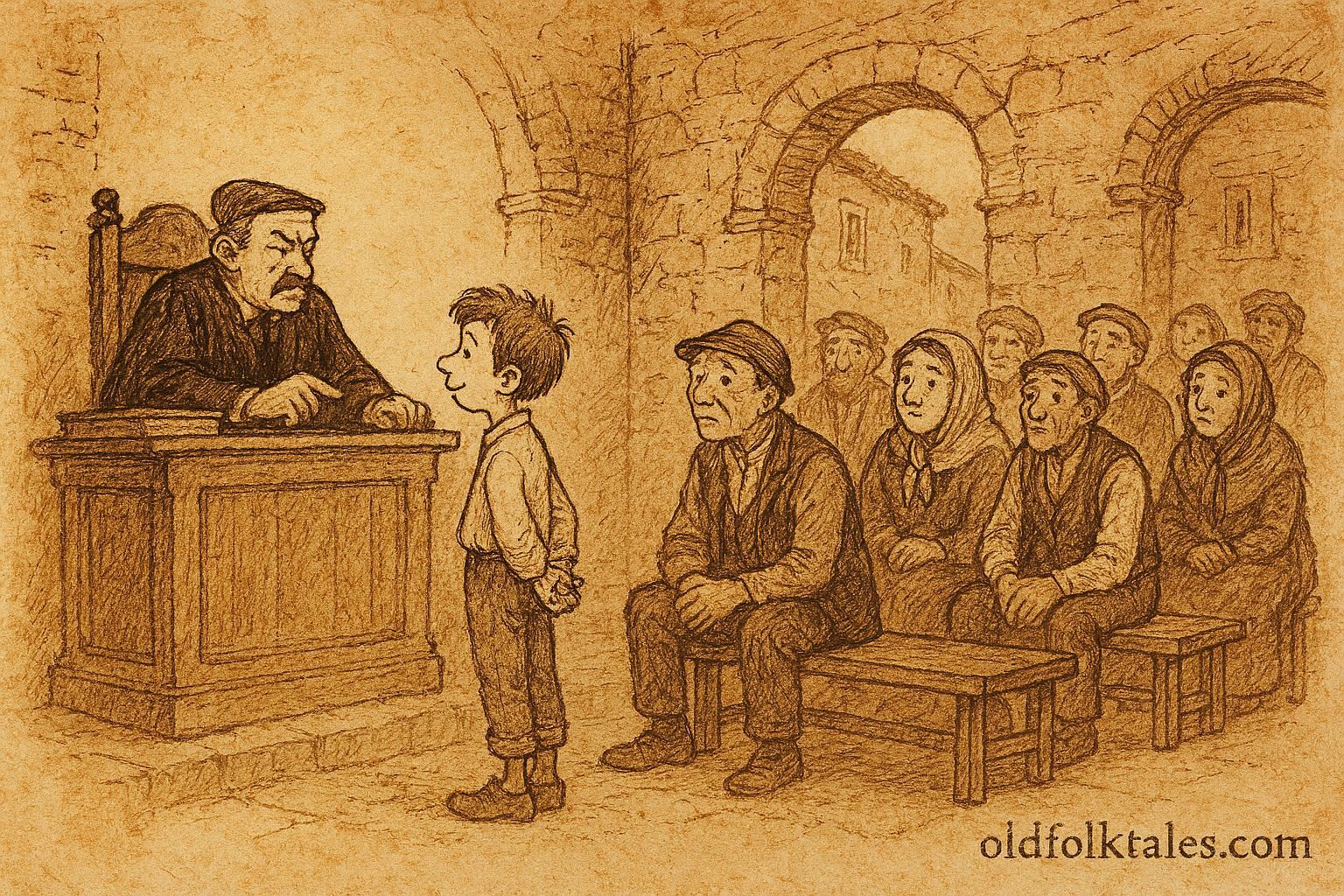
The case was brought before the judge, a stern man whose authority rested not only on his position but on the villagers’ fear of displeasing him. His robes were always immaculate, his words deliberate, his gaze sharp. He believed firmly in order and respect.
When Giufà entered the courtroom, the villagers gathered closely. They expected embarrassment. Perhaps punishment. Certainly confusion.
The judge cleared his throat.
“Giufà,” he began gravely, “you stand accused of misconduct. What have you to say?”
Giufà looked around the room calmly. “Your Honor,” he replied, “I did what I was told.”
The merchant stepped forward angrily. “He mocks the court! I gave him clear instructions.”
Giufà turned to the merchant. “You told me to act properly. So I acted properly.”
Laughter flickered through the room before the judge silenced it with a sharp gesture.
“What do you mean by ‘properly’?” the judge demanded.
Giufà answered sincerely. “I behaved the way I have always seen important men behave. I followed your example.”
A murmur spread across the villagers.
The judge’s expression hardened. “Explain yourself.”
Giufà spoke without hesitation. “When important men speak, they speak loudly so all will hear them. When they are displeased, they show it plainly. When they believe they are right, they do not listen to others. I have watched carefully. So when I was in the merchant’s house, I acted as I have seen authority act.”
The merchant protested. “This is nonsense!”
Giufà blinked. “Is it?”
The judge leaned forward. “Are you accusing this court of injustice?”
Giufà shook his head quickly. “No, Your Honor. I am only saying that I learn by observing. If I am wrong, then perhaps I observed wrongly.”
Silence settled over the room.
The judge felt the shift in the air. Giufà’s tone was innocent, but his words struck at something deeper. The villagers were no longer laughing. They were listening.
The merchant grew impatient. “He is pretending to be simple! He twists words!”
Giufà responded gently, “I do not twist words. I hold them straight. That is why they sometimes look crooked.”
A ripple of uneasy laughter passed through the crowd.
The judge tapped his staff against the stone floor. “Giufà, do you understand the seriousness of standing before this court?”
“Yes,” Giufà said. “That is why I am careful.”
“Careful?” the judge repeated.
“Yes. I say only what I see. If I speak foolishly, it is because I have seen foolishness. If I speak wisely, it is because I have seen wisdom.”
The merchant flushed with anger. “He insults authority!”
Giufà raised his hands in protest. “No, sir. I respect authority very much. That is why I copy it.”
The villagers could not suppress their laughter now. Even a few elders covered their mouths to hide smiles.
The judge felt his composure slipping. Yet beneath his irritation stirred something uncomfortable: recognition. Giufà’s words, absurd on the surface, reflected habits the judge himself had never questioned. How often had he spoken without listening? How often had he relied on his position rather than clarity?
Giufà continued, his voice calm. “If those in power speak with fairness and patience, then those beneath them will do the same. If they shout, others will shout. If they dismiss, others will dismiss. I am only a student of what I see.”
The courtroom grew still.
The judge looked around at the villagers. Their eyes were fixed not on Giufà now, but on him.
In that moment, the balance of the room shifted. Authority, once unquestioned, stood examined, not through rebellion or accusation, but through simple imitation.
The judge straightened in his seat.
“This court,” he declared slowly, “must be guided by justice, not pride. If there has been misconduct, it shall be addressed with fairness.”
He turned to the merchant. “Your complaint rests not only on Giufà’s actions, but on assumptions. If instructions are unclear, misunderstanding follows. If authority acts harshly, harshness spreads.”
The merchant opened his mouth to object but fell silent under the judge’s steady gaze.
“As for Giufà,” the judge continued, “his manner may appear foolish, but his words reveal a lesson. Let all present remember that authority must be worthy of imitation.”
A murmur of approval rose from the villagers.
Giufà bowed deeply. “Thank you, Your Honor. I will continue to observe carefully.”
A flicker of reluctant amusement crossed the judge’s face.
The case was dismissed. Justice, though not delivered in the way anyone expected, had been restored, not by punishment, but by reflection.
As Giufà stepped back into the bright Sicilian sunlight, children ran beside him, laughing and asking what had happened. He smiled in his absent-minded way and shrugged.
“I only told the truth,” he said.
And in the villages of Sicily, where pride and laughter often walk side by side, the story of Giufà and the judge was told for generations, not as a tale of rebellion, but as a reminder that wisdom sometimes wears the mask of folly, and that authority, when faced with honest absurdity, may rediscover its better self.
Moral Lesson
This Sicilian folktale teaches that wisdom can hide within apparent foolishness. Authority must be exercised with humility and fairness, for justice is strongest when leaders are willing to examine themselves.
Knowledge Check
-
Who is Giufà in Sicilian folklore?
Giufà is a trickster figure who appears simple-minded but reveals deeper truths through literal thinking and humor. -
Why is Giufà brought before the judge?
He is accused of misconduct and disrespectful behavior toward authority. -
How does Giufà defend himself in court?
He claims he acted by imitating the behavior of those in authority. -
What theme does the judge’s reaction highlight?
The importance of humility and responsibility in leadership. -
How is justice restored in the story?
Through irony and self-reflection rather than punishment. -
What is the origin and source of this folktale?
Sicily; recorded in Fiabe, novelle e racconti popolari siciliani (1875–1885).
Source: Fiabe, novelle e racconti popolari siciliani by Giuseppe Pitrè (1875–1885).
Cultural Origin: Sicily (Italian folk tradition).