In the flat, wind-swept landscapes of 19th-century Holland, the canals glittered like glass beneath a pale winter sun. Snow lay thick on the thatched roofs of houses, and frost crept over the wooden bridges connecting villages across the frozen waterways. It was a world where water both nourished and threatened, and where the people had long learned to respect the dikes that held back the rivers and seas.
Among these villages lived young Hans Brinker, a boy of quiet determination and boundless energy. He was not wealthy, yet he possessed a rare gift: the skill of skating. From the earliest winters, Hans had glided across frozen canals with ease, his movements a graceful blend of balance and daring. His silver skates, polished to a mirror sheen, gleamed in the sunlight, reflecting the joy and freedom he found in the cold, open expanse.
Hans lived with his father and younger sister, Gretel, in a modest home near the canal. Their life was simple but filled with warmth, despite the frugal means they had. The village itself was close-knit, a community built on mutual care and vigilance, where everyone knew the importance of maintaining the dikes that guarded them from the rivers’ untamed currents. Yet even in such a careful society, danger could arise without warning.
One crisp morning, as Hans practiced his skating near the village edge, he noticed something unusual. The water at the dike’s base swirled unnaturally, and a small fissure had begun to appear, thin but widening with alarming speed. The wind howled across the frozen fields, carrying a faint but urgent sound of water seeping through the icy barrier. Hans’ heart leapt into his throat. If the dike were to burst, the flooding would devastate the village and surrounding farmland. Crops, livestock, and homes would be lost, and lives would be at risk.
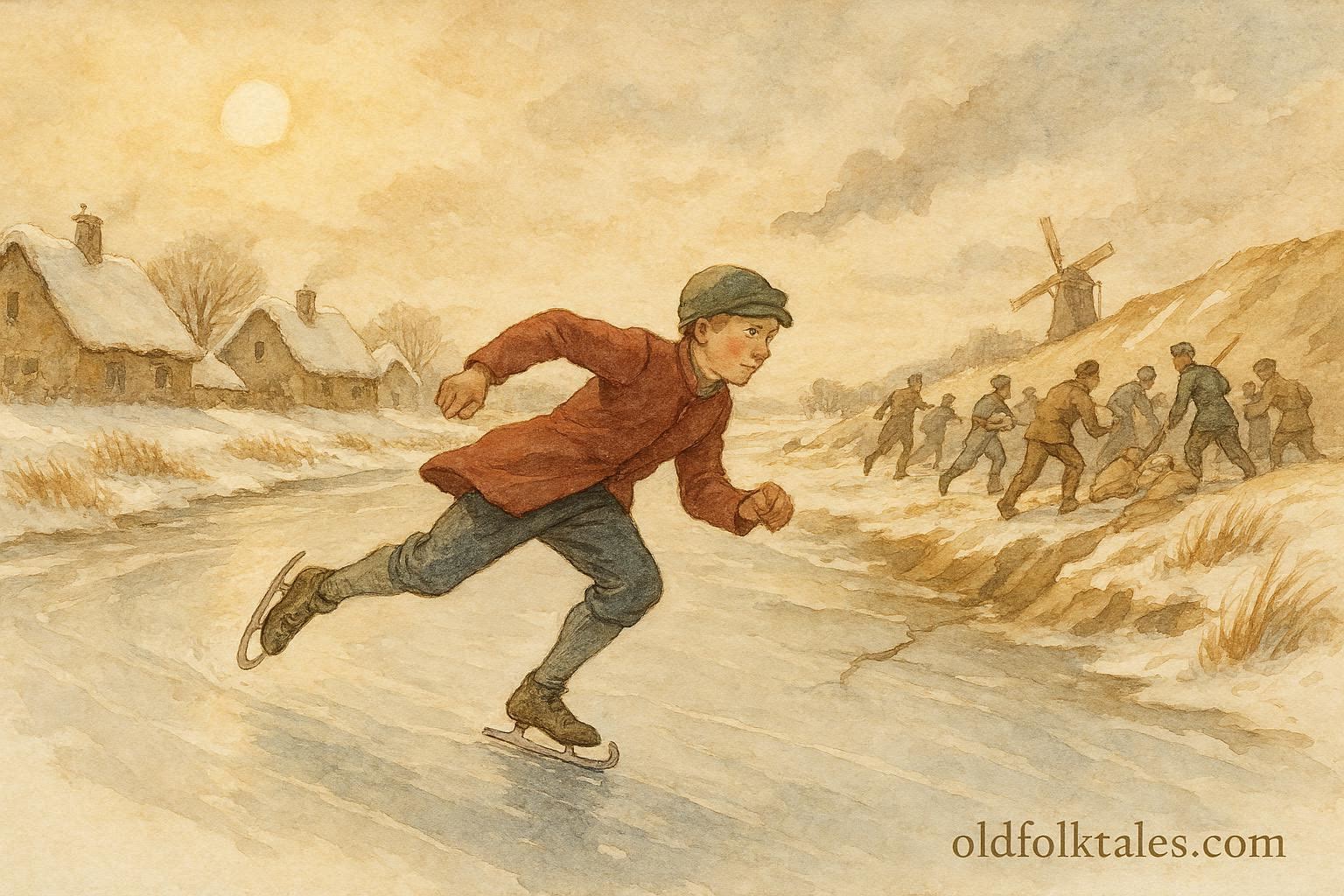
Without hesitation, Hans devised a plan. He strapped on his silver skates and, with every ounce of strength and skill, began racing across the frozen canals toward the center of the village. He skated faster than he had ever done before, his blades cutting arcs through the ice, the cold wind whipping against his cheeks. Every second counted.
As he approached the village square, he called out urgently to anyone within earshot. At first, the villagers could not comprehend the urgency in his cries, thinking it merely the exuberance of a boy at play. But Hans’ voice rang with unmistakable alarm. “The dike is breaking! Hurry! Help before it is too late!”
Men and women dropped their tasks, rushing to follow him. Others joined with shovels, ropes, and tools, guided by Hans’ swift directions. They reached the dike just as the fissure had widened dangerously. Water had begun to seep more forcefully, threatening to carve a destructive path through the frozen earth.
Together, the villagers worked as one. Hans’ keen observation and quick thinking guided their efforts. They piled sandbags, reinforced weak spots, and dug temporary channels to redirect the water. It was grueling work in the icy wind, and the water’s relentless pressure tested their strength and resolve. But the unity and determination of the villagers, inspired by Hans’ warning, held the flood at bay until more permanent repairs could be made.
By the afternoon, the dike was stabilized. The water, though fierce and unyielding, was contained, and the village had been saved. Exhausted but elated, Hans returned home with his father and sister, their pride in the boy mingled with relief. That winter, the story of Hans Brinker’s heroism spread throughout the region, a tale of courage, ingenuity, and the extraordinary impact one individual could have on the safety and wellbeing of a community.
Hans continued to skate, as he had always done, but now with a deeper understanding of responsibility. His silver skates, once symbols of leisure and skill, had become emblems of vigilance, quick thinking, and service to others. The village never forgot the lesson he embodied: that even in the coldest, most dangerous moments, courage and resourcefulness could turn peril into safety, and ordinary folk could rise to heroic deeds.
Moral Lesson
The Tale of Hans Brinker and the Silver Skates teaches that courage, quick thinking, and community-minded action can prevent disaster. Even young individuals, through skill and vigilance, can play a pivotal role in safeguarding the lives of others.
Knowledge Check
- Who is Hans Brinker?
- A young Dutch boy known for his skating skills and courage who warns his village of a dike about to burst.
- What skill does Hans use to save his village?
- Ice skating, which allows him to reach the village quickly and alert everyone.
- What natural danger threatens the village in the story?
- A dike is breaking, threatening to flood the village and surrounding farmland.
- What themes are central to this Dutch folktale?
- Courage and quick thinking, community responsibility, resilience, and heroism.
- How do the villagers respond to Hans’ warning?
- They quickly gather tools, work together, and reinforce the dike to prevent flooding.
- What cultural aspect is highlighted in the tale?
- Dutch water management traditions and the importance of dikes in protecting communities.
Source: Mary Mapes Dodge, Hans Brinker or The Silver Skates, 1865, Netherlands, 19th century.
Cultural Origin: Netherlands