Deep in the dense forests of Saxony, where pine and beech trees stretched tall and shadows lingered even at midday, there lived a poor woodcutter with his wife and two children, Hansel and Gretel. Times were hard, and the family often went hungry. Though the woodcutter worked tirelessly, there was never enough to fill their bellies.
This is the story of Hansel and Gretel, a tale of survival, courage, and cleverness collected by Jacob and Wilhelm Grimm in Kinder- und Hausmärchen, 1812. It is a story that has traveled through generations, teaching lessons about resourcefulness, loyalty, and the triumph of good over evil.
Abandoned in the Forest
One harsh winter, the family’s hunger became unbearable. The stepmother, who had grown bitter and cruel, persuaded the woodcutter to abandon the children deep in the forest, believing it the only way to reduce the number of mouths to feed.
Hansel, clever and attentive, overheard the plan. As the family prepared to leave, he collected small white pebbles, slipping them into his pockets. When the woodcutter led the children into the forest under the pretense of gathering wood, Hansel dropped the pebbles along the path, creating a trail back to their home.
As night fell, Hansel and Gretel returned safely, following the gleaming stones to their cottage. Their parents were astonished, but the stepmother’s cruelty remained unshaken.
A Second Abandonment
A few nights later, hunger struck again, and the stepmother insisted on abandoning the children once more. This time, Hansel tried to repeat his strategy, but the door to the garden was locked, and he could not gather pebbles. Instead, he dropped crumbs of bread along the path.
Unfortunately, birds in the forest quickly ate the crumbs, leaving no trail to follow. Hansel and Gretel were lost. The forest, dark and foreboding, seemed endless. They wandered for hours, shivering and hungry, with only their courage and each other for comfort.
Discovery of the Candy House
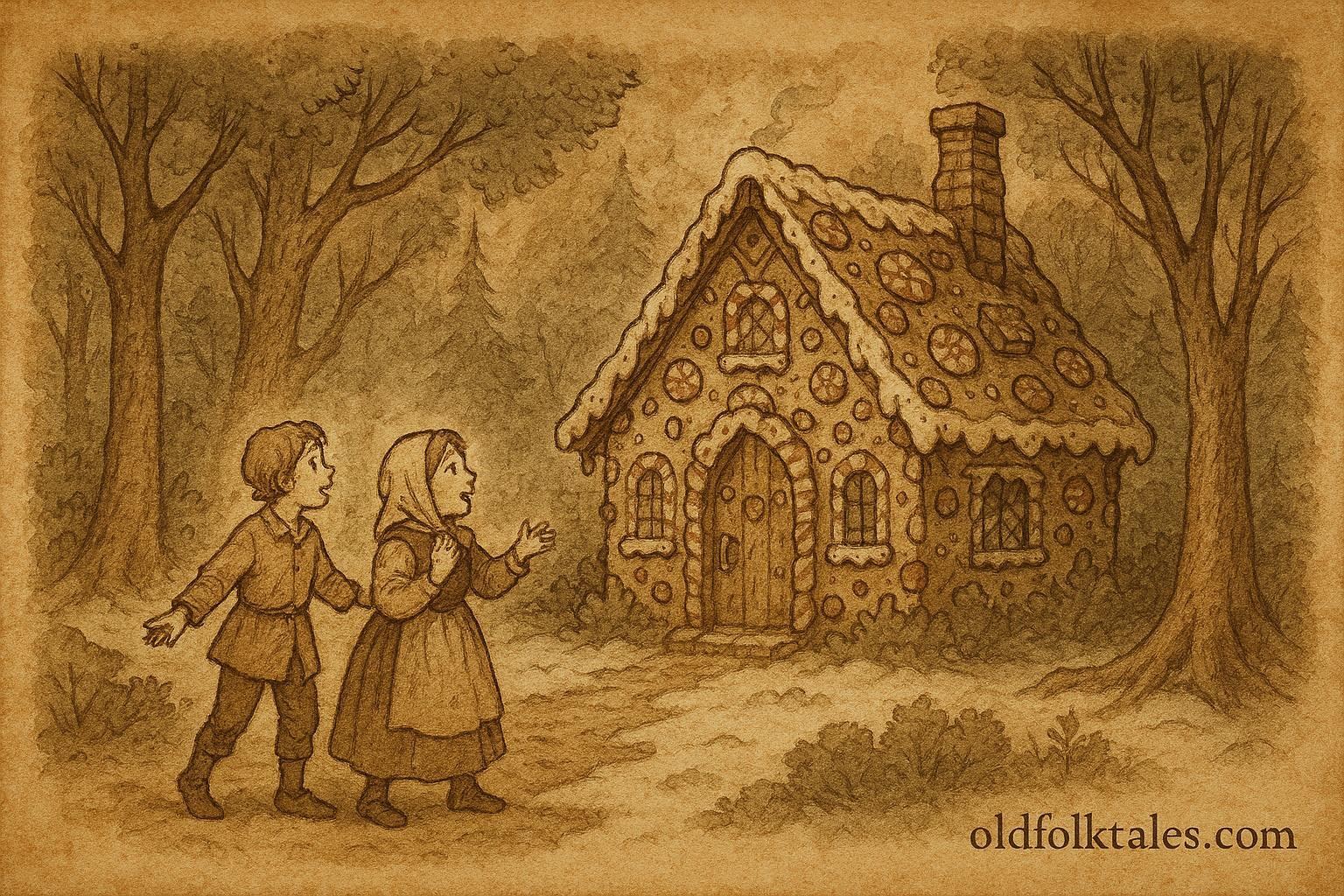
As they wandered, the children saw something extraordinary: a house built entirely of bread, sugar, and candy, its walls adorned with icing and windows of clear sugar. Their mouths watered at the sight. Starving, they began to eat pieces of the candy from the walls.
Suddenly, a kind old woman appeared at the door. She smiled warmly, inviting the children inside and offering them a feast. The house, once magical in appearance, now concealed a terrible secret: the woman was a witch who lured children to consume their innocence and strength, fattening them for her sinister plans.
The Witch’s Deception
Inside the house, the witch appeared gentle and sweet, but her eyes glimmered with malice. She locked Hansel in a cage, intending to fatten him for a meal, while Gretel was forced to work as a servant, cleaning and cooking. The witch fed Hansel carefully, offering him delicious food, yet he cleverly held out a small bone instead of his finger when she checked if he was ready to eat.
The witch, unable to detect Hansel’s cleverness, grew impatient and frustrated. She decided to speed up her plan and ordered Gretel to prepare the oven for baking. It was then that Gretel realized she must act quickly if they were to survive.
Courage and Cleverness Triumph
With steady hands and a brave heart, Gretel pretended not to understand the witch’s instructions. The witch grew angry and leaned over the oven to demonstrate. At that moment, Gretel pushed her into the oven and slammed the door shut. The witch was vanquished, and Hansel and Gretel were free.
Together, they searched the witch’s house and discovered treasures of gold and jewels hidden throughout the candy walls and cupboards. With these riches, they prepared to return home, their hearts buoyed by relief and excitement.
Return and Reunion
Hansel and Gretel followed the forest paths they remembered and eventually emerged near their father’s cottage. To their delight, the cruel stepmother was gone, having passed away during their absence, and their father, overwhelmed with joy and remorse, embraced them tightly.
The gold and jewels from the witch’s house restored their family’s fortune, ensuring that they would never go hungry again. The children, brave and resourceful, had not only survived but had brought prosperity and security back to their home.
Themes and Cultural Significance
The story of Hansel and Gretel illustrates key themes of German folklore: the vulnerability and resilience of children, the dangers of greed and cruelty, and the triumph of cleverness and courage over evil.
Forests in German tales often symbolize both danger and opportunity, serving as places where trials occur and virtues are tested. Hansel and Gretel navigate this symbolic landscape, using intelligence, observation, and bravery to overcome threats.
The tale also conveys lessons about family, loyalty, and moral justice. The stepmother’s cruelty is punished by the children’s survival and prosperity, while the witch’s malevolence is overcome through wit and courage.
Moral Lesson
Resourcefulness, courage, and cleverness are essential for overcoming adversity. Loyalty to family, clever observation, and bravery can help individuals survive danger, and evil intentions are ultimately punished while virtue is rewarded.
Knowledge Check
1. Who are the main characters of the story?
Hansel and Gretel, two siblings abandoned in the forest.
2. How do Hansel and Gretel survive the forest?
Hansel uses pebbles and later breadcrumbs to mark a path, and they rely on their courage and cleverness.
3. What is unusual about the witch’s house?
It is made entirely of candy and bread, designed to lure children.
4. How do Hansel and Gretel defeat the witch?
Gretel pushes the witch into the oven, using courage and quick thinking.
5. What lessons does the story teach?
Resourcefulness, bravery, loyalty to family, and triumph of good over evil.
6. Who collected the story and when?
Jacob and Wilhelm Grimm, Kinder- und Hausmärchen, 1812, Saxon/Thuringian German folklore.
Source: Jacob and Wilhelm Grimm, Kinder- und Hausmärchen (1812), Germany.
Cultural Origin: Saxon and Thuringian German folklore.