Along the northern coasts of Gozo, where the land breaks into jagged cliffs and narrow valleys that spill into the sea, lies the wild inlet of Wied il-Għasri. It is a place shaped by wind and water, where the waves carve their patient paths through stone and where fishermen have, for generations, cast their nets into the deep blue.
The people of these coastal villages have always lived by the rhythm of the sea. At dawn, their boats slip quietly into the water; at dusk, they return, their hulls heavy with the day’s catch. But they do not speak of the sea as merely a source of livelihood. To them, it is alive, vast, powerful, and unpredictable. It demands respect, and it remembers those who forget.
Discover Polish, Russian, Ukrainian, and Belarusian folktales where magic and morality meet
Among the many tales whispered along these shores, none is more enduring than that of Il-Baħar ta’ San Pietru, St. Peter’s Sea.
The elders say that on certain nights, when the waters lie still as glass and the air carries no wind, something stirs beneath the surface. The sea, usually restless, grows quiet, as though listening. It is on such nights that fishermen claim to witness a presence, not of storm or danger, but of guidance.
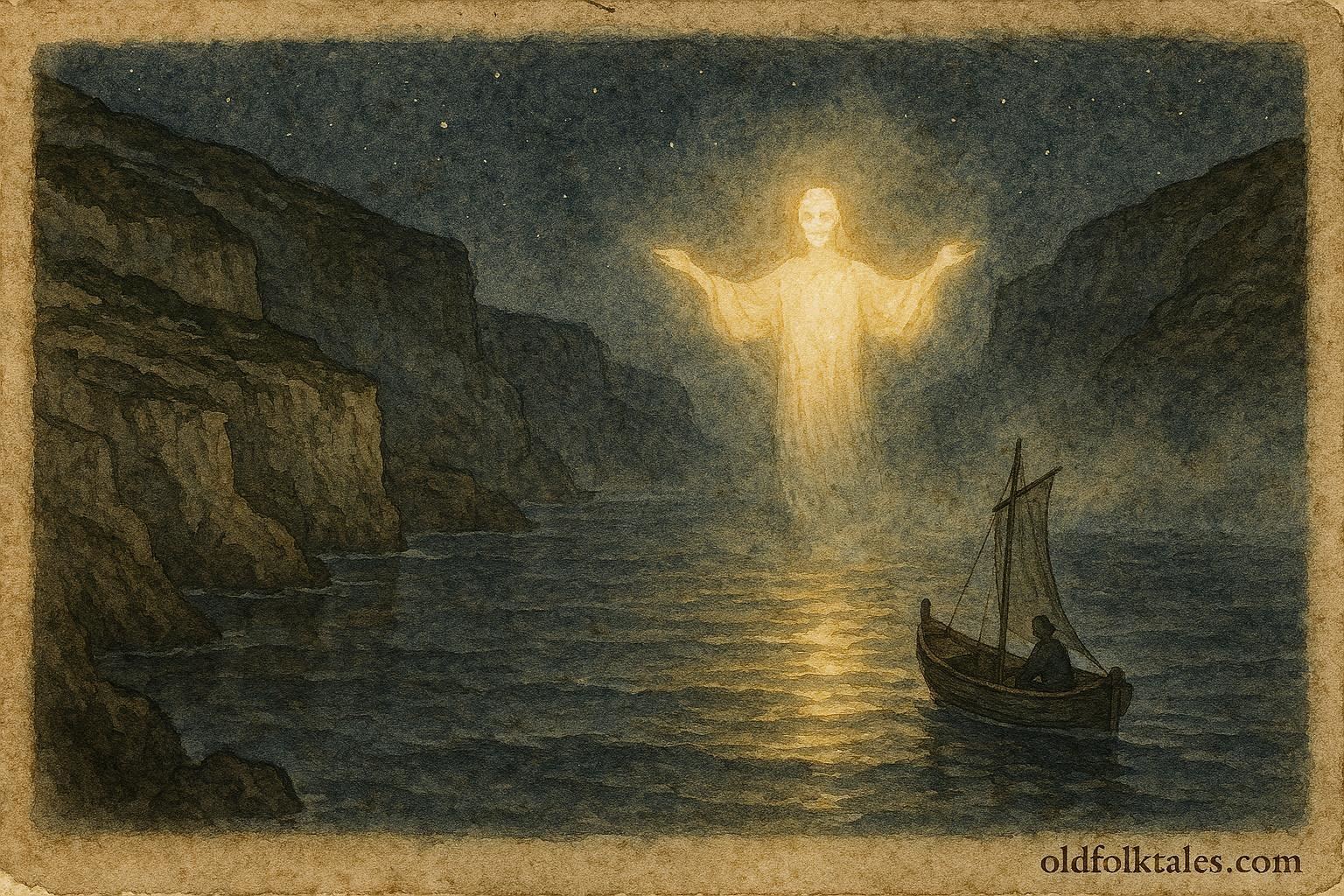
They speak of a faint glow rising from the depths, soft and golden, like the distant flicker of a lantern. At first, it appears far away, barely distinguishable from the reflection of the stars. But slowly, steadily, it moves across the water, drawing nearer, pulsing gently as if alive.
Some say it is the spirit of Saint Peter himself, the fisherman who became a saint, watching over those who still make their living from the sea.
Long ago, before the tale was widely known, there lived a young fisherman who ventured out alone from the narrow inlet of Wied il-Għasri. He was skilled and strong, but also proud, believing that the sea could be mastered by knowledge and courage alone.
One evening, he set out later than the others, chasing the promise of a larger catch. The sun dipped below the horizon, and darkness spread across the waters. Still, he pressed on, casting his nets deeper into the open sea.
At first, all was calm.
But the sea is never still for long.
Without warning, a thick mist rolled in, swallowing the stars and cloaking the horizon. The young fisherman found himself alone in a world of grey, where sky and sea blurred into one. He turned his boat, trying to find his way back, but every direction seemed the same.
The silence was heavy, broken only by the soft lap of water against the wood.
Then, faintly, he heard it.
A voice, soft, distant, almost like singing.
It was not a song he recognized, yet it carried a strange comfort. It rose and fell with the rhythm of the sea, guiding rather than calling. The fisherman strained to listen, his heart caught between fear and curiosity.
As he followed the sound, he saw the light.
It shimmered across the water, a gentle glow that cut through the mist. It did not dazzle or blind, but beckoned, steady and calm. With no other guide to trust, the fisherman steered toward it.
The light moved slowly, always just ahead, leading him through the fog. The singing continued, faint but unwavering, until at last the mist began to lift.
Before him, the cliffs of Gozo emerged, dark against the early dawn. The narrow opening of Wied il-Għasri lay just beyond, and the familiar shape of the inlet welcomed him home.
When he turned to look for the light, it was gone.
The sea was once again as it had always been, vast, quiet, and indifferent.
From that day on, the fisherman spoke of what he had seen and heard. Some believed him at once, for they too had felt the sea’s mysteries. Others dismissed it as a trick of fear and exhaustion. But as years passed, more sailors told similar stories.
They spoke of lights that appeared when hope was nearly lost, of voices that guided them safely through darkness. They claimed that the presence came only to those who respected the sea, those who listened, who understood their place within its vastness.
Yet the tale carried a warning as well.
There were those who heard the singing and chose to ignore it, trusting instead in their own strength. Some sailed past the guiding light, convinced they knew a better way. It is said that these sailors often met with sudden storms, violent winds that rose without warning, waves that crashed with relentless force.
The sea, the elders would say, does not forgive arrogance.
In time, the people came to believe that St. Peter himself watched over these waters, his spirit bound to the sea he once knew as a fisherman. He was not there to command or control, but to guide, to offer a path to those willing to follow.
On calm nights, when the moon hangs low and the sea lies still, fishermen still speak of the glow. They lower their voices as they tell of it, as though speaking too loudly might disturb the presence.
Some claim to have seen a figure within the light, standing upon the water as though it were solid ground. Others say they hear only the singing, carried by the wind, too distant to understand but impossible to ignore.
And there are those who say nothing at all, who simply nod when the tale is told, their silence more convincing than words.
Even today, as modern boats replace wooden vessels and technology charts the seas, the legend endures. For all their instruments and knowledge, sailors still know that the sea cannot be fully tamed.
There are moments, especially in the quiet of night, when instinct matters more than reason, when the old stories feel closer than ever.
In those moments, when the waters grow still and the world seems to hold its breath, some fishermen still pause and listen.
And if they are fortunate, they may hear it, the faint echo of a song, rising from the depths, guiding them home.
Moral Lesson
Respect for nature and humility in the face of greater forces invite guidance and protection, while pride and disregard can lead to danger.
Knowledge Check
- What is Il-Baħar ta’ San Pietru in Maltese folklore?
Answer: It is a legend of St. Peter’s spirit guiding fishermen through the sea near Gozo. - Where does the story take place?
Answer: Near Wied il-Għasri on the island of Gozo, Malta. - What supernatural signs guide sailors in the tale?
Answer: Eerie glowing lights and distant singing that lead them safely home. - What happens to sailors who ignore the guidance?
Answer: They may encounter sudden storms and danger at sea. - What role does St. Peter play in the legend?
Answer: He acts as a spiritual guardian of fishermen and the sea. - What cultural belief does the story reflect?
Answer: It reflects the deep connection between faith, seafaring life, and respect for nature.
Source: Adapted from Maltese Folk Traditions by Anton Cassar (1978).
Cultural Origin: Rural fishing communities of Gozo and Malta.