Long before the island of Gozo bore the quiet villages, terraced fields, and low stone walls that now shape its landscape, the land was believed to be watched over by a being of immense size and ancient power. The elders of Gozo spoke of him not as a monster, but as Il-Ġgant, the Giant, whose strength shaped the island itself.
Even today, when the sun rises over the limestone hills and strikes the massive stones of the Ġgantija Temples, some say the land remembers him. For these stones, larger than any one man could lift, were said to have been carried not by human hands, but by the Giant of Gozo.
The Giant and the Island
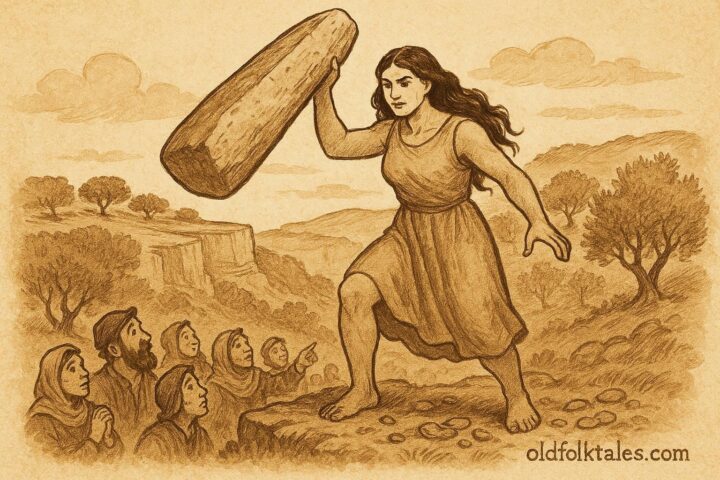
The Giant lived in an age before memory, when the sea lay closer to the land and the earth itself seemed softer beneath the feet. He was taller than the highest fig tree and broader than a farmhouse wall, with footsteps that caused the ground to tremble and a voice that echoed across valleys.
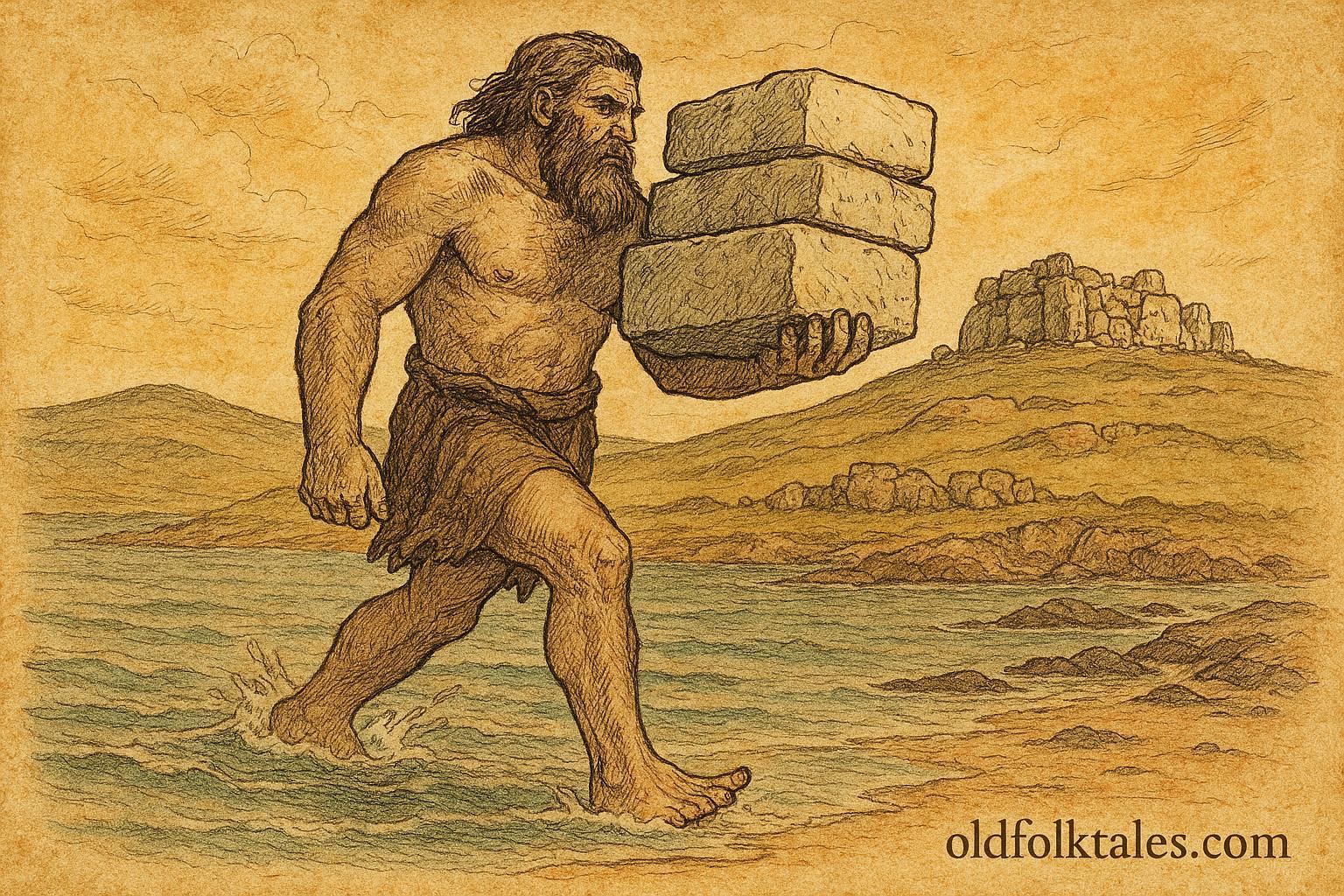
Though his size inspired fear, the Giant did not rule through cruelty. He was a solitary figure, living among the hills and cliffs of Gozo, watching over the people who scratched their lives from stone and soil. Shepherds would glimpse him at dawn, striding along the coast with boulders balanced easily on his shoulder. Fishermen claimed to see him wading through the sea, carrying stones as though they were pebbles.
To the weak, the hungry, and the fearful, the Giant was a protector.
The Building of Stone
In those early days, the people of Gozo struggled to shelter themselves. Storms swept the island, and the sun scorched the land. They prayed for protection, and the Giant answered, not with words, but with action.
Night after night, he carried enormous stones from distant shores, lifting them from the sea and placing them carefully upon the land. Some he stacked into walls. Others he arranged into great circles and chambers, aligned with the sun and stars.
The people watched in awe.
No oxen pulled these stones. No tools shaped them. Only the Giant’s strength and careful hands guided their placement. Mothers told their children that the Giant built not for glory, but for protection, spaces where people could gather, worship, and find refuge.
Thus rose the stones of Ġgantija, heavier than memory and older than history.
Fear and Gratitude
At first, the people honored the Giant. They left offerings of bread and fruit at the edges of fields. They spoke his name with respect and taught their children not to mock what they did not understand.
But as years passed, fear returned.
Some whispered that no being so strong could remain kind forever. Others said the Giant’s presence reminded them of their dependence, and they grew ashamed. Slowly, offerings ceased. Greetings turned to silence. Gratitude faded into expectation.
The Giant noticed.
He saw how people now avoided his shadow and spoke of him only as a danger. Though he continued to protect them, his kindness was no longer remembered, only his size.
The Turning to Stone
One dawn, the Giant stood before the great stones he had placed. He looked upon the temples, the walls, and the fields they sheltered. He understood then that humans had forgotten not only him, but the lesson he embodied, that strength must serve kindness, and gratitude sustains harmony.
As the sun rose, the Giant did not move.
His body stiffened, his skin hardened, and his vast form became stone itself. Some say he became one of the great blocks of Ġgantija; others believe he sank into the earth, becoming the island’s backbone.
When the people came searching, the Giant was gone.
Only the stones remained.
What the Island Remembers
Generations passed, but the story endured. The people of Gozo no longer feared the Giant, but they remembered his lesson. The stones he left behind became sacred, not because of their size, but because of what they represented.
To this day, elders say the land of Gozo stands firm because the Giant still holds it steady, turned to stone so that humans might endure, even when they forget to give thanks.
Moral Lesson
Il-Ġgant ta’ Għawdex teaches that great strength guided by kindness sustains humanity, but gratitude must be remembered, or harmony turns to stone.
Knowledge Check
1. Who was Il-Ġgant of Gozo?
A colossal protective giant believed to have shaped Gozo’s stone landscape.
2. What structures is the Giant associated with?
The Ġgantija megalithic temples and massive stone formations.
3. Why did the Giant help humans?
Out of kindness and a desire to protect the weak.
4. What caused the Giant to turn to stone?
Human forgetfulness and loss of gratitude.
5. What themes does the tale emphasize?
Strength guided by kindness, memory, and dependence on the supernatural.
6. Where does this folktale originate?
The island of Gozo, Malta.
Source: Cassar Pullicino, The Folklore of Malta, 1964
Cultural Origin: Gozo, Malta (Ġgantija Temple myth tradition)