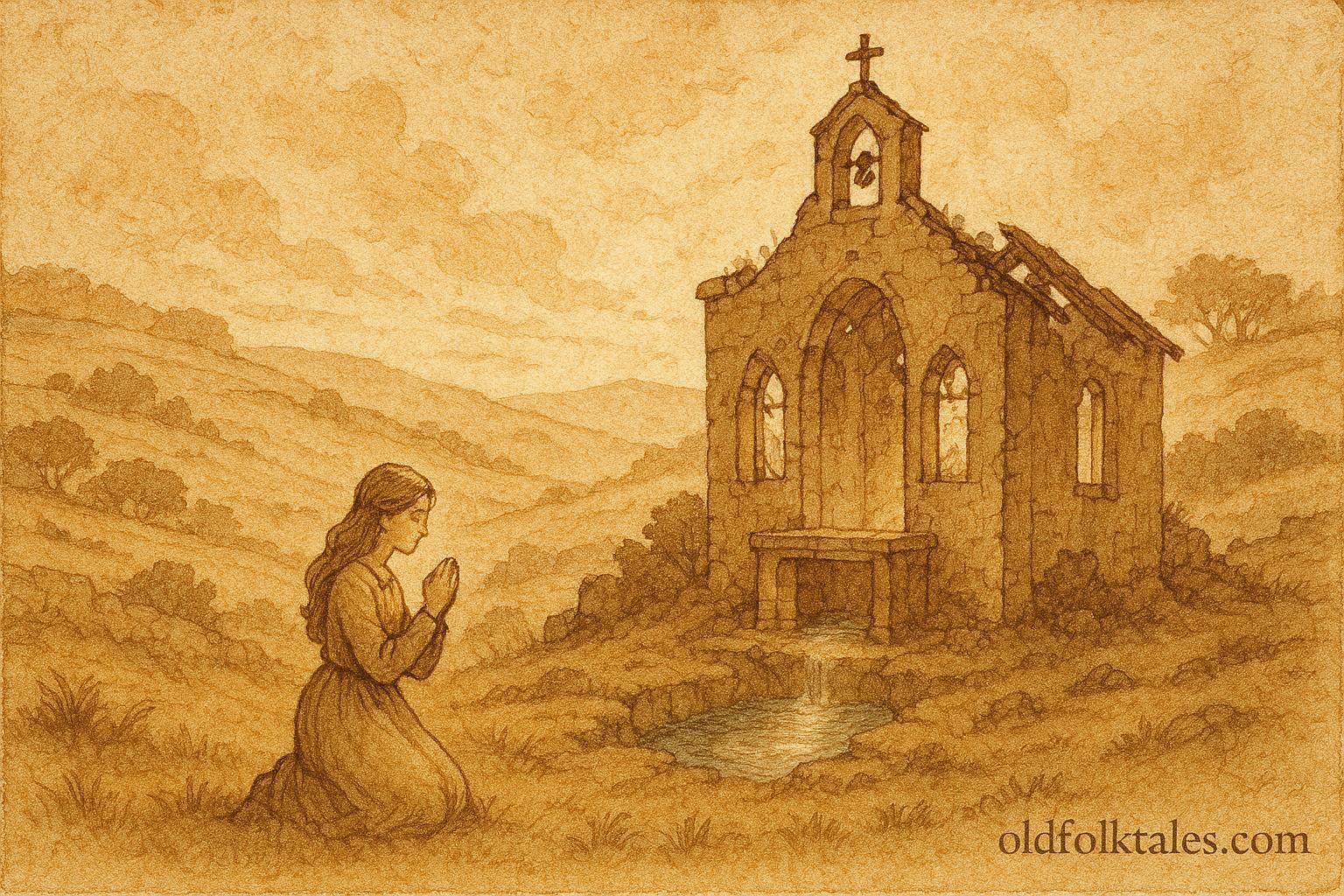
High among the gentle hills of rural Malta, where limestone terraces met the golden sunlight and the soft bleating of goats echoed across the valleys, there stood an old, abandoned chapel. Its walls, though weathered and crumbling, still carried faint frescoes depicting saints and angels, worn by centuries of wind and rain. The villagers called it Il-Kappella tal-Għajn, the Chapel of the Hidden Spring, for legend held that a miraculous spring lay somewhere beneath its foundations, a gift from the heavens with waters capable of healing body and soul.
The chapel had long been deserted. Overgrown ivy curled around the arches, and the chapel’s wooden doors sagged on rusted hinges. Few dared to venture there, for the waters of the spring were said to respond only to prayer, humility, and sincere hearts. Those who approached with greed or selfish intent discovered only dry stone and disappointment, as if the spring itself had disappeared to guard its sacred purpose.
Discover Polish, Russian, Ukrainian, and Belarusian folktales where magic and morality meet
Among the villagers lived a young woman named Mariella, gentle, faithful, and devoted to caring for the sick in her community. When her grandmother fell gravely ill one summer, Mariella remembered the stories of the hidden spring. Though wary of superstition, she resolved to visit the chapel and seek its healing waters, approaching not with greed, but with reverence and prayer.
As she climbed the dusty path winding among olive groves and fig trees, Mariella whispered prayers under her breath, asking for guidance rather than reward. The chapel appeared through the morning haze, its crumbling walls radiant in the soft sunlight. Mariella knelt at the threshold, crossing herself and bowing her head.
“Please, grant healing to my grandmother,” she murmured. “I ask only with faith and humility.”
The chapel responded not with sound, but with a gentle shift in the air, a cool breeze curling through the arches and carrying the scent of fresh water. As Mariella stepped inside, she noticed a faint glimmer beneath the altar, shimmering through cracks in the stone floor. Kneeling carefully, she cupped her hands and discovered water, pure and sparkling as morning dew.
With prayerful gratitude, Mariella filled a small clay vessel and carried it to her grandmother. Within days, the woman’s health returned, much to the astonishment and joy of the village. Word spread that Mariella had found the hidden spring, though none doubted that her sincerity and humility had been the key.
The story of the chapel and the spring became a lesson to all who lived nearby. Villagers who approached with devotion found blessing; those who sought to exploit the waters for profit or vanity discovered only dryness or concealment.
One such tale involved a wealthy merchant, Antonio, who had heard whispers of the miraculous spring. He arrived at the chapel with the intention of bottling the waters and selling them at great profit. Ignoring prayer and humility, he barged through the overgrown path, laughing at the superstition that had guided Mariella.
Antonio reached the altar, pushed aside the worn stones, and called for water to appear. But the spring remained hidden, dry as dust. The more he demanded, the further it seemed to retreat beneath the earth. Frustrated, he hammered at the stone and scolded the chapel aloud, but only the wind answered him, carrying whispers of his arrogance. Exhausted, he left, pale and humbled, realizing that the blessings of sacred spaces cannot be forced, they must be earned through faith and reverence.
Years passed, and the chapel remained a place of quiet sanctity. Travelers seeking relief from sickness, villagers in need of guidance, and those who approached with hearts full of prayer often discovered the spring. Those seeking selfish gain found only stone, echoing the spring’s silence as a reminder that divine gifts are reserved for the virtuous.
In time, Mariella became a respected healer, not because of magic alone, but because she had taught others the importance of patience, faith, and humility. She guided villagers to approach the chapel with reverence, instructing them to kneel, pray, and give thanks rather than grasp at the waters greedily. Even the children learned to walk softly among the chapel’s ruins, leaving stones undisturbed and speaking quietly, aware that sacred places require respect.
Legends say that on misty mornings, when the sun touches the chapel’s crumbling walls, one can still hear the faint murmur of water beneath the altar. Those who kneel and pray with honest hearts may glimpse a sparkling stream, and their ailments or troubles are said to lighten. But those who approach with selfish intent find nothing, as the spring remains hidden, its blessings protected by the very virtue it rewards.
By the time Mariella passed into old age, the chapel had become more than a site of miracles, it was a symbol of moral choice and faith. Travelers spoke of the spring’s subtle magic, and villagers continued to respect the old paths, teaching each generation that humility and devotion open doors that greed and impatience forever close.
Even today, the hills of rural Malta echo with stories of Il-Kappella tal-Għajn. Pilgrims and visitors recount that the chapel’s ruins, bathed in golden light, carry an invisible blessing, reminding all who approach that faith, humility, and reverence are treasures as enduring as any earthly wealth.
Moral Lesson
Il-Kappella tal-Għajn teaches that humility, prayer, and sincere faith bring blessing, while greed and disrespect lead to emptiness. Sacred gifts are revealed only to those who honor them with honest hearts and reverent intent.
Knowledge Check
1. What is Il-Kappella tal-Għajn?
An abandoned chapel in rural Malta, hiding a spring with miraculous healing powers.
2. Who is Mariella?
A humble young woman who approaches the chapel with prayer and sincerity, gaining access to its healing spring.
3. How does the spring respond to visitors?
It rewards the faithful and humble with healing waters and hides from those who act with greed or selfish intent.
4. What happened to Antonio, the greedy merchant?
He found the spring dry and hidden, learning that the blessings of sacred spaces cannot be forced.
5. Where does this folktale originate?
Rural Malta; collected in Folklore of the Maltese Islands by Ġorġ Mifsud Chircop (1996).
6. What is the central theme of the story?
Faith, humility, and respect for sacred spaces bring reward, while greed leads to disappointment.
Source: Ġorġ Mifsud Chircop, Folklore of the Maltese Islands, 1996
Cultural Origin: Rural Malta