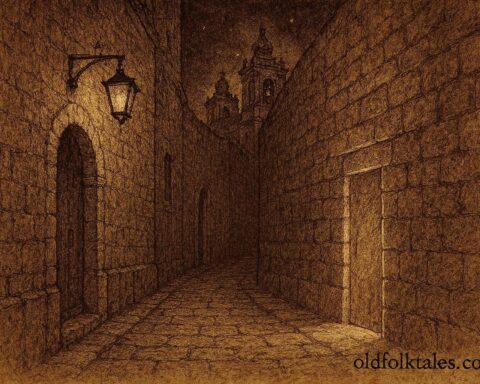
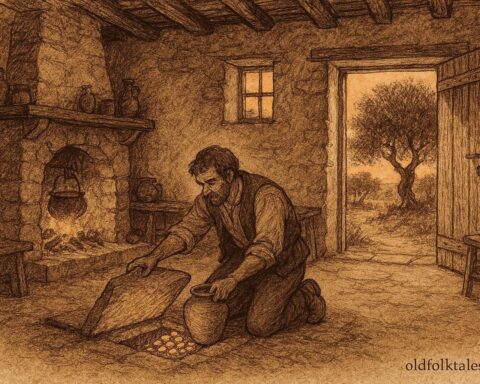
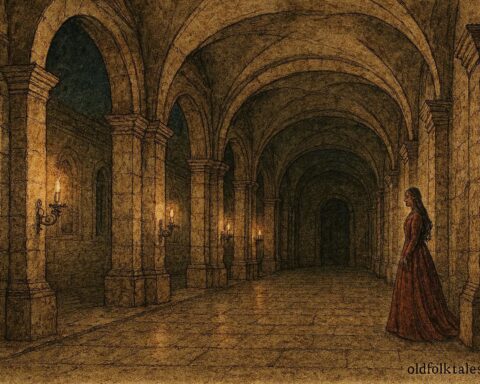
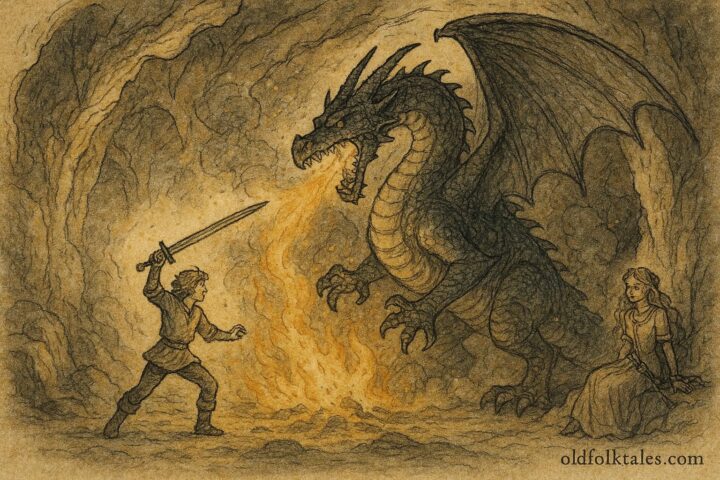
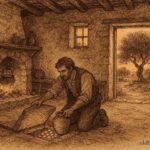
In the heart of Malta, far from the busy harbors and salt-washed coasts, lay a cluster of villages where stone houses stood close together and olive trees shaded narrow paths. In these villages, stories were not written but spoken, passed from grandmother to child during long evenings, when oil lamps flickered and the wind pressed softly against wooden shutters. Among the most whispered of these tales was that of Il-Prinċep tas-Sriep, the Serpent Prince.
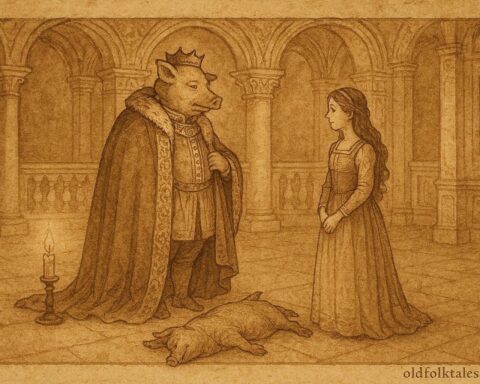
It was said that in earlier times, when magic still clung to the land like dew upon grass, a prince was born under an ill-starred sign. Whether through a curse spoken in jealousy, or fate woven long before his birth, no one could say for certain. What all agreed upon was this: by day, the prince lived in the form of a serpent, scaled and silent, bound to crawl upon the earth. By night, when darkness fell and the world slept, the curse loosened its grip, and he regained his human form.
Ashamed of his condition and fearful of judgment, the prince lived in seclusion, hidden away from the eyes of the court and the whispers of the people. His days passed in solitude, and his nights in longing, for companionship, for understanding, and for release from the spell that divided his existence.
Word of the strange prince spread quietly through the villages. Some spoke of him with fear, others with pity. Parents warned their children not to wander near certain fields or abandoned estates. Yet curiosity, as always, traveled alongside caution.
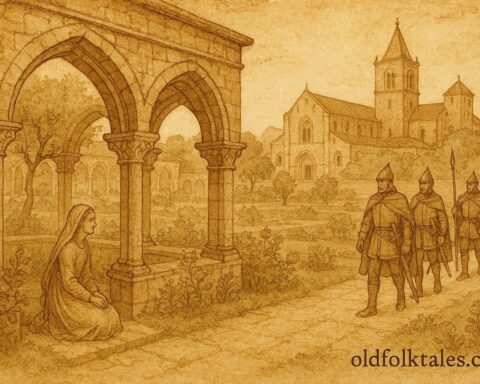
In one such village lived a young woman known for her steadiness of heart rather than beauty alone. She was neither wealthy nor powerful, but she possessed something rarer: patience, loyalty, and a deep sense of responsibility. When the proposal came that she should marry the Serpent Prince, many urged her to refuse. They spoke of danger, disgrace, and sorrow.
But the young woman listened not to fear, but to reason and compassion.
She agreed to the marriage, on one solemn condition: that she would not be forced to question what she could not yet understand. The prince, grateful beyond measure, accepted, and bound her with a vow of silence. She must never speak of his condition to anyone, nor seek to reveal it before the time was right. Only through trust and patience, he told her, could the curse be fully broken.
They were married quietly, without celebration or spectacle. By day, the woman lived beside a serpent, silent, watchful, and withdrawn. Though fear touched her at first, she did not turn away. She fed him, cared for him, and spoke to him kindly, even when he could not answer.
By night, the truth revealed itself.
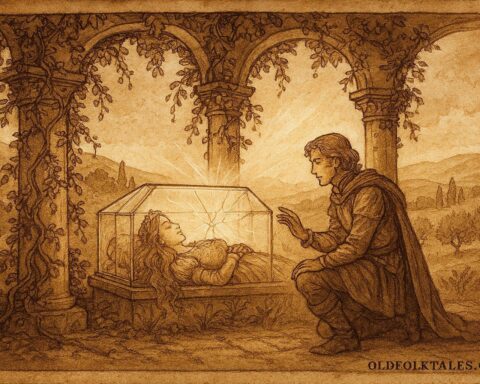
When darkness fell, the serpent shed his scaled form and stood before her as a man, gentle, intelligent, and deeply wounded by years of isolation. In these hours, they spoke freely, sharing thoughts and dreams. Love grew not from enchantment, but from shared endurance.
Yet the world beyond their home did not remain silent.
Neighbors noticed the strangeness of the marriage. Questions arose. Whispers followed the woman through the village lanes. Family members pressed her gently at first, then insistently, to explain the nature of her husband. Each time, she remained silent, honoring her promise.
But silence is heavy, and doubt is persistent.
One evening, worn down by worry and fear for her future, the woman revealed the secret, to a trusted voice, or so she believed. The words escaped her lips before she could draw them back. The vow was broken.
That night, the prince did not return in human form.
At dawn, the serpent was gone.
The house stood empty, the curse renewed and strengthened. Where the prince had vanished to, no one could say, some believed he was taken beyond reach, others that he was condemned to wander endlessly between forms, his chance at freedom lost.
The woman searched for him, calling his name through fields and valleys, but only silence answered. She understood then the weight of what had been lost, not merely a husband, but a fragile hope entrusted to her care.
From that day forward, the story of Il-Prinċep tas-Sriep was told as a warning and a lesson. Love alone, the elders said, is not enough. Trust must be guarded, promises honored, and patience upheld, especially when the unseen is involved.
And so the tale remains, carried through Maltese villages as a reminder that inner worth outweighs outward form, and that broken trust can undo even the strongest magic.
Moral Lesson
True love demands patience, loyalty, and silence when required. Breaking trust, even with good intentions, can destroy what devotion alone has built.
Knowledge Check
-
Who is Il-Prinċep tas-Sriep in Maltese folklore?
A cursed prince who lives as a serpent by day and a human by night. -
What condition must the young woman follow to break the curse?
She must remain patient and keep his secret in silence. -
Why does the curse ultimately fail to lift?
The woman reveals the secret too soon, breaking her vow. -
What does the serpent form symbolize?
Hidden identity and the difference between inner worth and outward appearance. -
What is the main lesson of the folktale?
That trust and promises are essential to love and transformation. -
Where does this story originate?
From central Maltese village-based oral storytelling traditions.
Source: Joseph Cassar Pullicino, Maltese oral narratives, 1964
Cultural Origin: Central Malta (village-based storytelling tradition)