In the ancient forests of Finland, where the birch trees whispered secrets to the wind and the lakes shimmered beneath endless skies, there was born a child unlike any other. His name was Kullervo, and from his first breath, misfortune shadowed his path. The bards of the Kalevala sang that he came into the world under a curse, doomed to sorrow by the hatred and bloodshed that surrounded his family even before his birth.
His father, Kalervo, was wronged by his brother Untamo, a man consumed by envy and cruelty. Out of greed for power and possession, Untamo attacked his brother’s household, destroyed his kin, and enslaved the few who survived. Among them was Kalervo’s wife, who bore a son in captivity, Kullervo, the child of sorrow. Even as an infant, the boy’s cries unsettled the household, and the servants whispered that ill fate followed him.
Untamo, fearing the power the child might one day possess, sought to destroy him. He tried to drown the baby, but the waters would not take him. He cast him into fire, yet the flames refused to burn. He hung him upon a tree, but the branches would not hold him. Each time, Kullervo lived, protected, it seemed, by the mysterious will of destiny. Untamo realized that no force of man could end the boy’s life and instead resolved to raise him as a slave, forcing him into servitude to break his spirit.
The Boy of Fury
As Kullervo grew, so too did his anger and defiance. His eyes burned with a wild blue flame, and his strength was that of three men. But though he was strong, his heart was twisted by pain. No kind word or gesture reached him, for Untamo’s people despised him and feared his cursed nature.
When Kullervo failed at every task, ploughing, tending cattle, carving wood, Untamo’s patience turned to rage. He sent the boy to his own household, hoping servitude might tame him. Yet wherever Kullervo went, misfortune followed. Crops failed, tools broke, and beasts fled in his presence.
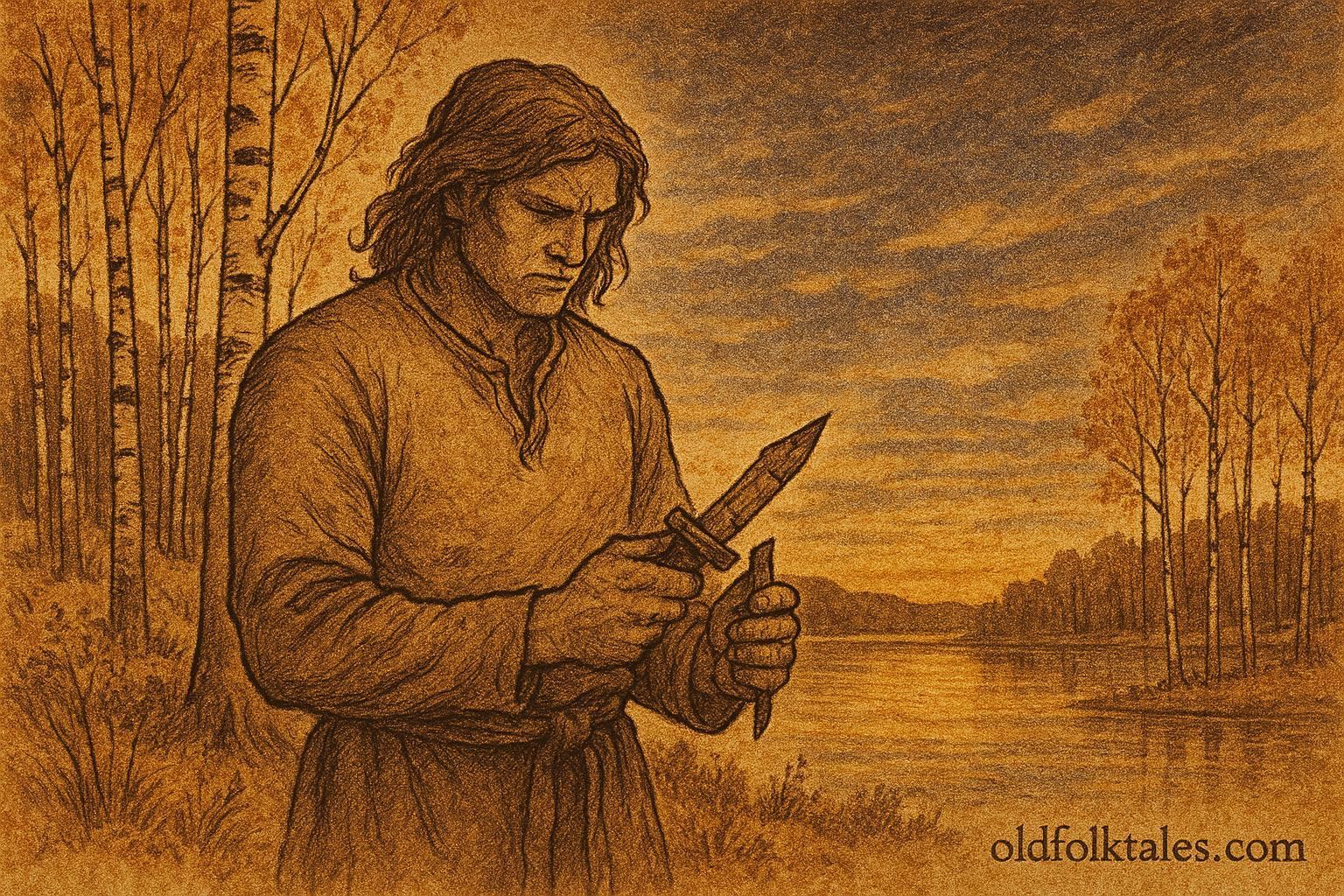
Desperate to rid himself of the boy, Untamo sold Kullervo as a slave to the smith Ilmarinen, the legendary craftsman who had forged the magical Sampo. There, Kullervo’s strength was put to hard labour, and he toiled day after day in bitterness. Ilmarinen’s wife, cruel and spiteful, despised him even more. One morning, when Kullervo went to the fields, she baked him a loaf of bread, stuffing inside it a stone instead of filling. When he cut into it with his father’s knife, the last heirloom of his lost family, the blade shattered.
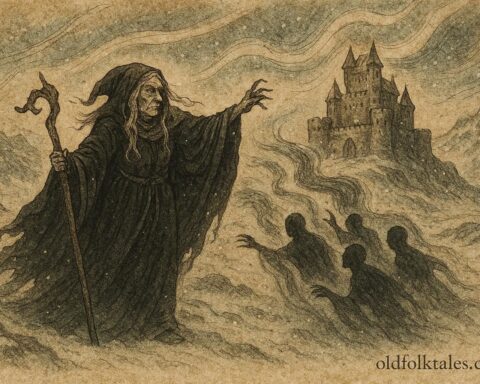
Fury surged through Kullervo like lightning. He cursed the smith’s wife with terrible words, calling upon wolves and bears to avenge him. The beasts obeyed. They tore through Ilmarinen’s household, leaving ruin and blood behind. Kullervo fled into the wilderness, clutching the broken knife, his only reminder of home and loss.
The Wanderer and the Unknowing Sin
In the dark woods, Kullervo became a wanderer. He hunted, sang, and wept in solitude, guided only by his thirst for revenge and a yearning for the family he had lost. At last, by chance, he found the remains of his father’s household, Kalervo, his mother, and sister, who had survived Untamo’s wrath and lived in hiding.
Joy filled his heart for the first time, and he swore to avenge their suffering. But his fate, ever cruel, was not yet done with him. One day, while travelling through the land, he met a maiden on the road. Drawn to her beauty and voice, he persuaded her to join him, not knowing she was his own sister, lost long ago. They shared a tragic night together, unaware of the truth until morning.
When the girl discovered who he was, horror overcame her. She threw herself into a river, choosing death over shame. Kullervo stood on the shore, stricken with despair. He tore his hair, cursed his destiny, and roamed the forests in madness.
Vengeance and the Final Doom
When Kullervo’s rage cooled into grief, he remembered his vow. He returned to Untamo’s lands, sword in hand, and destroyed his uncle’s household in a storm of vengeance. Not one of Untamo’s kin was spared. But the victory brought him no peace. Standing among the ruins, he felt only emptiness, a hollow ache where purpose once burned.
Haunted by guilt and sorrow, Kullervo wandered again into the wild. He came upon the place where he had first played as a child, and there he stopped. Speaking to his sword, he asked, “Would you drink the blood of guiltless Kullervo?” The blade, bound by the fatal will of fate, answered, “Gladly would I drink your blood, for it is guilt that feeds me.”
So Kullervo fell upon his own sword, ending the cycle of vengeance that had begun before his birth. The earth received him, and the forests of Finland whispered his name for generations to come, a warning, and a lament.
Moral Lesson
Kullervo’s tale is a story of vengeance, fate, and sorrow, a reflection on how bitterness and hatred destroy even the strong. It teaches that suffering, when met with revenge, breeds only more suffering. True peace lies not in retribution but in forgiveness and understanding.
Knowledge Check
- Who is Kullervo in Finnish mythology?
Kullervo is a tragic anti-hero from the Finnish Kalevala, cursed from birth and doomed to a life of misfortune, slavery, and vengeance. - What causes Kullervo’s downfall?
His curse and unrelenting desire for revenge lead him into tragedy, culminating in self-destruction. - What does the broken knife symbolize in the story of Kullervo?
The broken knife represents the loss of family, identity, and innocence, marking the moment Kullervo’s humanity begins to unravel. - What is the cultural origin of Kullervo’s tale?
The story originates from the Finnish Kalevala, based on ancient Karelian and Eastern Finnish oral traditions. - What moral lesson does Kullervo’s story teach?
It warns against letting anger and grief consume the soul, showing that vengeance brings no peace. - How does Kullervo’s story reflect Finnish mythology’s themes?
It embodies key Finnish mythic themes, fate, nature’s power, and the tragic cost of pride and sorrow.
Source: Adapted from the Kalevala (compiled by Elias Lönnrot, 19th century).
Cultural Origin: Finland (Karelian–Finnish oral tradition).