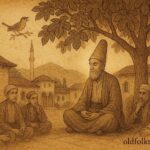
In a quiet riverside town of Bosnia, where the water shimmered like molten silver under the afternoon sun, lived a young woman named Nura. She was known throughout the town not only for her keen mind but for her gentle heart. Her laughter, soft as the ripple of the river, could brighten the darkest alleys, and her kindness reached even the poorest and loneliest.
Yet despite her many gifts, Nura carried a sorrow that no smile could disguise. A young man she had once loved had left, drawn by distant opportunities, and her heart ached with longing and uncertainty. Though she cared for others, her own spirit felt incomplete, burdened by the invisible weight of unfulfilled affection.
Step into the enchanted forests and mystical realms of the Slavic imagination
One day, while tending herbs along the riverbank, Nura overheard an old story whispered by villagers: a golden pomegranate hidden somewhere beyond the hills and forests could heal any heartbreak. Its flesh was said to glow like the rising sun, and a single seed could mend sorrow and awaken joy in even the heaviest heart.
The tale ignited a spark within her. She resolved to find this pomegranate, not to hoard its magic, but to understand love’s true meaning and heal the emptiness she carried. She packed a small satchel with bread, dried fruit, and a flask of water, and set out at dawn, guided by the songs of birds and the quiet murmur of the river that ran through her village.
The path led her into dense forests where sunlight filtered through the leaves in golden beams. Nura crossed shallow streams, carefully stepping on mossy stones, and climbed hills where wildflowers nodded in the breeze. Along the way, she encountered signs of trickery: footprints that doubled back, strange shadows that seemed to follow her, and the faint laughter of unseen creatures. She remembered the stories of the forests from her childhood: the Bosnian hills were home not only to animals but to spirits who tested travelers, offering lessons as much as challenges.
After several days, Nura reached a glade unlike any she had seen. In its center grew a magnificent pomegranate tree, its branches heavy with glowing golden fruits. But as she approached, a rustle in the underbrush made her pause. A fox spirit, clever and lithe, emerged, its fur glinting like copper in the dappled sunlight. Its eyes held mischief, intelligence, and a faint trace of magic that made the hair on her arms stand on end.
“Who dares enter my grove?” the fox asked, its voice soft yet sharp, like wind through reeds.
“I am Nura,” she replied, bowing slightly. “I seek the golden pomegranate to mend the sorrow in my heart.”
The fox circled her, sniffing the air. “Many come seeking this fruit,” it said. “But none understand that magic lies not in possession. Tell me, young one, why should I let you take it?”
Nura thought carefully. She could have begged or offered bribes, as some travelers might, but she remembered the stories of trickster spirits: only honesty and insight would succeed.
“Because,” she said, meeting the fox’s gaze, “I do not seek to possess it. I seek to understand it. I wish to learn the meaning of love, not to hold it in my hand.”
The fox’s ears twitched, and it stepped back, regarding her silently. Then it spoke again. “Very well. To earn the fruit, you must answer three questions. Fail, and you will wander this forest forever, lost to all hope.”
Nura nodded, steadying her heart. “I am ready.”
The fox’s first question was simple yet subtle:
“What is the weight of sorrow that cannot be shared?”
Nura paused. She thought of her own sadness, of the unspoken words and missed opportunities. “It is heavy enough to bend the strongest hearts,” she replied.
The fox’s second question came swiftly:
“What is the fire that warms without burning?”
Nura smiled faintly. She thought of kindness, of the gentle glow of love that could comfort and heal. “It is the heart that loves wisely,” she said.
Finally, the fox asked:
“What is the fruit that can heal hearts, yet cannot be taken by force?”
Nura looked at the golden pomegranates hanging in the branches. She understood, suddenly, that the answer was not in the fruit itself, but in comprehension. “It is understanding,” she said softly. “The wisdom to see what matters, and to give love freely, not selfishly.”
The fox nodded, its eyes glinting with approval. “You are clever, and your heart is true. You may take a seed, but remember, the fruit’s magic is not in owning it, but in knowing what it teaches.”
Nura carefully plucked a single golden seed. The moment she held it, she felt warmth spread through her chest, a quiet joy that was gentle yet unshakable. She thanked the fox, bowing deeply, and began the journey home.
On the path back, Nura realized that her sorrow had already begun to lift. The ache in her chest was replaced with understanding. Love, she saw, was not about clinging or possession, but about patience, empathy, and the courage to act with kindness. Even if the young man she once loved never returned, she carried within her a joy that could not be taken away.
When she reached her village, she shared her tale with the elders, who nodded in recognition. They understood the lessons the forest had imparted: wisdom and humility were the true treasures, and those who sought them with honesty would find healing beyond the measure of any magical fruit.
Nura planted the remaining seeds of the pomegranate near her home, letting them grow in the sun and rain. Over time, they bore small golden fruits that glimmered faintly in the morning light. Villagers learned to visit them not to steal, but to reflect, remembering that love’s power lay in understanding and compassion, not in possession or control.
From that day onward, Nura became a quiet guide for her friends and neighbors, helping them navigate heartbreak, offering wisdom from her journey, and reminding them that true magic lies in the lessons learned from challenge, humility, and courage. And the fox spirit? It vanished into the forests, leaving behind a faint copper scent on the wind and a subtle glimmer of laughter among the pomegranate trees, a reminder that wisdom often comes disguised as challenge and play.
Moral Lesson
This folktale teaches that true healing comes from understanding, humility, and wisdom, not from force or possession. Love and joy flourish when we act with insight and compassion, and the greatest magic lies in the lessons learned from patience and reflection.
Knowledge Check
-
Who guards the golden pomegranate?
A clever fox spirit, testing the seeker’s wisdom and intentions. -
Why does Nura seek the golden pomegranate?
To heal heartbreak and understand the true meaning of love. -
How does Nura succeed in her quest?
By answering the fox’s riddles honestly and demonstrating insight, humility, and understanding. -
What is the real “magic” of the pomegranate?
It symbolizes wisdom, inner understanding, and the capacity to give and receive love freely. -
What lesson does the story convey about love?
Love is best understood through patience, empathy, and humility, rather than control or possession. -
From which cultural tradition does this tale originate?
Bosnian rural storytelling, recorded by Dr. Seida Tulumović (1978).
Source: From Bosnian Folk Stories collected by Dr. Seida Tulumović (1978)
Cultural Origin: Bosnia, rural storytelling tradition