Pwyll, Prince of Dyfed, ruled a fertile land in the western reaches of Wales, where forests rolled into open plains and rivers wound patiently toward the sea. His court was prosperous, his people content, and his authority undisputed. Yet for all his success as a ruler, Pwyll was still a man shaped by pride, especially in matters of skill and dominance. Nowhere did this pride show more clearly than in the hunt, which he regarded as both sport and proof of princely worth.
One morning, as pale light filtered through drifting mist, Pwyll rode out with his companions to hunt in the wooded hills near Glyn Cuch. Horns sounded, hounds surged forward, and the forest echoed with the excitement of the chase. As the hunt progressed, Pwyll urged his horse ahead of the others, eager to be first to the quarry. The calls of his men faded, and soon he found himself alone beneath towering trees, where the air was still and heavy with moss and shadow.
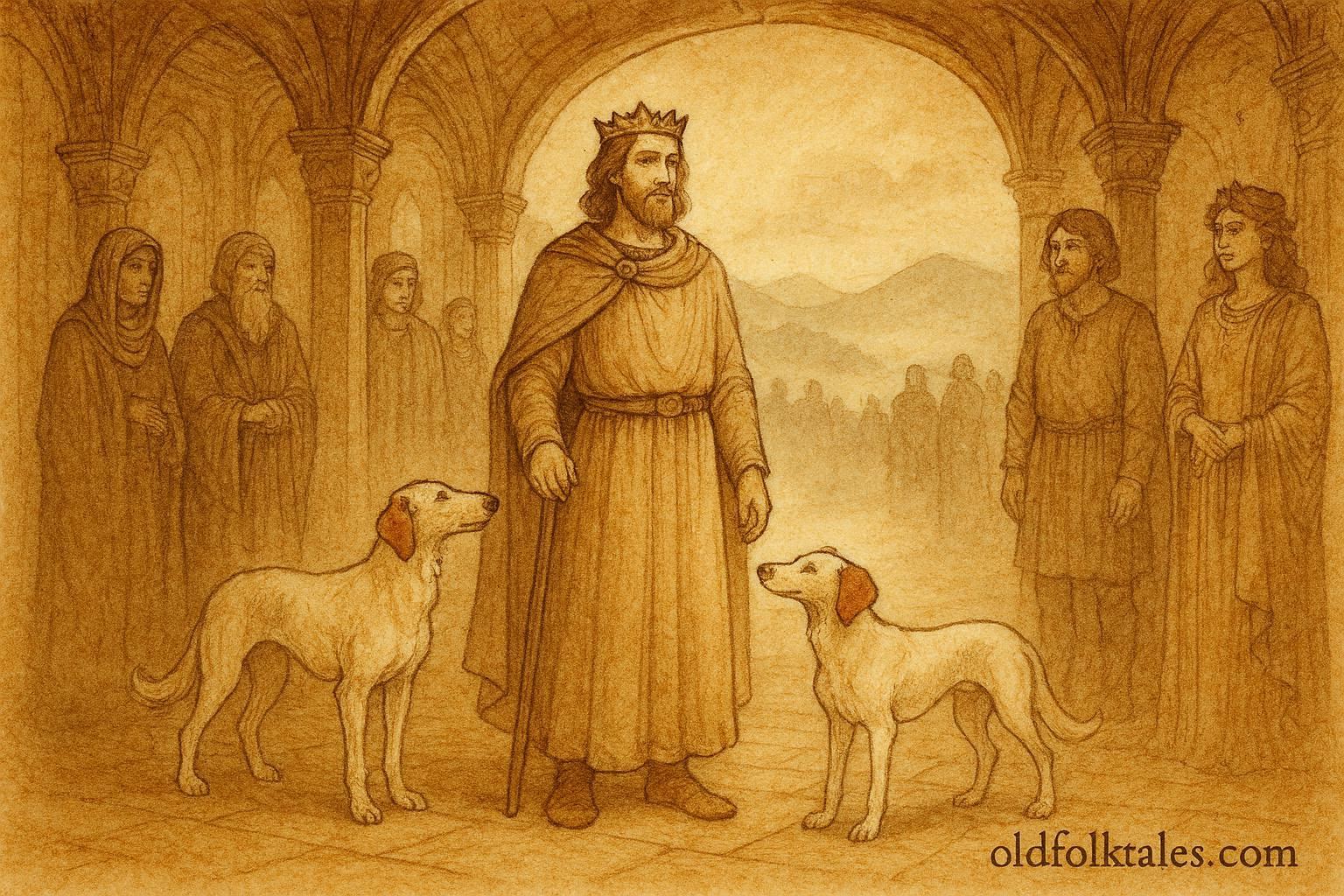
In a quiet clearing, Pwyll came upon a stag already brought down. Surrounding it was a pack of hounds unlike any he had seen before, pure white in body, with ears glowing red as if stained with blood. Though these signs marked them as creatures of the Otherworld, Pwyll failed to recognize their meaning. Acting on impulse and authority, he drove the strange hounds away and set his own upon the carcass.
Almost at once, a rider emerged from the forest. He was tall, calm, and carried himself with unmistakable dignity. His appearance alone commanded respect. The rider spoke plainly, identifying himself as Arawn, king of Annwn, the Otherworld realm that lies beyond mortal sight. He explained that the stag was his, and that Pwyll had wronged him grievously by claiming it.
Realizing his offense, Pwyll dismounted and acknowledged his fault without excuse. He did not deny what he had done, nor did he argue for his rank. Instead, he asked what recompense would restore honor between them. Arawn, though insulted, was a ruler who valued balance over vengeance. He proposed an unusual remedy: for a year and a day, Pwyll would exchange places with him. Pwyll would rule Annwn in Arawn’s form, while Arawn would govern Dyfed in Pwyll’s likeness. During that time, Pwyll must face and defeat Hafgan, Arawn’s rival, whose existence threatened the peace of the Otherworld.
At dawn, the exchange was completed. Pwyll awoke no longer in Dyfed but in Annwn, bearing Arawn’s appearance and authority. The Otherworld was rich and luminous, its fields untouched by decay, its halls filled with measured harmony. Though unfamiliar, it was governed by laws as binding as those of the mortal world. Pwyll quickly understood that he was no guest, he was king in truth, responsible for justice and order.
Day by day, Pwyll ruled Annwn carefully. He listened to disputes, judged with fairness, and resisted the urge to assert power through force. Though surrounded by abundance, he remained mindful of restraint. His greatest test lay in his daily life with Arawn’s queen. Though she welcomed him as her husband, Pwyll honored Arawn’s trust, maintaining perfect chastity throughout the year. His silence and self-control spoke more loudly than words, and the court took note of his integrity.
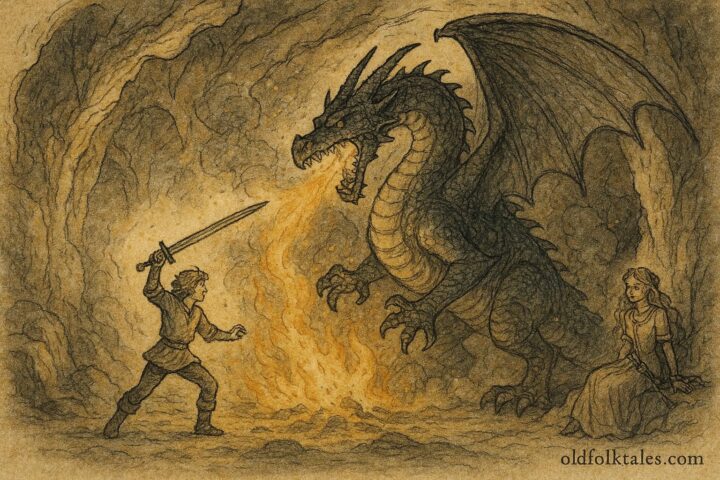
When the appointed time arrived, Pwyll met Hafgan in single combat, as arranged. The battle was fierce, but Pwyll remembered Arawn’s warning: Hafgan could only be defeated by a single blow. Gathering his strength, Pwyll struck once, wounding Hafgan mortally. As Hafgan fell, he begged Pwyll to strike again and end his suffering. Pwyll refused, understanding that a second blow would restore his enemy. By resisting both mercy and pride, he ensured lasting peace in Annwn.
At the end of the year and a day, Pwyll and Arawn returned to their true forms. Arawn praised Pwyll not only for defeating Hafgan, but for ruling Annwn with honor, fidelity, and humility. From that moment onward, a bond of friendship united Dyfed and the Otherworld. Pwyll returned home forever changed, known thereafter as Pwyll Pen Annwn, Head of the Otherworld, a ruler who had learned that true power lies in self-mastery.
Moral Lesson
The story of Pwyll teaches that leadership is proven not through dominance or pride, but through humility, restraint, and honor. True authority is earned by respecting others, keeping one’s word, and choosing integrity even when no one is watching.
Knowledge Check
1. Who is Pwyll in Welsh mythology?
Pwyll is the Prince of Dyfed, a mortal ruler who interacts with the Otherworld in The Mabinogion.
2. What mistake does Pwyll make at the beginning of the story?
He disrupts Arawn’s hunt by claiming a stag that belongs to the king of Annwn.
3. What is Annwn in Welsh folklore?
Annwn is the Otherworld, a supernatural realm ruled by Arawn.
4. Why does Pwyll exchange places with Arawn?
To restore honor after offending Arawn and to defeat Arawn’s rival, Hafgan.
5. What virtue defines Pwyll’s success in Annwn?
Self-restraint, especially his fidelity and fair governance.
6. What does the story symbolize about leadership?
That true leadership depends on integrity, humility, and respect for balance.
Source: The Mabinogion, translated by Lady Charlotte Guest (1849)
Cultural Origin: Wales (Brythonic Celtic tradition)