Long ago, in a fertile kingdom nestled between rolling hills and winding rivers of England, the people lived under a dark shadow. A terrible dragon had claimed the land, terrorizing villages and demanding daily sacrifices. Each dawn, a young maiden was chosen, trembling with fear, to face the fiery beast in hopes of sparing the rest of the kingdom. The dragon’s roar echoed through the valleys, a sound that chilled hearts and silenced even the bravest warriors.
The king, desperate and helpless, watched helplessly as his people were struck with despair. Every village had offered its daughters, and the kingdom’s sorrow grew heavier with each passing day. Then, on a morning lit by the pale gold of a rising sun, a figure appeared on the horizon. Mounted upon a strong steed, clad in shining armor that reflected the sunlight, came a noble knight named St. George. His eyes burned with determination, and his heart was filled with the courage to face evil where others faltered.
Word of the knight spread swiftly. The king, with hope flickering in his weary eyes, welcomed St. George and explained the plight of the kingdom. Without hesitation, the knight vowed to confront the dragon, not for glory, but to protect the innocent and restore peace to the land. Armed with his lance, shield, and unwavering resolve, St. George rode to the dragon’s lair, a cavernous den at the base of a blackened cliff, where scorched earth and the stench of smoke told of countless past victims.
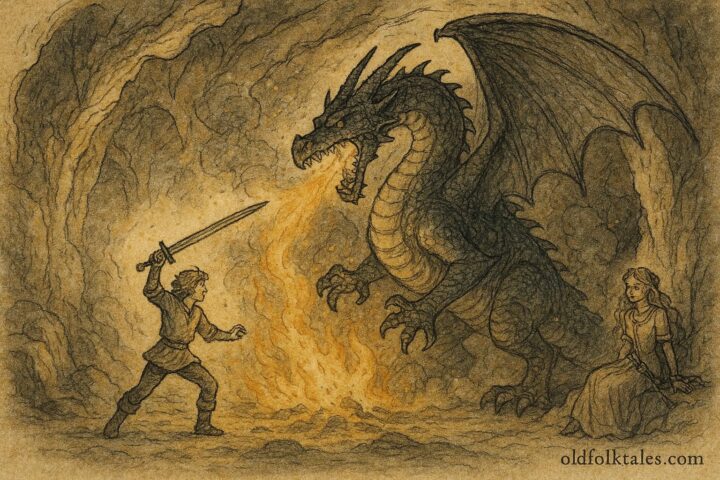
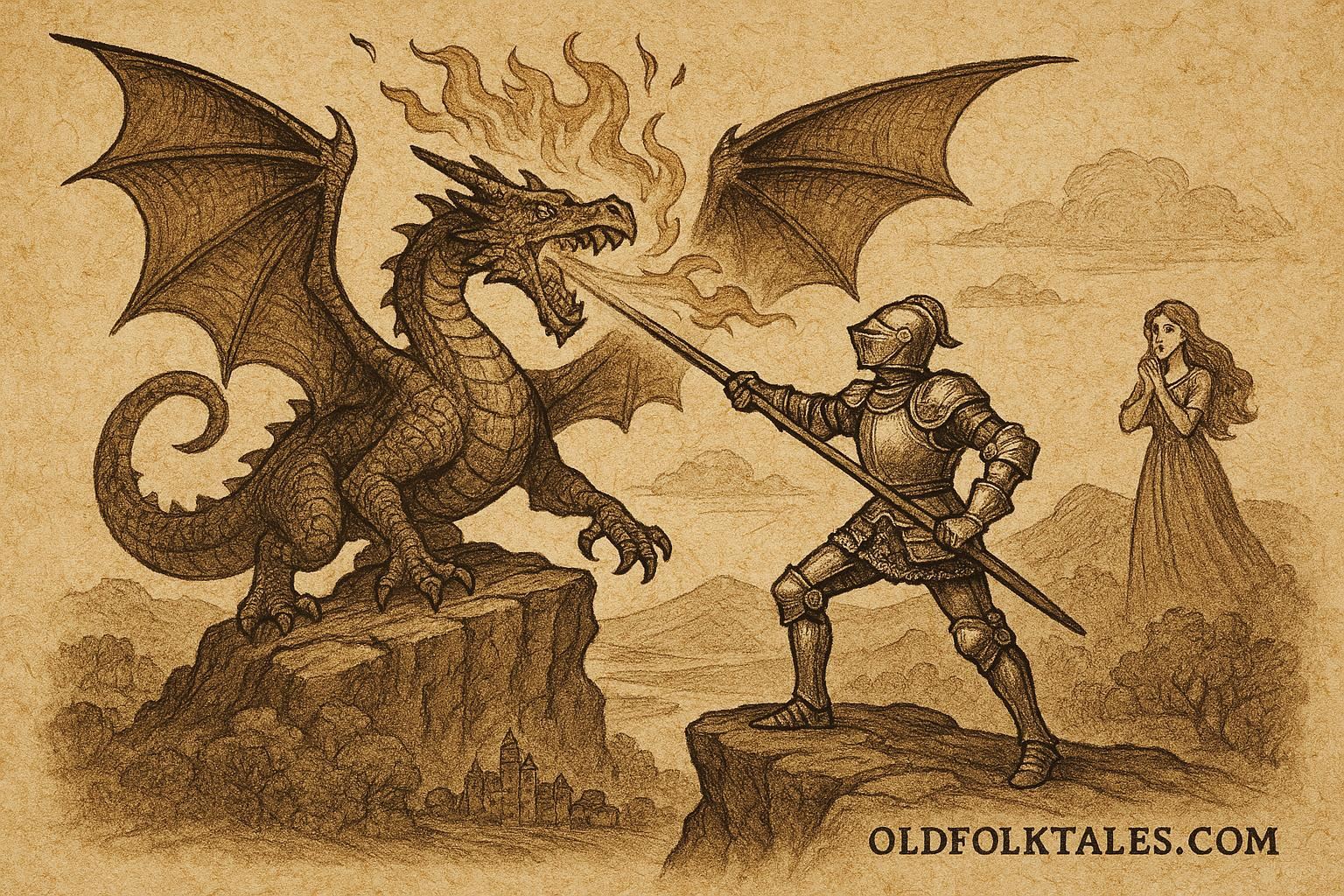
As he approached, the dragon emerged from the shadows, scales glittering like molten metal, eyes blazing with fury, and wings stretching wide to blot out the sun. Its roar thundered like a storm, shaking the very ground beneath St. George’s horse. Yet, the knight stood firm, gripping his lance, every muscle taut with readiness. The dragon lunged, breathing fire that turned grass to ash, but St. George’s swift reflexes and strategic skill allowed him to dodge and strike, each movement precise and deliberate.
The battle raged for hours, with the dragon lunging and the knight countering. Sparks flew as lance met scale, and the ground trembled with every clash. St. George, recalling his training and the courage instilled in him by his noble cause, spotted a weak point beneath the dragon’s armored neck. With a daring charge, he drove his lance deep, wounding the creature and forcing it to retreat. Seeing an opportunity, he pressed forward, displaying both skill and valor, until at last, the dragon fell, defeated and silenced.
With the dragon slain, St. George freed the maiden, who had watched with awe and trembling courage. Together, they returned to the kingdom, where the people rejoiced. Villagers poured into the streets, singing praises, lifting the princess upon their shoulders, and celebrating the knight who had saved them from the shadow of terror. The king, overwhelmed with gratitude, offered St. George a place of honor, yet the knight humbly declined, for his reward was the safety and joy of the kingdom. Peace returned to the land, and the story of St. George’s heroism spread across England, inspiring generations with the truth that courage and selflessness triumph over fear and evil.
Moral Lesson
True courage is not the absence of fear but the determination to act for the good of others. Selflessness, valor, and moral duty ensure that even the greatest threats can be overcome.
Knowledge Check
-
Who is the hero of the tale?
St. George, the noble knight of England.
-
What threat did the kingdom face?
A fearsome dragon demanding daily sacrifices of young maidens.
-
How did St. George defeat the dragon?
By skill, bravery, and targeting the weak point beneath its neck with his lance.
-
What does the dragon symbolize in the story?
Evil, fear, and challenges that threaten the innocent.
-
What moral lesson does the tale teach?
Courage, selflessness, and determination can overcome even the greatest dangers.
-
Where does this folktale originate?
England, from medieval legend.
Source: Adapted from English Fairy Tales by Joseph Jacobs (1890)
Cultural Origin: England (Medieval Folklore)