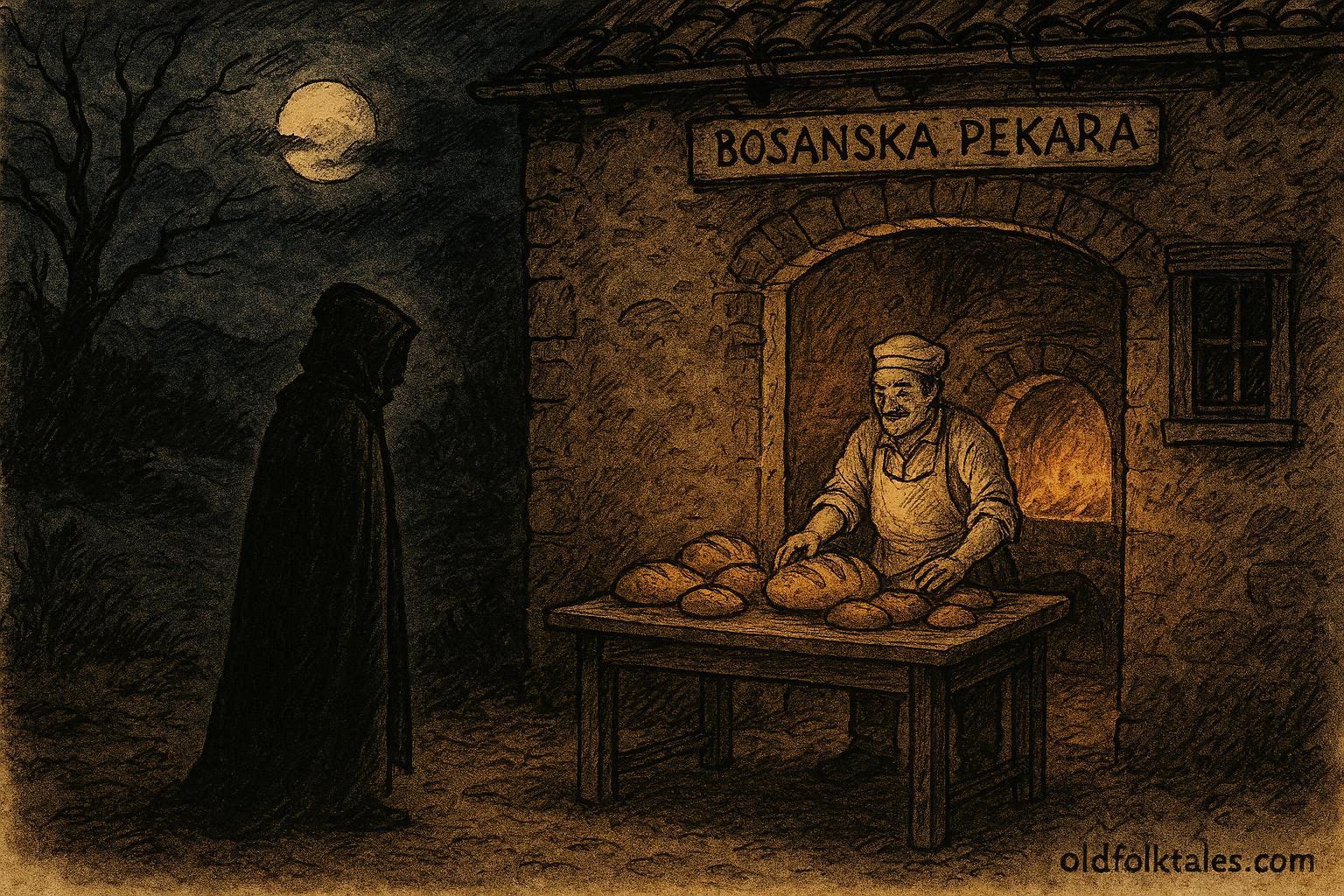
In the heart of a small Bosnian town, nestled among cobblestone streets and timbered houses, there lived a baker named Safet. He was neither rich nor renowned for cleverness, but for miles around, the scent of his bread carried comfort, warmth, and a quiet pride. Each morning, his shop filled with villagers eager for the simple joy of fresh loaves, and each night he labored alone, kneading dough under the amber glow of oil lamps.
One week in early spring, the town prepared for the festival of Saint George, a time of celebration, music, and the blessing of the harvest. The town square would overflow with dancers and merchants, and Safet’s bread would feed hundreds. Determined to provide enough, he stayed late into the night, kneading, shaping, and baking loaves in his small, wood-fired oven. The flames flickered and hissed, casting dancing shadows on the walls, and the aroma of baking bread warmed the chill of the spring evening.
Explore the warmth and wit of Mediterranean storytelling, where love and wisdom intertwine
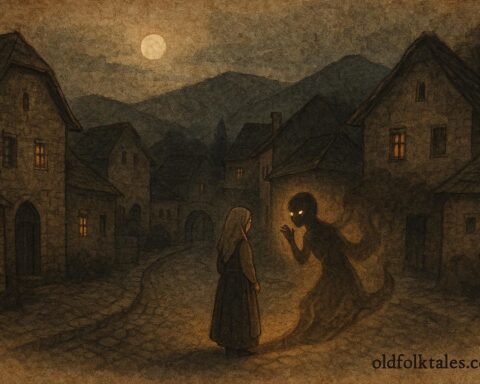
As the clock struck midnight, a sudden knock at the shop door startled him. Few ventured out at such an hour, and Safet, wiping flour from his hands, peered through the window. Outside stood a lone traveler, cloaked in deep gray, face hidden beneath a hood, shoulders hunched against the night’s cold.
“Good evening,” Safet called cautiously, opening the door. “The hour is late. Who seeks bread at this time?”
The traveler lifted a hand and smiled faintly. “A humble soul in need of warmth and a meal,” he said. His voice carried a quiet authority, gentle yet impossible to ignore. “I have traveled far and seek only a moment’s rest and sustenance.”
Safet’s heart stirred. He remembered the old tales his grandmother told: spirits sometimes walked among humans, testing hearts under the veil of night. They sought generosity, humility, and honesty. Some were harsh; some rewarded the pure. Without hesitation, he gestured the traveler inside.
“You are welcome,” Safet said. “Rest by the fire and warm your hands. Bread will be ready in a moment.”
The traveler stepped inside, and Safet set a table with fresh loaves, warm cheese, and a jug of sweetened milk. They ate in silence, the crackle of the fire and the scent of bread filling the tiny shop. After a time, the traveler spoke again.
“You show kindness freely, even when none watches,” he said. “Few in your town would have opened the door at this hour, and fewer still would offer food without expectation.”
Safet bowed slightly. “I do what I can for those in need. The festival will feed many, and bread is for sharing. If you are hungry, you are welcome to it. Nothing more is asked.”
The traveler’s hood fell back slightly, revealing a pale face that glimmered faintly in the firelight, as if lit by moonbeams. “You have shown the heart of true hospitality,” he said. “Tonight, your generosity will be remembered, and the blessings of this act will touch many.”
Before Safet could respond, the figure rose and extended a hand. A soft wind stirred the shop, carrying the fragrance of baked bread into the streets beyond. When Safet blinked, the traveler had vanished. Where he stood, a single silver coin rested on the table, glowing faintly. Safet picked it up, feeling warmth and calm radiate through his fingers.
The next morning, as villagers gathered for the festival, they were astonished. Loaves of bread, baked with extraordinary perfection, appeared in every home. Those who tasted them felt a quiet joy, a sense of community and well-being that lingered through the day. Safet’s shop overflowed not with customers seeking bread for themselves, but with neighbors sharing their loaves with friends, families, and strangers alike.
Word of the midnight guest spread slowly through the town, carried in whispers from one neighbor to another. No one saw the traveler, yet all spoke of the warmth that seemed to have touched the village, of the sense of goodwill and abundance that spread quietly among the people. Safet, ever humble, never claimed any credit. He kept the silver coin as a reminder of the night, not for wealth, but for the lesson it carried: generosity given without expectation multiplies in ways unseen.
Years passed, and Safet continued to bake bread late into the night for the festival each year. Sometimes, when the moon rose high, he imagined a shadow at the door, a figure cloaked in gray seeking kindness. And each year, the village prospered in small ways: the harvest was plentiful, disputes settled more easily, and neighbors looked after one another, echoing the generosity that had begun with a single midnight loaf.
Thus, in a quiet Bosnian town, through the simple act of offering warmth and sustenance to a stranger, the bonds of community were strengthened, the spirit of hospitality endured, and the festival of Saint George became not just a celebration of crops and music, but a reminder of the power of kindness given freely, without expectation or reward.
Moral Lesson
Generosity given without expectation brings unseen rewards, not only to the giver but to the wider community. Hospitality and kindness, even in small acts, nurture trust, unity, and prosperity.
Knowledge Check
-
Who is Safet in the folktale?
Safet is a humble baker in a Bosnian town whose kindness to a mysterious midnight traveler brings blessings to his community. -
What lesson does the midnight guest test?
The guest tests Safet’s generosity, humility, and hospitality, rewarding selflessness over personal gain. -
What happens after Safet helps the traveler?
Bread magically multiplies, village prosperity increases, and the spirit of kindness spreads among the townspeople. -
What are the main themes of the story?
Hospitality, kindness without expectation, reward for generosity, and the power of community celebration. -
Why is the festival important in the story?
The festival of Saint George serves as the setting for sharing bread and amplifies the impact of Safet’s generosity across the village. -
What is the cultural origin of this tale?
This story comes from Bosnian village folk tradition, recorded in Tales of Hearth and Home by Mirjana Đurić (1977).
Source: Adapted from Tales of Hearth and Home, collected by Mirjana Đurić (1977)
Cultural Origin: Bosnia (village folk tradition)