In the highlands and valleys of Albania, where rugged mountains stand as silent witnesses to generations of lives lived with dignity and struggle, there exists a word more powerful than wealth, stronger than fear, and deeper than life itself: besa.
Besa is not merely a promise. It is a sacred word, an oath that binds the soul. Once given, it must be kept, no matter the cost.
This is the story of a brother who honored his besa… even beyond death.
In a quiet village nestled among the hills, there lived a family blessed with many sons and one beloved daughter. The daughter was the heart of the household, gentle, kind, and dearly loved by her brothers, who protected her with unwavering devotion.
As the years passed, suitors came from distant places, seeking her hand in marriage. Yet her brothers hesitated. To marry her away meant sending her far from home, beyond the reach of their care.
But among the brothers, one stood firm. He was the youngest, yet also the most determined.
“Let her marry where she is loved,” he said. “And I give my besa, no matter the distance, I will bring her home whenever she wishes to return.”
His words carried weight. The family trusted him, and so the sister was married and sent to a distant land, far from the hills of her childhood.
Time passed. Seasons changed. The sister built a life in her new home, yet her heart often longed for her family.
Back in the village, sorrow struck. One by one, misfortune fell upon the household, and the brother who had given his besa fell gravely ill.
Even as his strength faded, his promise remained alive within him.
“I have given my word,” he whispered. “And my word must be kept.”
But fate was unyielding.
The brother died.
Years later, the sister longed deeply to return home, to see her family, to walk once more among the hills she had known as a child. Yet there was no one to come for her. The one who had promised, the one who had sworn his besa, was gone.
Still, she hoped.
And one evening, as twilight settled and the air grew still, there came a knock at her door.
She opened it, and there he stood.
Her brother.
Pale, silent, yet unmistakably him.
Joy filled her heart, though something in his presence felt strange. His voice was quiet, his movements measured, as though he carried a weight unseen.
“I have come,” he said simply, “to take you home.”
She did not question him. She trusted him, as she always had.
They set out together under the fading light.
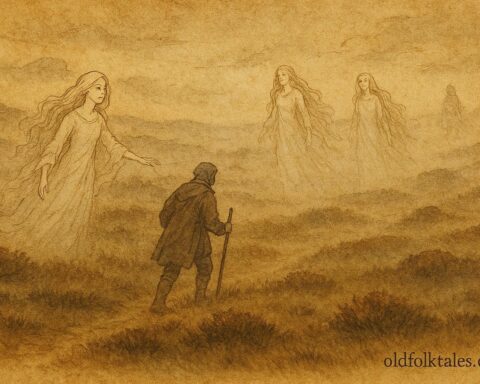
Their journey was long, stretching across valleys and winding paths. As they traveled, the world seemed hushed around them. The wind whispered softly, and the stars above watched in silence.
The sister spoke of her life, her memories, her longing. But her brother spoke little. When he did, his words were gentle, yet distant, as though carried from another place.
At times, she noticed the coldness of his hand, the stillness of his step, but she pushed these thoughts aside. Her brother had come for her. That was all that mattered.
As night deepened, they passed through lonely places, fields where no one walked, paths where shadows lingered.
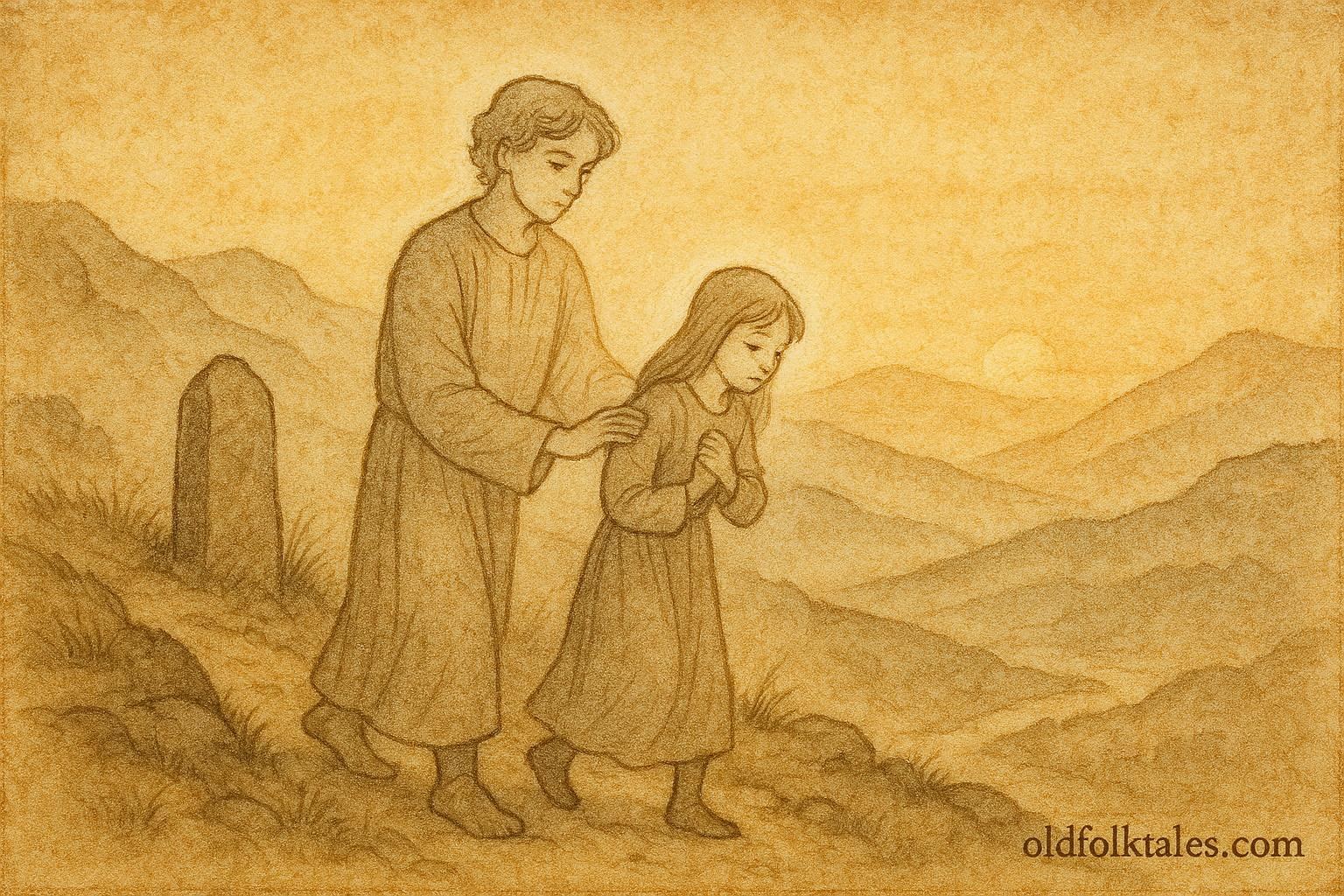
At one moment, they stopped near a resting place, where the earth seemed newly turned. The brother paused, his gaze fixed upon the ground.
“Let us not linger here,” he said softly.
A chill passed through the sister, but she followed without question.
At last, as dawn began to break and the first light touched the hills, they reached their home village.
The sister’s heart swelled with emotion. The familiar sights, the air, the distant sounds, it was all as she remembered.
But as they approached the house, her brother stopped.
“I have brought you home,” he said.
She turned to him, smiling through tears. “Come inside,” she said. “Let us see our family together.”
But he shook his head.
“My place is not among the living,” he replied quietly.
In that moment, understanding dawned.
The truth she had not dared to see became clear. Her brother, who had promised to return for her, had done so, not in life, but in death.
He had risen from the grave to fulfill his besa.
Tears filled her eyes, but they were not only of sorrow. They were of awe, of love, of the realization that his promise had been stronger than death itself.
“You kept your word,” she whispered.
He nodded once, his form already beginning to fade with the morning light.
“A besa is eternal,” he said.
And then he was gone.
The sister entered her home, where her family greeted her with astonishment and joy. When she told them what had happened, silence filled the room.
They understood.
In Albania, a promise is not taken lightly. A besa is sacred, and this story would be told for generations as proof of its power.
From that day on, the tale of the dead brother’s besa spread far and wide. It became a reminder that honor is not bound by life alone, that loyalty can transcend even death, and that a true promise carries the weight of eternity.
Moral Lesson
This Albanian folktale teaches that honor and loyalty are sacred values that must be upheld at all costs. A true promise, besa, transcends even death, proving that integrity and devotion are eternal.
Knowledge Check
- What is “besa” in Albanian culture?
Besa is a sacred promise or oath that must be honored under all circumstances, even beyond death. - Who fulfills the promise in the story?
The brother fulfills his besa by returning from the grave to escort his sister home. - Why does the sister trust the brother without question?
Because of their deep bond and the cultural importance of trust and family loyalty. - What is the main theme of the folktale?
Honor, loyalty, and the sacred nature of keeping one’s word. - What makes the story supernatural?
The brother rises from the dead to fulfill his promise, defying natural laws. - What lesson does the story teach about promises?
That true promises carry moral weight and must be kept, regardless of circumstances.
Source: Albanian Folklore: Tales and Legends, 1975.
Cultural Origin: Albanian folklore (nationwide)