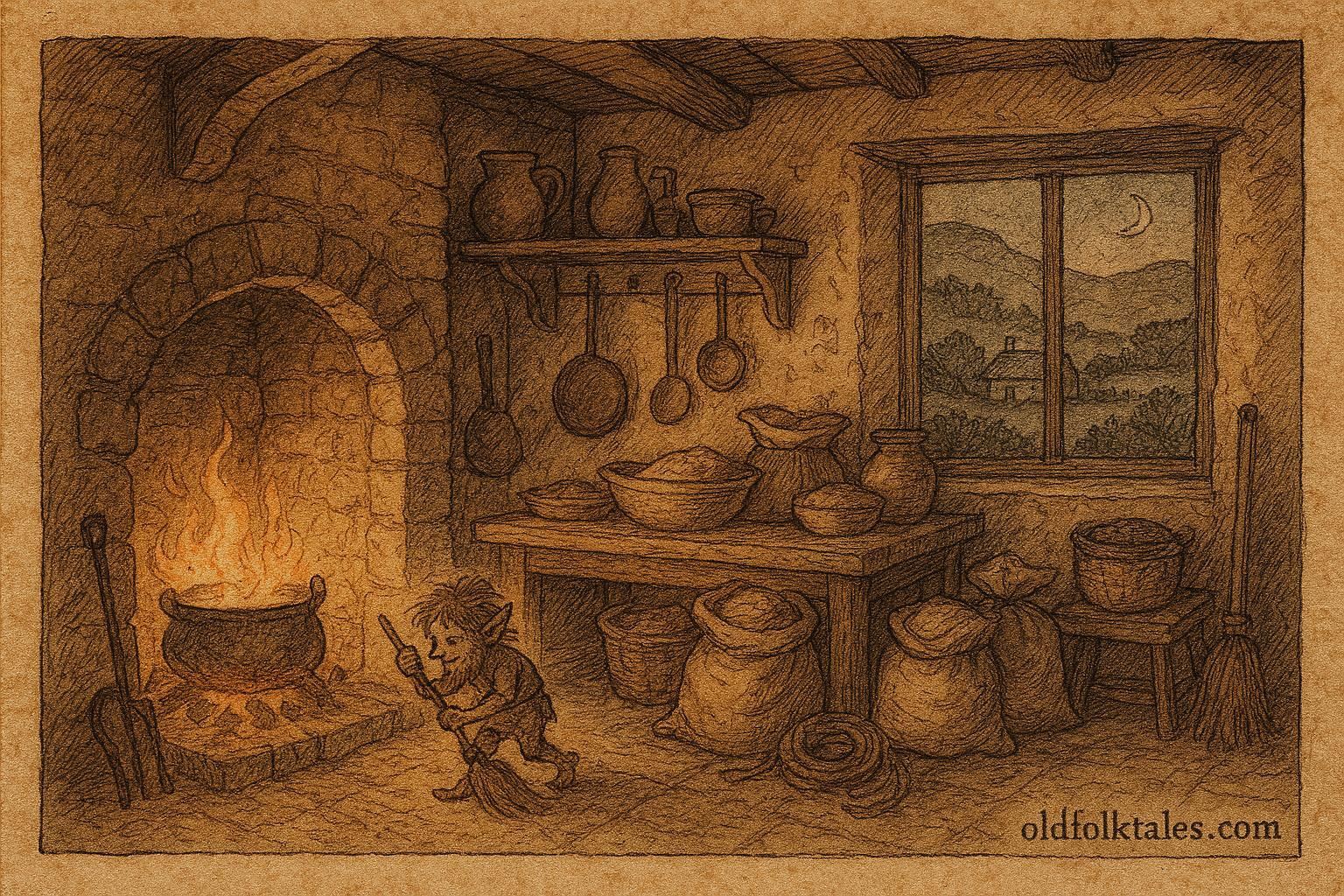
In the rolling lowlands of Scotland, where mist clung to the hills like a silken veil and the rivers whispered secrets as they wound through green pastures, there stood a small, humble farm at Blednoch. The farmhouse was modest, built of grey stone with a thatched roof, surrounded by fields of barley and oats, and bordered by thick hedgerows where the wind carried the scent of wildflowers. Life there was simple, honest, and often hard, as the family worked from dawn until dusk, tending to the crops, the animals, and the chores that sustained their home.
Though the family labored faithfully, they had little wealth. Each day brought a struggle, each season a challenge. Yet one night, as the household slept, a strange rustling echoed through the kitchen. No one was awake to see it, yet by morning, the chores that had seemed impossible, mending fences, cleaning the barn, even stacking firewood, were neatly completed. At first, the family suspected neighbors or wandering workers, but none confessed to the quiet, nocturnal labors.
Experience legends where mountains breathe magic and heroes face moral choices that shape destiny
Soon, they realized that a mysterious helper had taken residence in their home. They called him simply the Brownie of Blednoch, a small, elusive figure, neither fully seen nor understood, who worked in secret while the family slept. The Brownie never sought reward, nor did he speak; his presence was felt only through the order, neatness, and unexpected ease he brought to the household.
A Household Transformed
With the Brownie’s help, the farm flourished. The barley grew taller and healthier than in any other field nearby, the cows produced more milk, and the house itself seemed to grow brighter and warmer. The family prospered quietly, attributing their good fortune to diligence, luck, or the blessing of the land. They were careful not to disturb the unseen worker, leaving small tokens of respect, a bit of bread, a bowl of cream, at the edge of the kitchen floor, hoping to show gratitude without intruding upon his mysterious ways.
Years passed, and the family grew bolder in their desire to repay their helper. The mother suggested placing a silver coin in the bowl, while the father, curious and proud, thought perhaps the Brownie might enjoy a warm garment or a special cloak. The children whispered excitedly about meeting the little man, imagining a cheerful, diminutive figure with sparkling eyes and nimble fingers.
Yet the Brownie was not like other folk. He had appeared not for reward, nor for recognition, but for the joy of helping those who worked honestly and humbly. When the silver coin was left in the kitchen, he touched it briefly, then vanished before anyone could see him. The cloak, intended as a gift, was found in tatters the next morning, shredded as if by invisible claws.
The Disappearance
The family grew uneasy. The farm, once thriving under the Brownie’s unseen labor, began to slow. Tasks that had once been effortless became burdensome again. The cattle gave less milk, the barn needed repairs, and the fields required the full strength of the family to tend. One evening, the father, frustrated and longing to understand the mystery, declared that they must find the Brownie and reward him properly so he would stay. They searched the house and the surrounding barns, calling softly for the little man, offering gifts and coins.
But the Brownie did not return. He had vanished from Blednoch forever, leaving the household to rely solely on their own labor. Though they mourned the loss, the family learned the lesson quietly, understanding that some help in the world comes with boundaries that mortals must respect. The Brownie’s aid had been a gift, not a service to be bought or commanded. His disappearance reminded them that gratitude, humility, and patience are essential virtues, and that pressing for reward where none is owed can break the delicate balance of blessing and labor.
The Lessons of the Brownie
Years later, villagers would tell the story of the Brownie of Blednoch to children and travelers alike. They spoke of a mysterious figure who worked in the night, unseen but powerful, whose presence transformed a humble household. They spoke, too, of the family’s mistake, how ambition and curiosity, however well-intentioned, disturbed the natural order of magic and respect.
The moral of the story was clear: blessings cannot be commanded, and kindness cannot be forced. The Brownie had appeared because the family labored faithfully, because they had hearts attuned to diligence and virtue. When that balance was disrupted by the desire to control or reward, the aid was withdrawn. In that quiet Scottish farm, amid the rolling hills and misty streams, the tale of the Brownie became a lesson in humility, patience, and respect for forces that dwell just beyond mortal sight.
Even after the Brownie left, the family never forgot him. They continued to work hard, mindful that prosperity comes from honest labor and that unseen help, when it appears, must be received with gratitude and reverence. The tale endured in the Lowlands, whispered from one generation to the next, a reminder that the world holds mysteries both generous and exacting, and that the heart of human virtue lies in understanding them.
Moral Lesson
The story of the Brownie of Blednoch teaches that help, even miraculous, comes with a price: humility, respect, and gratitude. Blessings cannot be demanded, and attempts to control or reward supernatural forces may cause them to vanish. True prosperity arises from honest work, moral integrity, and careful recognition of limits.
Knowledge Check
-
Who is the Brownie of Blednoch?
A mysterious, unseen household helper who performs chores and brings prosperity to a humble Scottish farm. -
Why does the Brownie leave the household?
Because the family tries to reward or control him, violating the boundaries of his aid. -
What lessons does the Brownie teach?
Humility, gratitude, patience, and respect for unseen forces. -
How does the household prosper under the Brownie’s help?
Crops grow taller, animals are healthier, and chores are completed without visible effort. -
What theme is central to the story?
Respect for supernatural boundaries and the value of diligent, humble labor. -
What is the cultural origin of the tale?
Lowland Scotland, collected from oral accounts in Scottish fairy and folk tales.
Source: George Douglas, Scottish Fairy and Folk Tales (Collected from oral accounts, 1901)
Cultural Origin: Lowland Scotland