In the northeast of England, near the River Wear in Sunderland, stands the ruins of Hylton Castle, a gray stone fortress long associated with one of England’s most poignant ghost legends: the Cauld Lad of Hylton.
Unlike many spirits said to terrify or torment without reason, the Cauld Lad’s haunting carried a message. His presence was not one of malice, but of sorrow. His story speaks of cruelty, injustice, and ultimately, redemption through kindness.
Discover the timeless charm of French, Dutch, and Belgian stories filled with cleverness and heart
Rooted in 17th-century oral tradition and later documented in 19th-century folklore collections, this tale remains one of England’s most emotionally resonant household hauntings.
The Boy in the Stables
The legend tells of a young stable boy employed at Hylton Castle. Known simply as “the lad,” he was responsible for tending horses, cleaning stalls, and enduring the harsh commands of his master.
Accounts differ on the details, but many versions claim the boy was mistreated, beaten for minor mistakes, forced to work in freezing weather, and denied warmth or adequate food. His life was one of cold labor and silent suffering.
One bitter winter night, after another punishment, the boy disappeared.
Some say he died from exposure. Others whisper darker suspicions, that his master struck him in anger and concealed the body. Whatever the truth, the stable boy never left the castle grounds.
Soon after, strange events began.
The Cold Presence
Servants at Hylton Castle reported hearing footsteps at night, soft but persistent. Doors creaked open. Ashes scattered from the hearth. Kitchen utensils moved from their places.
More curious still, household tasks left undone in the evening were mysteriously completed by morning. Floors were swept. Fires were laid. Buckets were filled.
Yet along with these helpful acts came disturbances: milk turned sour, objects toppled without cause, and bedsheets were tugged away in the coldest hours before dawn.
Servants began to speak of “the Cauld Lad”, “cauld” meaning cold in the northern dialect.
They said he moved through the corridors shivering, restless, unable to find warmth.
A Haunting Without Malice
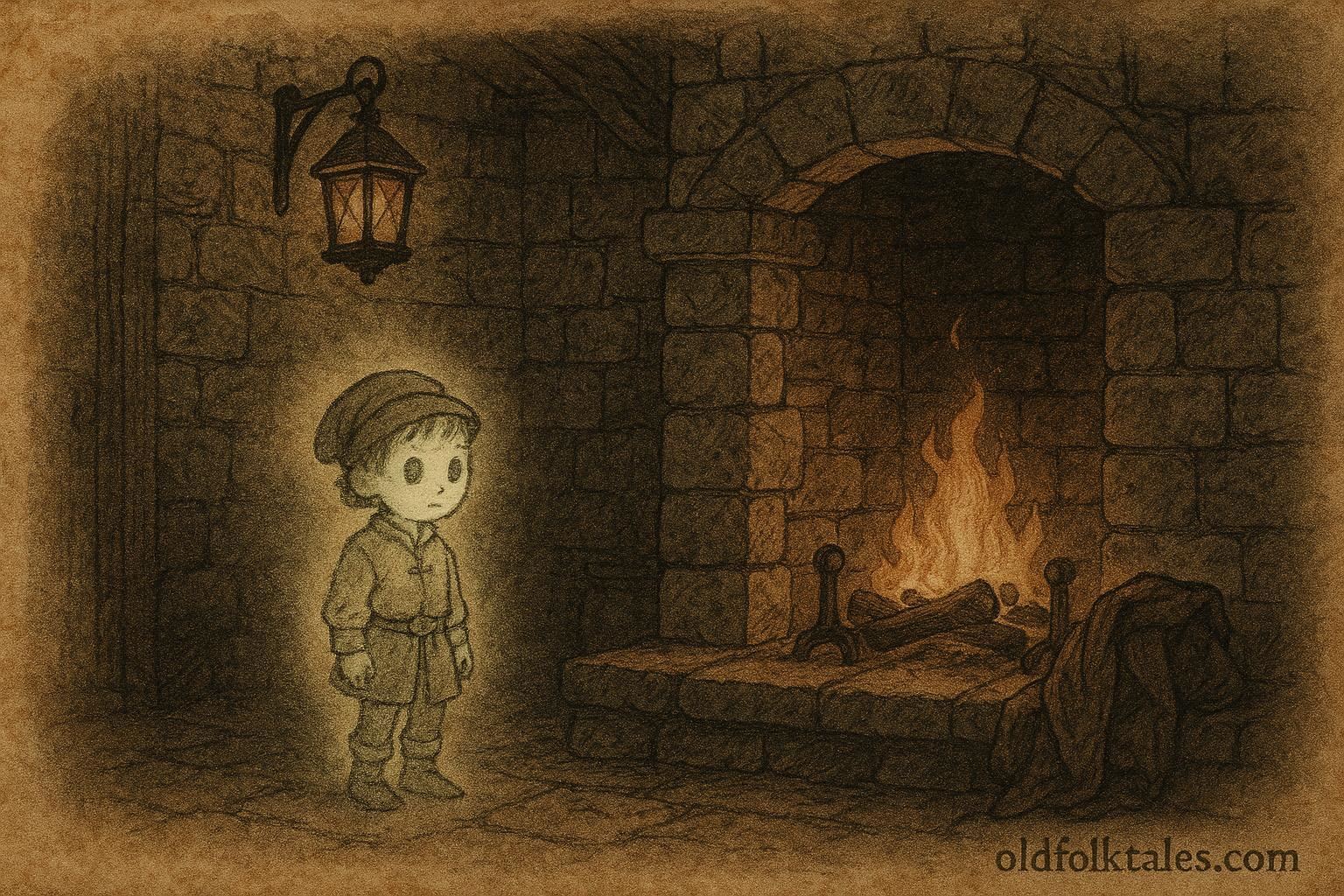
Unlike vengeful spirits that seek destruction, the Cauld Lad seemed bound to the routines of the household. He worked as he once had in life, sweeping kitchens, tending hearths, performing chores.
Yet his presence carried a chill. Witnesses described an icy draft accompanying his movement. Some claimed to glimpse a small, pale figure near the stables or hearth.
The castle’s residents were unsettled. Priests were consulted. Prayers were offered. But the disturbances continued.
The haunting did not escalate, it endured.
It was as if something remained unfinished.
The Turning Point
One elderly servant, wiser than the rest, proposed a simple solution.
“If the lad was cold in life,” she said, “perhaps he is cold still.”
Rather than curse the spirit or drive it away, she suggested compassion.
One night, the household left a warm cloak, a cap, and bread beside the kitchen hearth. No ceremony. No dramatic ritual. Just quiet acknowledgment.
By morning, the garments were gone.
From that night forward, the disturbances ceased.
The footsteps faded. The cold drafts lifted. The Cauld Lad of Hylton was seen no more.
Villagers believed his soul had finally found peace.
Justice Through Kindness
The heart of this tale is not fear, it is moral restoration.
The stable boy had been denied warmth, dignity, and compassion in life. Only when those things were symbolically restored did his spirit rest.
The haunting served as both reminder and correction. It forced the household to confront its past cruelty. The resolution did not come through force, but through empathy.
This theme appears frequently in British ghost lore: restless spirits often represent unresolved injustice. Peace arrives not through confrontation, but through acknowledgment.
The Ballad of the Cauld Lad
The legend became so well known that it inspired a traditional ballad in northern England. The verses describe the “cauld lad” wandering through Hylton Hall, performing nightly labors.
The song reinforces the dual nature of the spirit, both helpful and unsettling.
In this way, the Cauld Lad resembles household spirits found across European folklore: brownies in Scotland, kobolds in Germany, domovoi in Slavic lands. Yet unlike those beings, he was once human.
His haunting was personal.
Cultural Context
Seventeenth-century England was a time of social hierarchy and rigid class divisions. Servants and laborers often endured harsh treatment with little recourse.
The Cauld Lad story may have functioned as quiet social commentary. It suggests that cruelty toward the powerless does not vanish without consequence. Even after death, injustice lingers.
But it also offers hope: wrongs can be softened through compassion.
In Sunderland and surrounding regions, the legend remains one of the area’s best-known ghost traditions, often retold as part of local heritage connected to Hylton Castle.
Moral Lesson
Cruelty does not disappear simply because time passes. True peace, whether emotional, social, or spiritual, requires acknowledgment and kindness. Even small gestures of compassion can bring resolution where force cannot.
Knowledge Check
1. Who was the Cauld Lad?
The ghost of a mistreated stable boy at Hylton Castle.
2. What kinds of disturbances occurred?
Footsteps, moved objects, completed chores, cold drafts, and minor mischief.
3. Why was he called “Cauld”?
Because he was associated with coldness and shivering.
4. How did the haunting end?
The household left warm clothing and food by the hearth, showing kindness.
5. What central theme does the story convey?
Compassion and justice can bring peace after wrongdoing.
6. Where does this legend originate?
Sunderland, England, 17th-century tradition documented in 19th-century folklore studies.
Source: Regional ghost lore accounts; 17th-century tradition recorded in 19th-century folklore studies.
Cultural Origin: Sunderland, England.