In the rolling hills and green pastures of Bosnia, where sheep grazed beneath rugged mountains and small villages dotted the valleys, there lived a young shepherd named Marko. His family was poor, owning only a few sheep, but Marko’s mind was sharp, and his heart brave. He tended his flock with care, speaking kindly to the animals, guiding them through rocky paths and shaded meadows, and never taking more than necessary from the land that had nurtured his family for generations.
One day, news came to the village of a nobleman from the nearby town, a man named Count Dragutin, who was notorious for greed and cunning. He owned vast lands and herds but desired more, especially anything that belonged to his poorer neighbors. Hearing of Marko’s small but thriving flock, the nobleman concocted a plan to claim the sheep for himself.
Step into the enchanted forests and mystical realms of the Slavic imagination
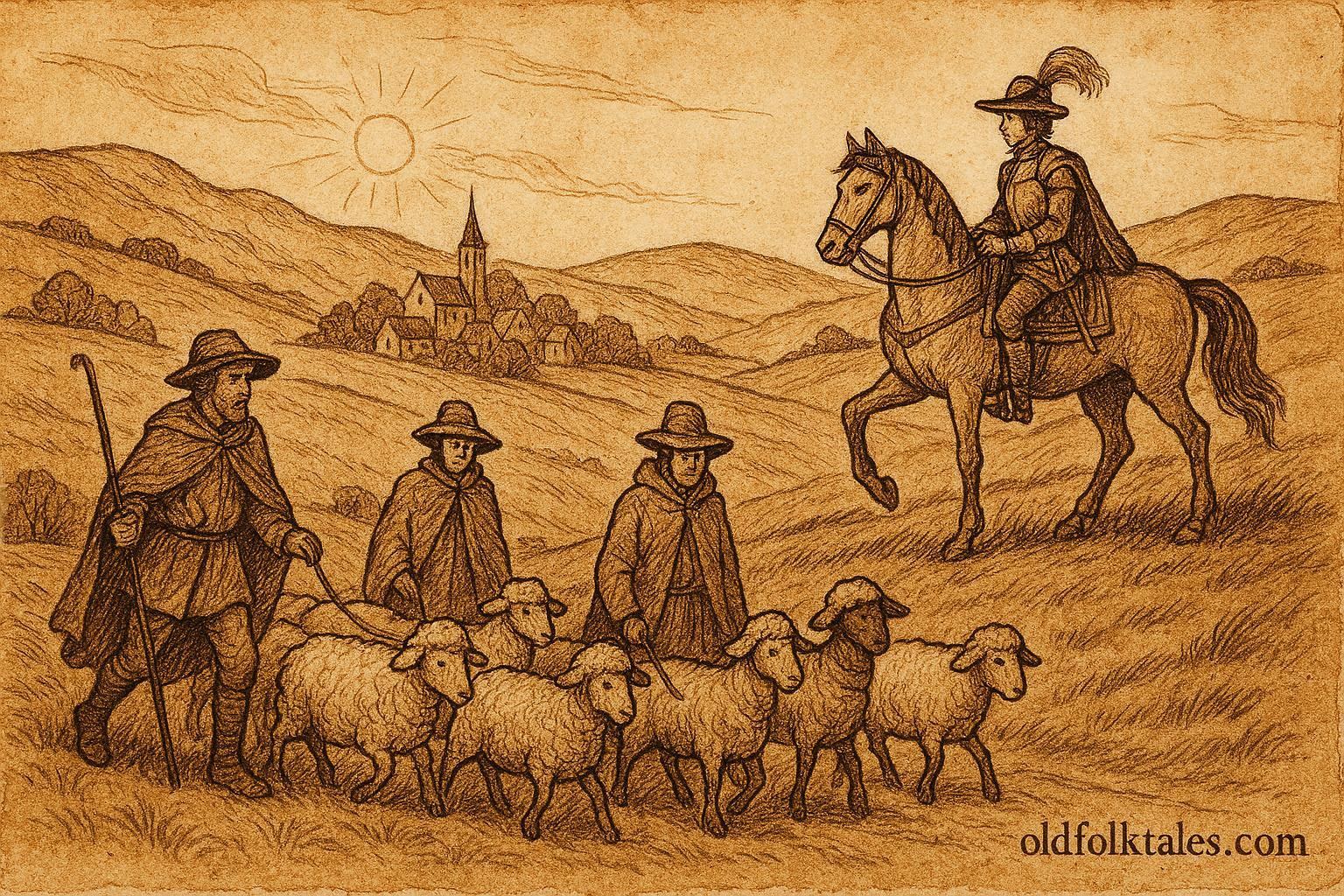
Count Dragutin arrived at the village with his retinue, dressed in fine silks and mounted on a horse more valuable than many villagers’ homes. With a smile that did not reach his eyes, he called to Marko:
“Good shepherd,” he said, “I hear you own a flock that is both healthy and beautiful. I have need of more sheep for my estate. I propose a fair arrangement: hand over your flock to me, and I shall pay you generously.”
Marko, wary of the nobleman’s reputation, bowed politely. “Count Dragutin, I have little, but I care for what I have. If my sheep are to leave my care, they must be protected and treated well. I fear your wealth may be generous in words, but light in deeds.”
The nobleman’s eyes narrowed. “I assure you, it is as I say. If you do not agree, you risk displeasing me.”
Marko pretended to consider the offer and then said thoughtfully, “Perhaps a test of fairness is best. I will allow one of my sheep to accompany you today. If you return it unharmed, I shall consider your offer.”
Count Dragutin, eager to appear magnanimous, agreed. Marko chose a small lamb with snowy wool, lifting it carefully into the nobleman’s hands. “Take care of her,” he warned, “for she is delicate and dear to me.”
The nobleman rode away, confident that by nightfall the sheep would be in his hands and Marko would have no choice but to surrender the rest. But Marko was clever. He had noticed the nobleman’s impatience and greed, and he had prepared a plan.
As night fell, Marko gathered his neighbors and shared his scheme. With ropes, lanterns, and clever disguises, they would ensure that Count Dragutin received only illusions of the sheep, while Marko’s flock remained safe.
The next morning, Count Dragutin returned to the village, a smile of triumph ready on his lips. He called for Marko: “Where is my sheep? It should be in my care!”
Marko approached, feigning sorrow. “I am afraid, Count, that while the lamb was with you, other creatures of the forest took fright. Wolves, perhaps, or bandits. I cannot say for certain. The lamb is gone.”
The nobleman’s brow furrowed. “Gone? Do you mock me, shepherd?”
Marko shook his head solemnly. “I assure you, Count, I speak the truth. But if you wish, I can show you where it vanished.”
Intrigued and annoyed, Count Dragutin followed Marko to the edge of the forest, where Marko had prepared a clever ruse. He had hung a series of lanterns over straw figures shaped like sheep, leaving tracks leading into the dense trees. When the nobleman approached, he saw the figures and thought he was tracking the lost lamb.
Hours passed as Count Dragutin tramped through thickets and stumbled over rocks, convinced he was retrieving his prize. Meanwhile, Marko returned to his flock, safe and unharmed, and guided them to richer pastures beyond the nobleman’s reach.
The nobleman returned, exhausted and empty-handed, his pride wounded. Marko, calm and composed, greeted him politely:
“I am sorry, Count Dragutin. The forest can be unpredictable, and it seems fortune favored the lamb elsewhere. Perhaps next time, we might trust less in tricks of fate and more in fairness between man and man.”
Count Dragutin, humiliated in front of the villagers who had gathered to witness the event, could do nothing. Marko’s cleverness and resourcefulness had not only protected his flock but also exposed the nobleman’s greed. The villagers cheered, their respect for Marko growing with each clever maneuver he had orchestrated.
The story of Marko’s cleverness spread throughout the surrounding valleys and towns. Other shepherds sought his advice on protecting their flocks, and his reputation became one of wisdom, wit, and integrity. Though he remained poor in wealth, he was rich in respect and honor. He learned that cunning, tempered with humility and care, could safeguard not only one’s property but also the harmony of the community.
As years passed, Marko continued to shepherd his flock with intelligence and vigilance. He never again relied solely on strength or the simple labor of his hands; he understood that true security came from thinking ahead, observing carefully, and acting with wisdom. The nobleman, Count Dragutin, never attempted to deceive Marko again, for he had learned that wealth and status alone could not overcome cleverness and integrity.
And so, the tale of the clever shepherd endured in village squares, around fires, and along the rolling hills of Bosnia. Parents told it to their children as a lesson in wit and prudence. Travelers passing through the valleys would recount Marko’s story, a reminder that even the humblest among them could outsmart those who would exploit them, if only they acted with intelligence, patience, and courage.
Moral Lesson
Cleverness, foresight, and integrity are powerful tools against greed and injustice. True respect and security are earned through wit, humility, and community-minded action rather than submission to wealth or force.
Knowledge Check
1. Who is the main character of the story?
Marko, a poor but clever shepherd.
2. What challenge does Marko face?
A greedy nobleman, Count Dragutin, tries to cheat him out of his flock.
3. How does Marko protect his sheep?
By using clever tricks, decoys, and foresight to outsmart the nobleman.
4. What traits allow Marko to succeed?
Intelligence, quick thinking, humility, and resourcefulness.
5. How does the village respond to Marko’s cleverness?
They respect and admire him for his wit, bravery, and protection of the community.
6. What is the cultural origin of the story?
Bosnia and Herzegovina, rooted in pastoral folk traditions and social storytelling.
Source: Ćiro Truhelka, Bosnian Folk Tales (1903)
Cultural Origin: Bosnia and Herzegovina