For centuries, the Moselle River has flowed patiently through the valleys of Luxembourg, its waters winding between vineyards, forests, and quiet villages. To the people who lived along its banks, the river was more than a source of water and trade, it was a living presence, generous yet demanding respect. Fishermen spoke to it softly at dawn, and boatmen crossed themselves before long journeys, for all knew that the Moselle remembered how it was treated. It was along this river, so the elders said, that a treasure lay hidden.
Long ago, when borders were uncertain and the river carried not only wine and grain but secrets as well, smugglers traveled its bends under cover of night. They knew hidden paths through reeds and caves in the riverbanks where patrols dared not linger. Gold coins, silver goblets, and precious goods passed quietly from hand to hand, never entering the daylight markets.
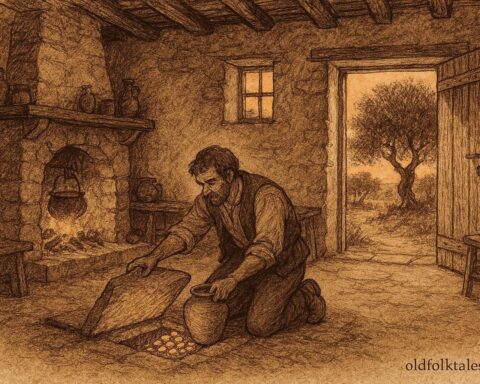
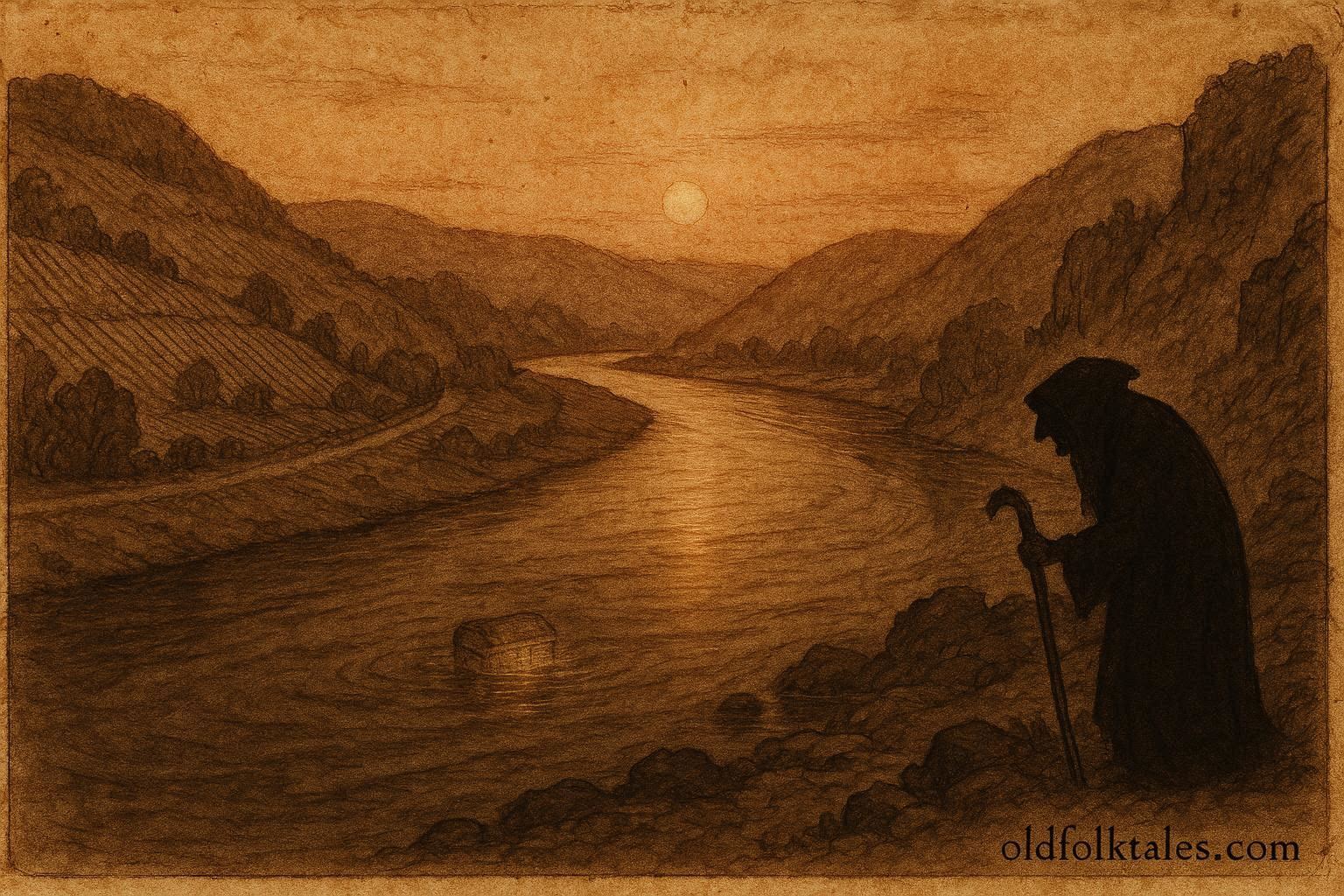
Among these smugglers was a group whose greed outweighed their caution. Over many seasons, they amassed a chest filled with gold, more wealth than they could safely move or spend. Fearful of betrayal and pursuit, they chose to hide the treasure near a secluded bend of the Moselle, where the river curved sharply and the water ran deep and dark.
But they did not reckon with one thing.
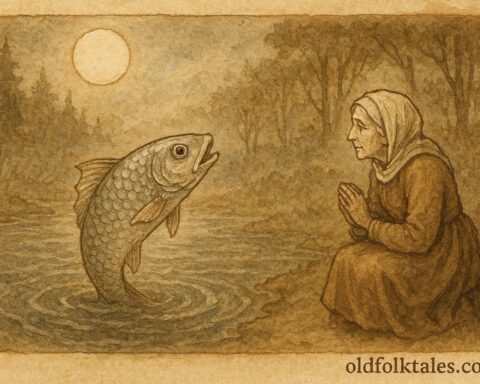
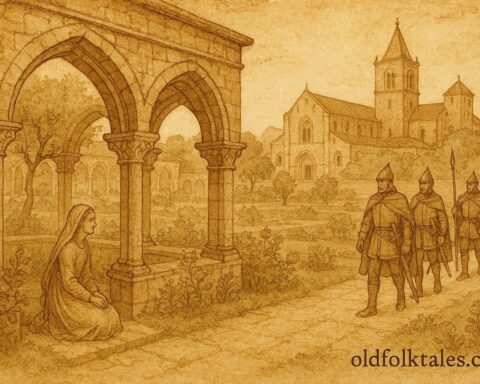
Near that stretch of river lived an old woman, known to few and trusted by fewer. Some called her a witch; others said she was merely wise in ways the world had forgotten. She lived close to the land and the river, understanding its moods and rhythms. When she learned of the smugglers’ plan, she saw not cleverness, but arrogance, men who took without gratitude and hid riches beside a river that had given them passage and protection.
On the night the chest was buried, the old woman came quietly to the riverbank. There, under the moon’s pale light, she spoke words not meant for human ears alone. She called upon the spirit of the Moselle itself, binding the stolen wealth to a curse born of greed and disrespect.
From that moment on, the treasure no longer belonged to those who buried it.
In time, the smugglers vanished, some arrested, others lost to accidents and illness. Yet the legend of the hidden chest remained. Fishermen claimed their nets snagged on something solid beneath the water. Children whispered of golden glimmers seen through the river’s surface on still evenings.
Soon, treasure seekers arrived.
Men driven by ambition and hunger for wealth scoured the riverbanks. They dug at night, pried into caves, and dragged hooks through the shallows. And one by one, misfortune found them. Some fell ill without explanation. Others lost their savings, their homes, or their sanity. Boats capsized on calm waters. Tools broke. Paths twisted, leading searchers astray.
Those who returned from the hunt spoke in hushed voices, warning that the treasure was cursed. Yet greed is stubborn, and warnings only sharpened the desire of some.
The curse did not strike swiftly or dramatically. It worked slowly, quietly, as the river itself does, wearing down resolve, punishing impatience, and revealing character. Those who sought the gold believed they could outwit the legend, but the Moselle tolerated no such arrogance.
Amid these tales were quieter stories, often overlooked.
Villagers spoke of humble folk, fishermen, widows, travelers, who approached the river with respect rather than desire. They did not dig or pry. They gave thanks for safe crossings and good catches. Some left offerings of bread or whispered prayers before drawing water.
To these people, the river gave small gifts.
A fisherman might find an old coin tangled in his net, just enough to buy food for the week. A child skipping stones might uncover a single gold piece in the mud. A weary traveler resting by the river could discover a silver clasp washed ashore beside them.
None of these were the great chest of gold. Yet each gift came at a moment of need, never excess, never enough to awaken greed.
Those who tried to gather more, who returned again and again, searching for greater reward, found their luck vanish. The river gave only once, and only to those who asked for nothing.
Over time, people began to understand.
The treasure was not meant to be taken. It was bound to the river as a lesson, not a prize. The old witch’s curse did not guard gold for its own sake; it guarded balance. The Moselle rewarded humility and punished those who treated its gifts as something to be claimed rather than received.
And so, the chest remained hidden, somewhere beneath water and stone, untouched by hands driven by desire.
Even today, when the river runs low and the light strikes its surface just right, some say you can see a faint glimmer beneath the water. But the wise do not reach for it. They watch, they listen, and they remember the old stories, stories of a river that gives, a curse that teaches, and a treasure that was never meant to be owned.
Moral Lesson
The Cursed Treasure of the Moselle teaches that greed invites misfortune, while humility and respect bring quiet rewards. Wealth taken without gratitude poisons itself, but patience, honesty, and reverence for nature allow blessings to come in their proper measure.
Knowledge Check
-
What is the cursed treasure of the Moselle River?
It is a hidden chest of gold buried by smugglers and cursed by an old witch. -
Why was the treasure cursed in the legend?
The smugglers acted out of greed and disrespect toward the river and its spirit. -
Who suffers misfortune in the folktale?
Those who try to claim the treasure through greed experience bad luck and loss. -
Who receives rewards from the Moselle River?
Humble people who respect the river and expect nothing are given small treasures. -
What does the river symbolize in the story?
The river represents nature, balance, memory, and supernatural justice. -
What lesson does the Moselle treasure legend teach?
Greed leads to ruin, while humility and patience bring rightful rewards.
Source: Nikolaus Gredt, Sagenschatz des Luxemburger Landes (1883)
Cultural Origin: Moselle River region, Luxembourg