Long ago, in the green hills and silver mists of Croatia, there lived a young woman whose beauty shone like the dawn on the Adriatic. Her hair glimmered like gold-threaded flax, and her eyes were clear as the mountain springs. She lived a humble life, helping her widowed mother in the meadows, singing softly as she worked. Her songs were so pure that even the birds fell silent to listen. The villagers often said her voice must have come from the vilas, those mysterious fairy-spirits who ruled the winds and streams of the mountains.
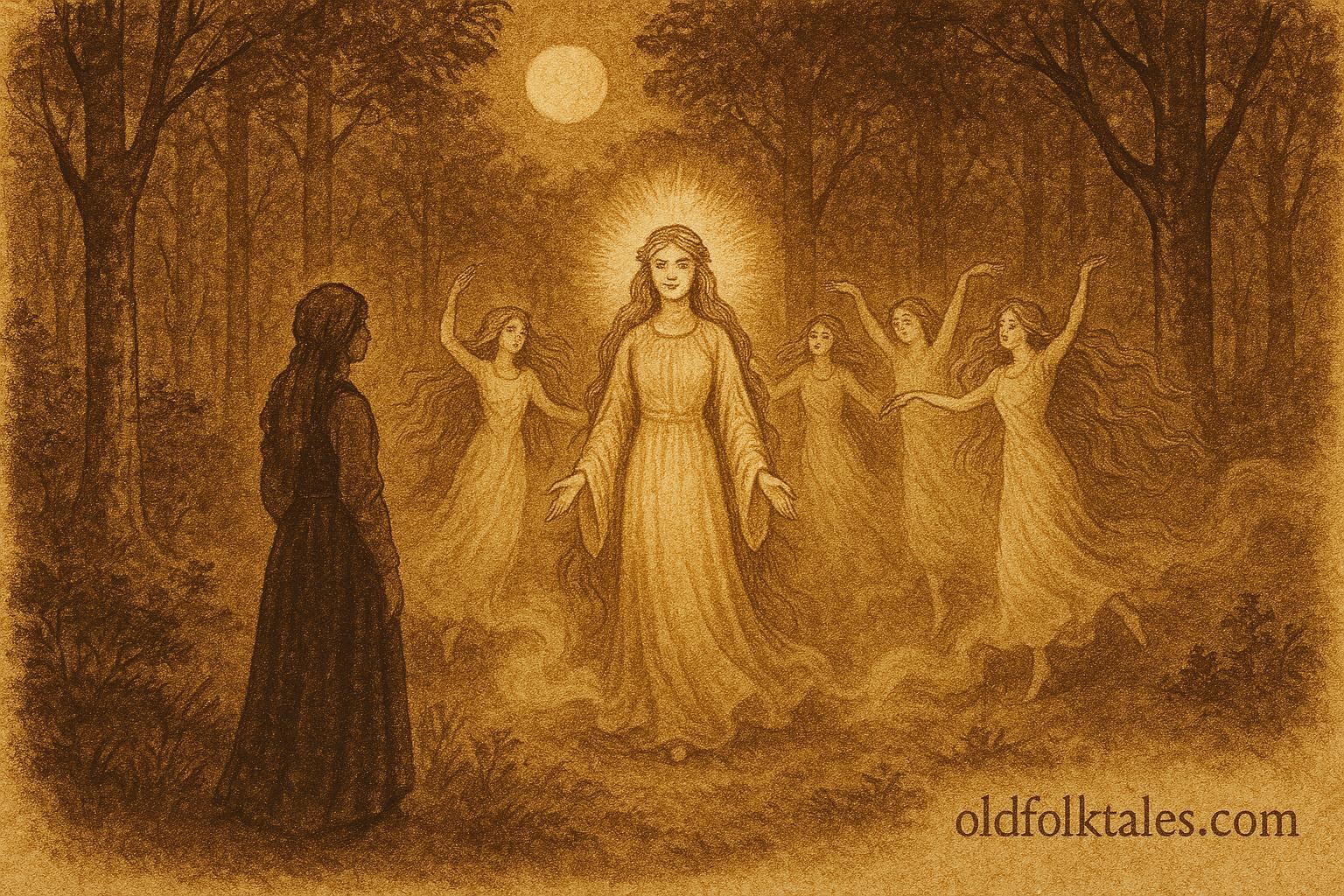
One evening, as she sang near the edge of the forest, a strange breeze began to stir. The leaves trembled, and a fragrance unlike any she had known filled the air, wildflowers and rain, moonlight and dew. From the heart of the wind came laughter, soft, musical, and not of this world. Suddenly, before her appeared a circle of radiant women, clad in white veils that shimmered like mist. Their eyes gleamed like stars, and their voices blended into the sweetest harmony.
Discover the spiritual depth and wisdom hidden in the ancient folklore of Eastern and Balkan Europe
They were vilas, the fairy-spirits of the woods and mountains, beautiful, proud, and dangerous. It was said that vilas could bless or curse, heal or harm, depending on their mood. No mortal could see them and remain unchanged.
The vilas danced around the maiden, their silvery feet barely touching the grass. One, more resplendent than the rest, stepped forward. Her crown glistened with pearls and moonstones, she was the Daughter of the King of the Vilas, ruler among these ethereal beings.
“Come with us, mortal girl,” she said, her voice both gentle and commanding. “You have sung with the voice of truth. The forest has heard you, and my father, the King of the Vilas, has chosen you to dwell among us.”
The young woman trembled. She wished to flee, yet her feet would not move. The air shimmered, and in an instant, the vilas lifted her away like a breeze carries a petal.
The Enchanted Realm of the Vilas
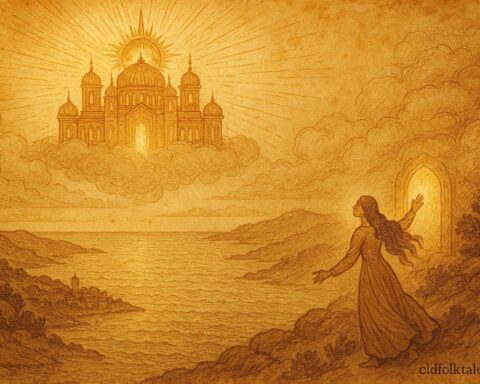
When she awoke, she found herself in a place beyond dreams. Crystalline trees sparkled like ice yet swayed like willows. Rivers of light flowed through fields of eternal flowers. Above, the sky gleamed with stars even at noon.
There, in the marble palace of the vilas, the mortal maiden was brought before their king, a tall, radiant being crowned with silver leaves. His eyes shone with knowledge of ages long past.
“You have been chosen,” he told her, “for your heart is pure and your courage untested. You may live among us, but first, you must prove your loyalty.”
The maiden bowed her head. “I will do as you command, my lord.”
Then began her trials.
The Trials of Loyalty
The first test came on the third night. The vilas led her to a lake so still it mirrored the heavens. “Fetch us water from the heart of the lake,” they said. “But beware, whatever you see, do not turn back.”
She stepped into the water, and as she reached the center, strange visions swirled around her. She saw her mother weeping alone, her village in mourning, her own grave newly dug. Her heart ached, but she remembered the vilas’ warning and pressed on. When she returned with the water, they nodded in approval.
Her second test came when the King of the Vilas himself gave her a golden key. “In the eastern tower,” he said, “there are a hundred doors. Open only the one your heart tells you is true.”
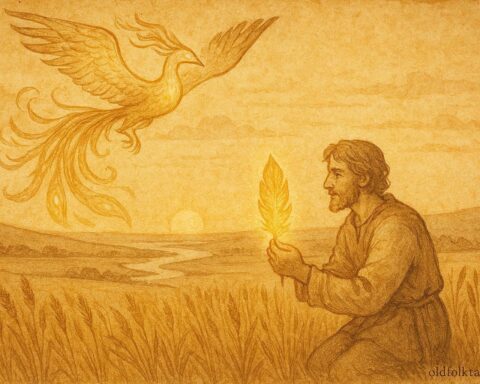
She walked the silent halls, her hands trembling. Each door whispered promises, riches, youth, love everlasting. But one simple wooden door stood quietly, without glow or glamour. Trusting her heart, she opened it. Inside, she found a single white feather glowing softly. When she brought it back, the vilas smiled. “You have chosen well,” said the King. “Truth lies not in splendor but in simplicity.”
The third and hardest test came on the seventh night. The Daughter of the King of the Vilas appeared once more and said, “If you wish to remain among us, or return to your world, you must face what you fear most.”
From the shadows rose a dark shape, half mist, half flame. It spoke with her own voice, whispering doubts and fears: that she was unworthy, forgotten, powerless. She nearly fainted but gathered her courage. Taking the white feather, she held it before her heart. The light of the feather grew until the shadow dissolved like smoke in morning air.
Then all was still. The vilas knelt around her, singing a song of blessing.
The Choice
At dawn, the King of the Vilas approached her. “You have passed the trials, mortal girl. You may dwell with us forever, untouched by time, or return to your mother, bearing our blessing.”
Tears filled her eyes. She thought of her mother waiting by the hearth, of the mortal world where laughter and sorrow walked hand in hand. “I thank you, great king,” she said softly, “but my heart belongs among my own.”
The vilas bowed their heads. The Daughter of the King of the Vilas embraced her, whispering, “You will always be a friend of the vilas.”
When the maiden awoke again, she was by the same meadow where she had sung. Morning light broke over the forest, and though no trace of the vilas remained, she carried within her a calm and shining strength that never faded.
Moral Lesson
True courage lies not in strength, but in remaining loyal to one’s heart. Temptation and fear test our spirit, but those who walk with honesty and love will always find their way home.
Knowledge Check
1. Who are the vilas in Croatian folklore?
Vilas are female fairy-spirits associated with nature, known for their beauty, power, and testing of human virtue.
2. What was the first test the maiden faced?
She had to fetch water from a magical lake without turning back, no matter what visions she saw.
3. What was the meaning of the golden key and the doors?
It symbolized the test of discernment, choosing truth and humility over temptation.
4. How did the maiden overcome her greatest fear?
She faced a shadowy reflection of her own doubts and used the white feather, a symbol of purity, to conquer it.
5. Why did the maiden choose to return to her world?
Out of love for her mother and her understanding that her heart belonged among mortals.
6. What is the main moral of the story?
Loyalty, humility, and courage guide us through life’s trials more surely than power or beauty.
Cultural Origin: Croatian folktale, Croatia.
Source: Adapted from traditional Croatian oral tales featuring the “vila-bride” motif, as preserved in regional folklore collections and studies.