In the towns and caravan roads of Ottoman-era Bosnia and Herzegovina, stories once traveled as faithfully as merchants and pilgrims. They were told in courtyards, sung beside fountains, and remembered in coffeehouses long after the lamps had burned low. Among these tales, preserved in the late nineteenth century by Kosta Hörmann in Narodne pjesme Muhamedovaca u Bosni i Hercegovini, is the story of a wandering dervish and a nightingale whose song pierced more than silence.
It pierced the conscience.
Explore the warmth and wit of Mediterranean storytelling, where love and wisdom intertwine
The Town of Heavy Purses
In a prosperous town surrounded by orchards and low hills, merchants prided themselves on their success. Their shops overflowed with silks and spices. Their houses were built with carved wooden balconies and inner courtyards shaded by fig trees.
Coins clinked in leather pouches.
But doors did not open easily to the poor.
Though wealth increased, generosity did not follow. Beggars were turned away with excuses. Travelers were offered words instead of bread. Charity, once considered sacred duty, had become rare.
Yet the townspeople did not see themselves as unjust.
They saw themselves as prudent.
The Arrival of the Dervish
One evening, as the sun softened the sky into amber light, a wandering dervish entered the town.
His robe was simple. His sandals worn thin. In his hand he carried only a wooden staff. His face bore no bitterness, only quiet awareness.
A dervish, in the Ottoman tradition, lived lightly upon the earth. He sought spiritual truth over possession, insight over comfort. Some listened to such men. Others dismissed them.
The townspeople watched him pass through the marketplace without stopping to beg.
He did not ask.
He observed.
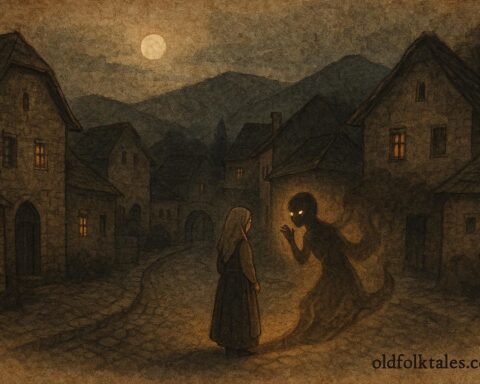
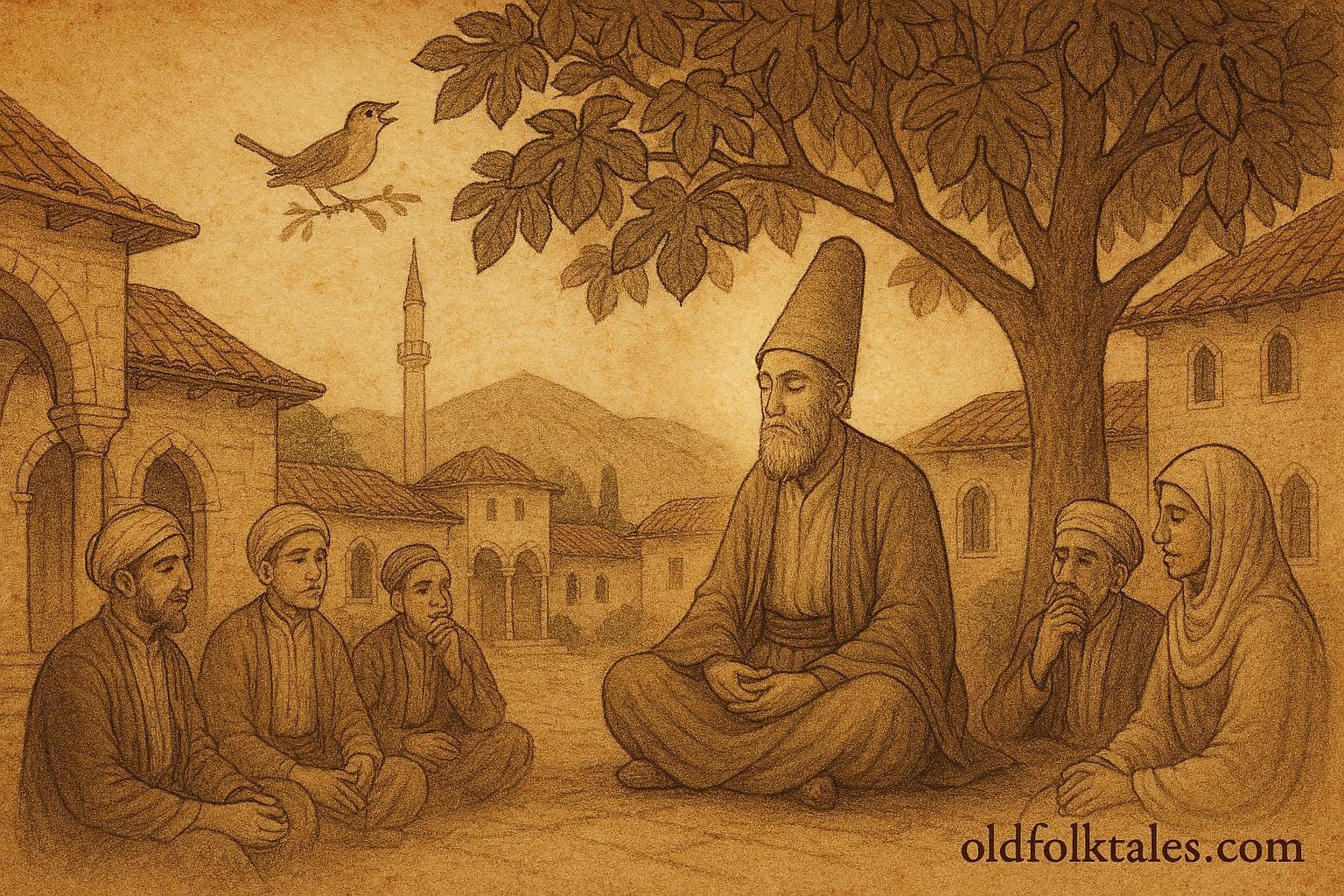
As night approached, he walked beyond the houses to a fig tree at the edge of town and sat beneath its branches.
There he closed his eyes in prayer.
The Nightingale Speaks
From within the branches above him came a soft, melodic sound.
A nightingale.
Its song flowed clear and intricate, weaving through the evening air like silver thread.
The dervish opened his eyes and listened.
Then the melody shifted.
The bird’s voice took on words.
“Why do you rest beneath this tree, traveler?”
The dervish did not startle. His life had taught him that wisdom often speaks from unexpected forms.
“I rest where there is shade,” he replied gently. “And where there is truth.”
The nightingale fluttered lower.
“This town is rich,” the bird said. “But its spirit is poor.”
The dervish inclined his head.
“Then sing what they refuse to hear.”
The First Song: The Locked Granary
The following morning, townspeople awoke to a strange sound drifting from the fig tree at the town’s edge.
The nightingale sang not in ordinary notes, but in clear human speech carried upon melody.
It told of a farmer who filled his granary beyond measure, locking the doors tight while neighbors starved. When famine struck his own house, he found that hoarded grain had rotted, useless and foul.
The refrain echoed:
“What is stored without sharing turns to dust.”
Merchants paused in their counting.
Women drawing water listened.
Children stared toward the tree.
Some laughed nervously.
“It is only a bird,” they said.
But they listened again the next morning.
The Second Song: The Empty Cup
On the second day, the nightingale sang of a wealthy man who polished his golden cup daily but never poured water for the thirsty. In time, the cup grew dull, untouched by kindness, and the man’s name faded from memory.
“What shines without service grows dim.”
This time fewer laughed.
The dervish remained beneath the tree, neither claiming the bird nor explaining it.
He listened as one who already understood.
Greed Revealed
By the third morning, the entire town gathered beneath the fig tree.
The nightingale sang of scales that weighed coins heavier than compassion, of houses built high but hearts kept low, of prayers spoken without generosity.
Each verse struck gently but precisely.
Faces in the crowd grew thoughtful.
Some felt exposed.
Others felt uneasy.
At last, a merchant stepped forward.
“Why does this bird accuse us?” he demanded.
The dervish rose slowly.
“It accuses no one,” he said. “It reflects what it sees.”
The merchant frowned.
“We are not unjust.”
“Then your deeds will prove it,” the dervish replied.
The Turning
That afternoon, a widow knocked at a merchant’s door.
He hesitated.
He remembered the song.
Slowly, he opened it.
A baker who had long refused credit to struggling families reconsidered his practice.
A wealthy landowner sent food to a distant relative without being asked.
These were small acts at first, almost reluctant.
But generosity, once begun, grows.
The nightingale continued to sing for several more days, each parable gentler than the last.
Soon, the tone of the town shifted.
Laughter returned to courtyards, not the sharp laughter of pride, but the softer laughter of shared bread.
The dervish watched quietly.
The Departure
One dawn, before the town fully stirred, the dervish rose from beneath the fig tree.
The nightingale perched above him.
“You have done what you came to do,” the bird said.
“I did nothing,” he answered. “They chose to listen.”
The bird’s song softened into ordinary melody once more.
By the time the townspeople gathered that morning, the dervish was gone.
The nightingale still sang, but only as a bird.
Yet its earlier words remained.
The Meaning of the Nightingale
In Bosnian Ottoman-era storytelling, the dervish often represents spiritual insight, humble yet perceptive. The talking nightingale symbolizes divine wisdom disguised in beauty and song.
The town’s wealth reflects material success without moral grounding. The transformation comes not through punishment, but through awakening.
The tale reminds listeners that generosity is not loss.
It is alignment with higher justice.
Moral Lesson
The Dervish and the Talking Nightingale teaches that wealth without generosity leads to spiritual emptiness. True prosperity lies not in accumulation, but in compassion and shared abundance.
Knowledge Check
1. Where does this folktale originate?
Bosnia, within Ottoman-era oral storytelling traditions.
2. Who preserved this tale in written form?
Kosta Hörmann in Narodne pjesme Muhamedovaca u Bosni i Hercegovini (1888–1889).
3. What role does the nightingale play?
It speaks in parables revealing the town’s greed.
4. What does the dervish represent?
Spiritual wisdom and quiet moral guidance.
5. What central theme defines the story?
Generosity over greed.
6. How does the town change?
Through voluntary acts of compassion inspired by reflection.
Source: Kosta Hörmann (ed.), Narodne pjesme Muhamedovaca u Bosni i Hercegovini (1888–1889).
Cultural Origin: Bosnian Ottoman-era oral storytelling tradition.