In 18th-century France, a world of shadowed forests, candlelit chambers, and bustling towns, stories of the supernatural captivated imaginations. Among these tales, devils, witches, and otherworldly beings played central roles, not merely as figures of fear, but as agents of justice. These narratives blended Christian morality with echoes of older, pagan traditions, teaching that pride, greed, and disrespect toward others could summon consequences beyond human control, while virtue, cleverness, and caution offered protection.
At the heart of these stories was the understanding that the world contains forces beyond sight and reason, forces that observe human behavior and act to maintain balance, often in unexpected, dramatic ways.
Experience legends where mountains breathe magic and heroes face moral choices that shape destiny
Devils Among Men
One of the most enduring figures in these tales is the devil, not as an abstract evil but as a cunning, sometimes seductive, presence. Jacques Cazotte’s Le Diable amoureux (1772) captures the tension between human desire and moral responsibility, depicting how temptation tests the limits of virtue.
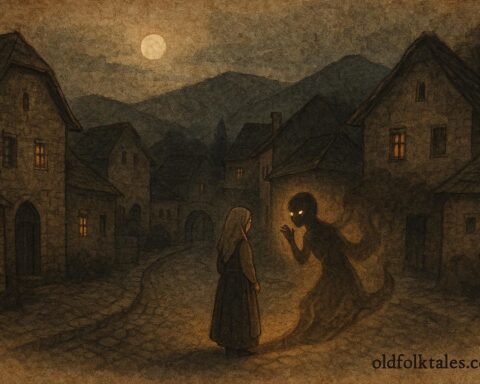
In the villages, it was said that devils could appear in human form, disguising themselves as charming strangers. A proud merchant, certain of his wealth and position, might invite one into his home without suspicion. A young noblewoman, drawn by curiosity or vanity, might encounter a devil cloaked in beauty, promising secrets or influence beyond imagination. The outcome depended on the individual’s virtue, judgment, and courage. Those who acted selfishly or arrogantly often found themselves ensnared; those who remained prudent could emerge unscathed.
Witches and Their Cunning
Witches, too, played a vital role in the moral landscape of 18th-century French folktales. Unlike the malevolent caricatures of later popular culture, they were often depicted as cunning humans who had tapped into powers beyond ordinary understanding, sometimes for personal gain, sometimes as enforcers of cosmic justice.
A common story tells of a peasant who insulted the village healer, mocking her remedies and dismissing her wisdom. One night, he awoke to find his livestock sickened, his crops failing, and shadows moving unnaturally in his barn. The witch had acted, punishing his arrogance while reinforcing the social and moral norms of the village. These tales reinforced the idea that disrespect toward others, especially those who held knowledge or power in a community, could summon retribution, blending everyday ethics with supernatural authority.
Supernatural Justice in the Forest
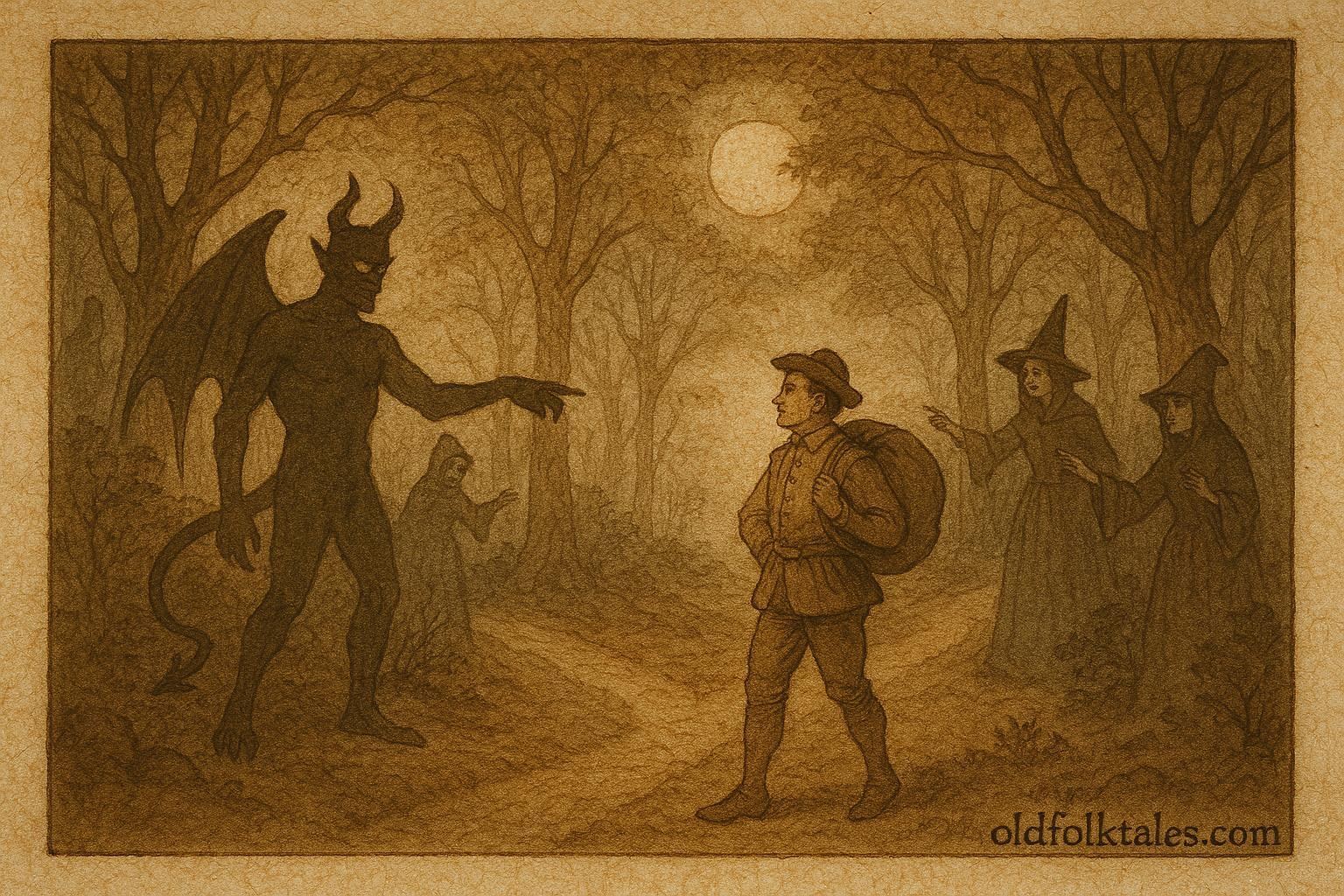
The forests of France, deep and ancient, frequently appear as liminal spaces in these stories. In shadowed groves, along riverbanks, or atop isolated hills, encounters with the supernatural often took place. A proud hunter might find himself lost amid twisted paths, the forest itself seeming to turn against him. Whispered voices could guide or mislead, reflecting the character’s choices.
One tale recounts a wealthy landowner who, seeking to claim more than his neighbors, ignored boundaries and sacred groves. At twilight, a figure cloaked in dark robes appeared, leading him in circles until exhaustion and fear humbled him. In this story, the “witch” or “devil” enforces justice not through brute force, but through clever manipulation, demonstrating that moral reckoning can arrive in forms subtle and indirect.
Humans Versus Supernatural Forces
A key theme in these stories is the interplay between human agency and supernatural power. Characters often face moral dilemmas: pride tempts them to defy community norms; greed drives them to act selfishly; curiosity or vanity leads them into dangerous encounters. The supernatural does not act arbitrarily, it responds to human behavior.
In one tale, a merchant refuses to share excess profits with his community and mocks the poor. At night, he dreams of a shadowy figure offering him more wealth, but every coin he grasps vanishes into smoke. In terror, he awakens to find his store emptied of goods he hoarded, while those who had acted generously prospered. Here, the devil is not a figure of random evil but a vehicle through which the natural consequences of vice are made manifest.
Virtue as Protection
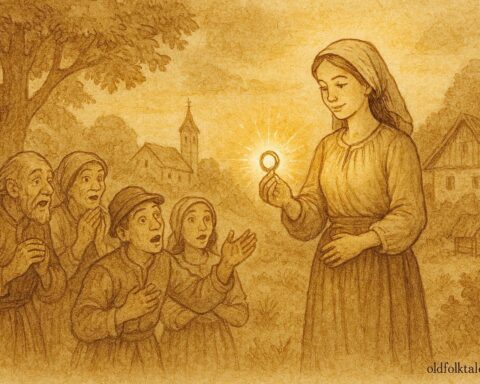
While supernatural beings often enforce punishment, virtue and cleverness offer protection. A humble servant, respectful of elders and cautious of temptation, might encounter a devil disguised as a wealthy stranger, yet remain unharmed simply by refusing offers of excess or by speaking truthfully. A wise peasant girl who shows kindness to a forest spirit may find guidance when lost, avoiding the dangers that befall the arrogant or greedy.
In this way, the tales served dual purposes: they entertained with suspenseful encounters and magical intervention, while teaching practical moral lessons. Listeners learned that courage, humility, and respect are shields as much as they are virtues.
The Enduring Appeal
The stories of devils, witches, and supernatural justice have remained part of French literary and oral tradition for centuries. Cazotte’s Le Diable amoureux inspired later Gothic writers and popular imagination, but the motifs also echo older folk beliefs, connecting Christian moral lessons with pagan memories of spirits and forces that governed forests, fields, and households.
Even today, in quiet villages or old forests of France, tales of clever or vengeful spirits continue to be told. They remind listeners that morality is observed, that pride and greed can summon consequences, and that virtue and wit are forms of protection against both visible and invisible dangers.
The supernatural becomes not merely frightening, but instructive. It rewards prudence, enforces justice, and maintains balance in human affairs.
Explore the wit and wisdom of Western Europe, where humor and virtue often go hand in hand
Moral Lesson
Arrogance, greed, and disrespect invite consequences beyond human control. Virtue, humility, and cleverness provide protection, and moral behavior can safeguard individuals against both earthly and supernatural retribution.
Knowledge Check
1. Which French author popularized tales of devils and witches enforcing justice?
Jacques Cazotte, in Le Diable amoureux (1772).
2. What behaviors typically attract supernatural punishment in these folktales?
Pride, greed, disrespect, and immoral or selfish actions.
3. How are witches and devils depicted in these stories?
As cunning beings who enforce justice, test virtue, and challenge arrogance.
4. What role do forests and liminal spaces play in these tales?
They serve as settings where moral and supernatural encounters occur, emphasizing human vulnerability.
5. What themes define this 18th-century French folktale tradition?
Sin and retribution, virtue as protection, and human versus supernatural forces.
6. How do virtue and cleverness function in these stories?
They protect individuals from harm, enabling them to navigate supernatural tests safely.
Source: Jacques Cazotte, Le Diable amoureux (1772), France.
Cultural Origin: France (18th-century Gothic literary tradition).