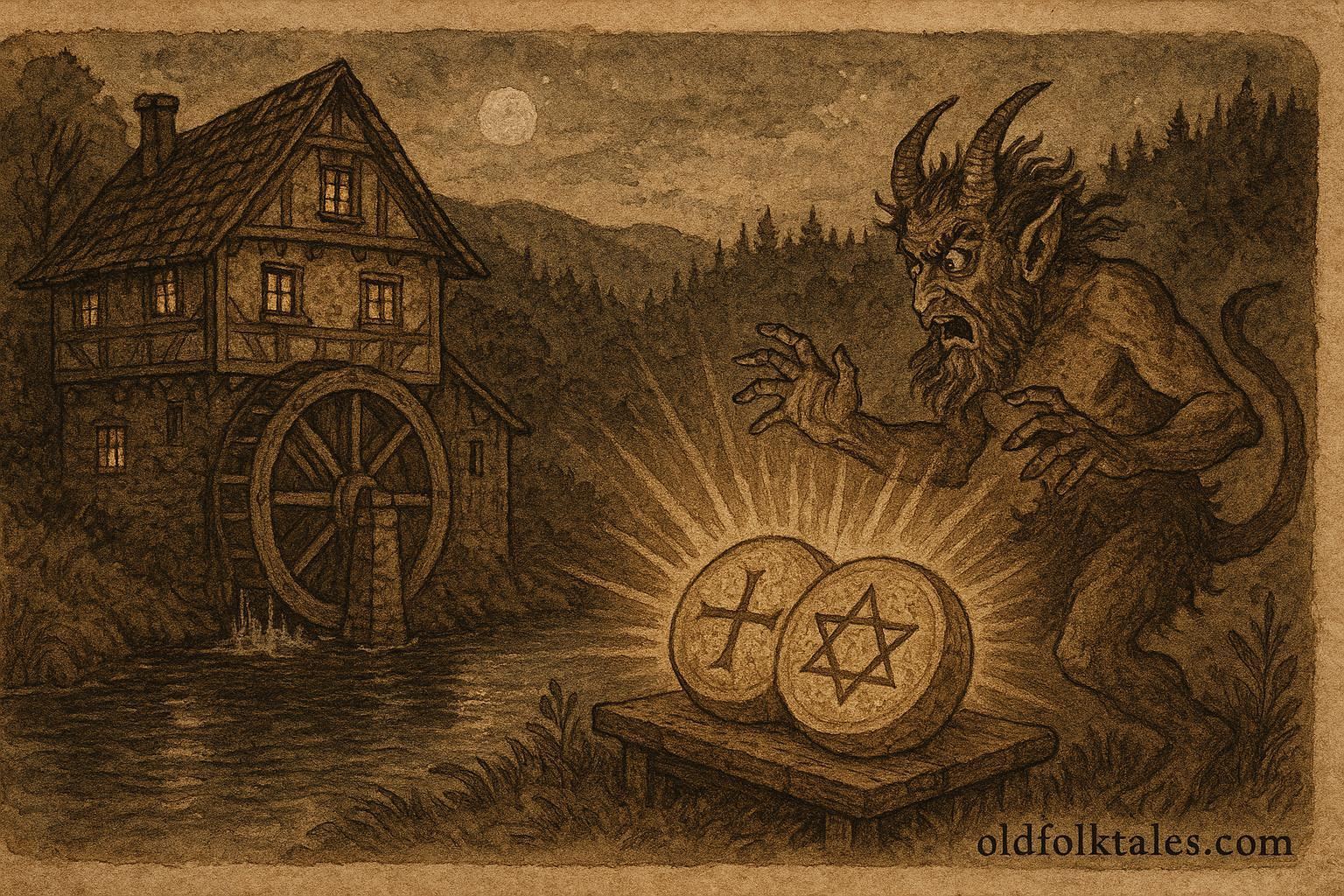
In a quiet corner of Bohemia, where forests pressed close to narrow valleys and rivers cut patiently through stone, there stood an old watermill. Its wheel creaked day and night, turning with the steady rhythm of water and time. Travelers recognized it from afar by the sound of rushing current and grinding stone, and villagers knew it as a place of honest work and measured living.
The mill belonged to a miller who had inherited little more than the building itself and the knowledge of his trade. He was not a man of wealth, nor was he given to boasting. His clothes were worn, his hands roughened by years of labor, and his face bore the lines of long days spent watching grain pour between stones. Yet his mill never cheated a customer, and his word carried weight throughout the valley.
Discover the moral heart and wild spirit of the north through timeless Nordic storytelling
Still, the miller was human.
In lean years, when floods ruined crops or frost killed wheat in the fields, he sometimes wondered why fortune favored dishonest men while those who worked faithfully scraped by. Such thoughts did not make him bitter, but they left him restless.
It was on one such evening, when the mill stood quiet and the river whispered in darkness, that the devil came.
The miller was alone, adjusting the millstones by lamplight, when the flame flickered though no wind blew. The wheel outside slowed, then stilled, though the stream flowed freely. A chill crept into the air, heavy and unnatural.
From the shadows near the door stepped a stranger.
He was dressed like a prosperous traveler, with fine boots and a cloak lined in dark velvet. His voice was smooth, his smile practiced, and his eyes gleamed with a knowing light. He praised the miller’s diligence, his patience, his skill, words spoken too precisely to be sincere.
Then he spoke of opportunity.
Why should such a capable man labor endlessly for modest reward? Why should he depend on weather, harvest, and honest trade when power existed to bend fortune itself?
The stranger promised full granaries, unending custom, and a mill that would never fail. Gold would come easily, without worry or fatigue. All he asked in return was a simple thing: when the miller’s earthly life ended, his soul would belong to him.
The miller did not need the stranger to name himself.
He crossed himself quietly and did not recoil. Instead, he leaned against the millstone and listened, as if weighing grain.
“Such matters,” he said at last, “should not be decided in haste.”
The devil smiled, certain of victory. He had learned long ago that men often needed only time to convince themselves of their own ruin. He agreed to return in three days.
When the stranger vanished, the mill wheel began turning again as if nothing had happened.
The miller sat alone in the dim light, listening to the river. Fear came, but it did not master him. He understood something the devil had not considered: a miller’s life teaches patience. Grain is not rushed. Water is not forced. And bargains made in haste often destroy those who make them.
The next day, the miller went about his work as usual. He spoke little but listened carefully. He visited older villagers, asking about old tales and warnings without revealing his danger. He recalled prayers learned at his grandmother’s knee, words spoken against storms, sickness, and evil influences.
By the time the third night fell, he was ready.
The devil returned, confident and eager.
This time, the miller greeted him warmly and appeared agreeable. He said he would accept the bargain, but first, he wished to see proof of the devil’s power.
“Grind my grain,” he said, “faster than any mill ever has.”
The devil laughed. Such a task was nothing. He seized the millstones and turned them with inhuman strength. The stones shrieked, sparks flew, and grain poured forth in a torrent.
But the miller watched closely.
At the height of the devil’s effort, he traced a sacred sign upon the stone and spoke a prayer aloud. The millstones shuddered violently. The devil cried out, his hands smoking where they touched blessed stone. With a howl of fury, he vanished in sulfur and shadow.
For a time, the miller believed the danger had passed.
But evil does not surrender easily.
Weeks later, the devil returned, stripped of courtesy. He accused the miller of trickery and demanded the contract be sealed properly.
The miller nodded.
“Ink fades,” he said calmly. “Let us carve our agreement in stone.”
They went outside to a great millstone resting near the river, heavy and ancient. The devil raised his claw, but the stone bore markings etched long ago when the mill had been blessed. The moment the devil touched it, he screamed in pain and leapt away.
Again, he vanished.
His final return came not with promises, but with threats.
He raged, vowing to take the miller’s soul by force. The ground shook as he lunged forward, but he could not cross the threshold of the mill, which had been blessed when it was first raised. Bound by laws older than himself, the devil howled and fled forever.
The miller lived out his days in peace. His mill prospered through honest labor, and the valley remembered the lesson. From that time on, the place was known as Čertův mlýn, the Devil’s Mill, not because evil triumphed there, but because it was defeated by human wit and moral strength.
Experience legends where mountains breathe magic and heroes face moral choices that shape destiny
Moral Lesson
The Devil’s Mill teaches that temptation feeds on impatience and doubt. True strength lies not in wealth or power, but in wisdom, restraint, and fidelity to moral principles.
Knowledge Check
-
Why does the devil approach the miller?
To tempt him into trading his soul for wealth. -
What allows the miller to resist temptation?
Patience, faith, and practical intelligence. -
Why does the miller delay the agreement?
To gain control over the situation and expose the devil’s weakness. -
What role do sacred symbols play in the story?
They protect against evil and reveal spiritual boundaries. -
Why can the devil not cross the mill’s threshold?
Because the mill has been blessed. -
What is the central lesson of the folktale?
Cleverness and moral integrity overcome evil bargains.
Source & Cultural Origin
Source: Karel Jaromír Erben, Prostonárodní české pohádky a pověsti (1865)
Cultural Origin: Czech folklore