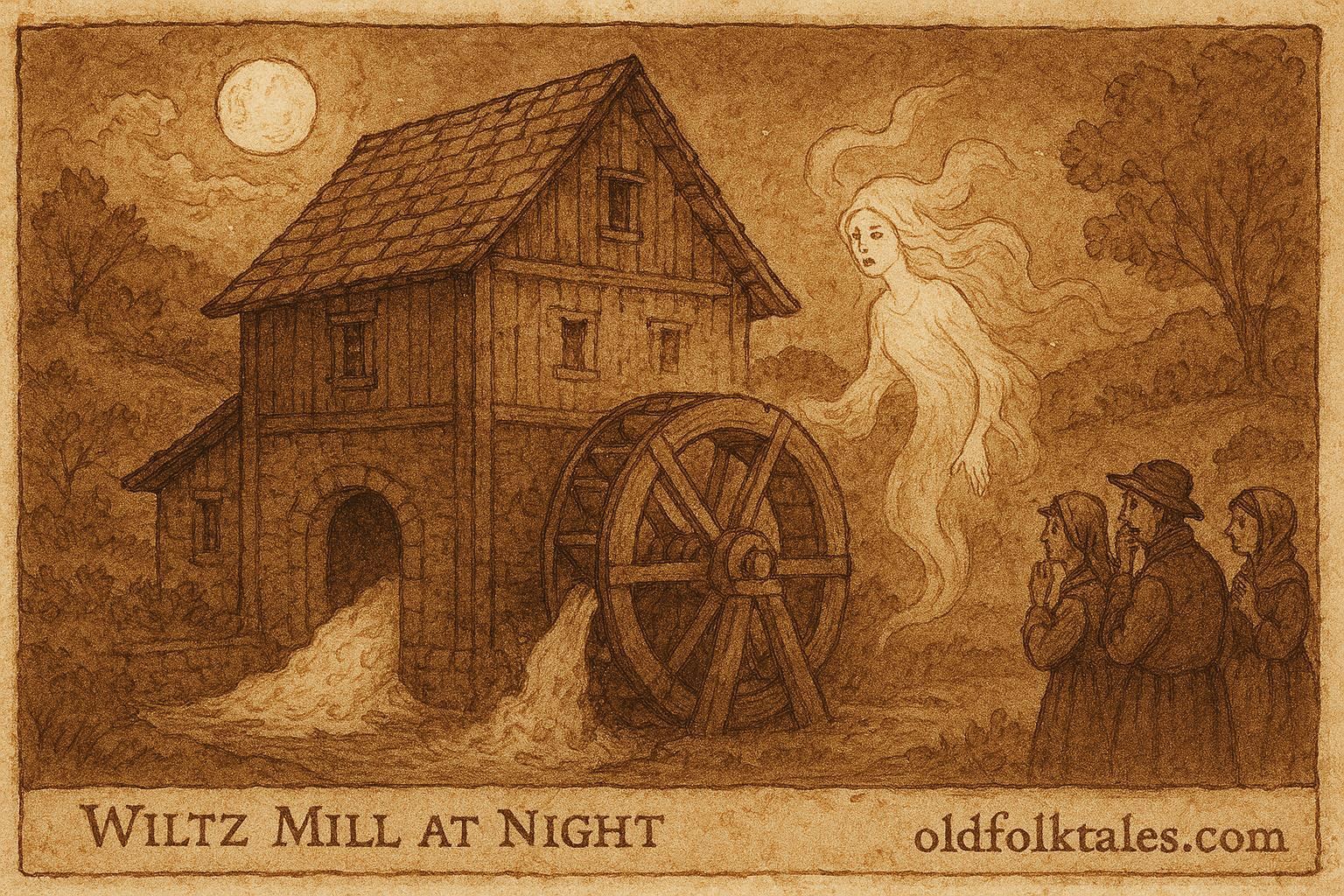
In the rolling hills and dense forests surrounding Wiltz, Luxembourg, there stands a mill unlike any other. Its sturdy walls and creaking wooden wheel are ordinary by day, but at night, under the soft glow of moonlight, the mill is said to grind endlessly on its own. The villagers whisper of a spirit that dwells within, a guardian of honesty and hard work, punishing those who act with greed or laziness, and rewarding those who labor faithfully. This is the story of the enchanted mill and the lessons it imparted to all who lived nearby.
The Village and Its Mill
Wiltz, nestled amid Luxembourg’s green valleys, was once a modest village where life moved with the rhythm of the seasons. Fields of wheat and rye swayed in summer wind, and cattle grazed lazily along the hills. The mill, positioned at the edge of the village by a sparkling stream, was a hub of activity. Farmers came to grind their grain, exchanging stories and laughter as the wheel turned.
But the mill carried a secret. Villagers noticed that on some nights, when the moon hung full and the forest was still, the sound of grinding continued even after the miller had gone home. No human hand touched the stones, yet the machinery moved as if guided by invisible force. Some claimed it was the wind; others whispered of spirits.
The Spirit’s Warning
The legend tells of a spirit bound to the mill, charged with ensuring that the villagers remained honest and diligent. Those who attempted to cheat the mill, by stealing grain, skipping payment, or avoiding labor, found themselves facing strange misfortunes. Bags of flour would turn to dust, wheels would stop abruptly, or the mill would grind without pause, consuming every morsel carelessly thrown in.
One farmer, known for his laziness, thought he could trick the mill by leaving half-emptied sacks of grain, hoping the spirit would not notice. That night, the mill ground continuously, the sound echoing through the village like a warning bell. When he returned in the morning, the millstone had split his sacks, and the flour was ruined. Humiliated, he understood that no shortcut could escape the mill’s vigilance.
A Lesson for the Greedy
Greed, too, was punished. A wealthy merchant, conceited and proud, attempted to take more flour than he had paid for. He approached the mill under the cover of darkness, confident that his wealth could secure any outcome. But as he loaded the bags, the spirit intervened. The millstones turned faster and faster, tossing grain in all directions. Flour spilled across the floor, and the merchant was covered in white dust from head to foot. When the villagers discovered him the next morning, he had been humbled, and he vowed never again to try deceit at the mill.
Through these stories, the villagers learned that the mill was not merely a place of work but a guardian of morality. It observed human behavior, rewarded diligence, and punished selfishness.
Rewards for the Honest
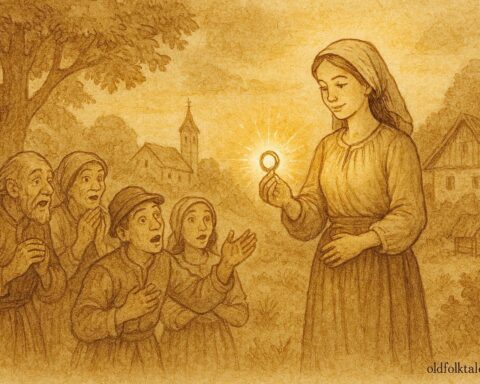
Yet the mill was not cruel. Those who labored honestly and treated their neighbors fairly found favor with the enchanted mill. A widow with children, who rose before dawn each day to tend her field and grind her grain properly, discovered that the millstone moved effortlessly. Bags were filled to the brim, and the flour was pure and fine.
Young apprentices, learning the trade of milling, also found encouragement. By showing care, attention, and dedication, they could use the mill safely, often finishing their tasks in record time. In this way, the spirit of the mill nurtured diligence and honesty, proving that virtue brought practical rewards as well as moral approval.
The Mill at Night
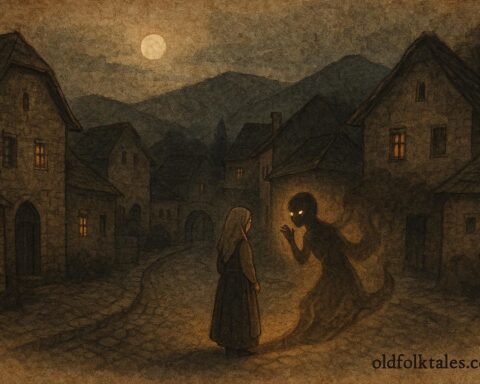
On nights when the mill ground by itself, villagers sometimes ventured close to listen. They claimed to hear soft laughter or the whisper of encouragement carried on the wind. Some said the spirit walked among the stones, invisible but vigilant, ensuring that the lessons of honesty and hard work were never forgotten.
Despite centuries passing, the mill’s legend endured. Even as new machinery replaced old wheels and the village modernized, the tale of the enchanted mill remained. Children grew up learning that shortcuts and deceit invited trouble, while steady labor and respect for the work of others brought blessings.
Moral Lesson
The Enchanted Mill of Wiltz teaches that laziness and greed have consequences, while diligence, honesty, and respect for labor are rewarded. Supernatural oversight may manifest in legend, but its lessons apply in daily life: work faithfully, honor your agreements, and recognize that effort brings both practical and moral benefits.
Knowledge Check
1. Where is the enchanted mill located?
Near Wiltz, Luxembourg, in a forested and pastoral area.
2. What behavior does the mill’s spirit punish?
Laziness, dishonesty, and greed.
3. How are honest workers treated by the enchanted mill?
Their grain is ground efficiently, and they are rewarded with pure, abundant flour.
4. What supernatural element is central to the folktale?
A spirit that enforces moral behavior by controlling the millstones.
5. What themes are conveyed in this Luxembourg folktale?
Reward for diligence, punishment for greed, and supernatural oversight of human actions.
6. Who recorded the tale and when?
Nikolaus Gredt, in Sagenschatz des Luxemburger Landes (1883).
Source: Nikolaus Gredt, Sagenschatz des Luxemburger Landes (1883), Luxembourg.
Cultural Origin: Wiltz, Luxembourg.