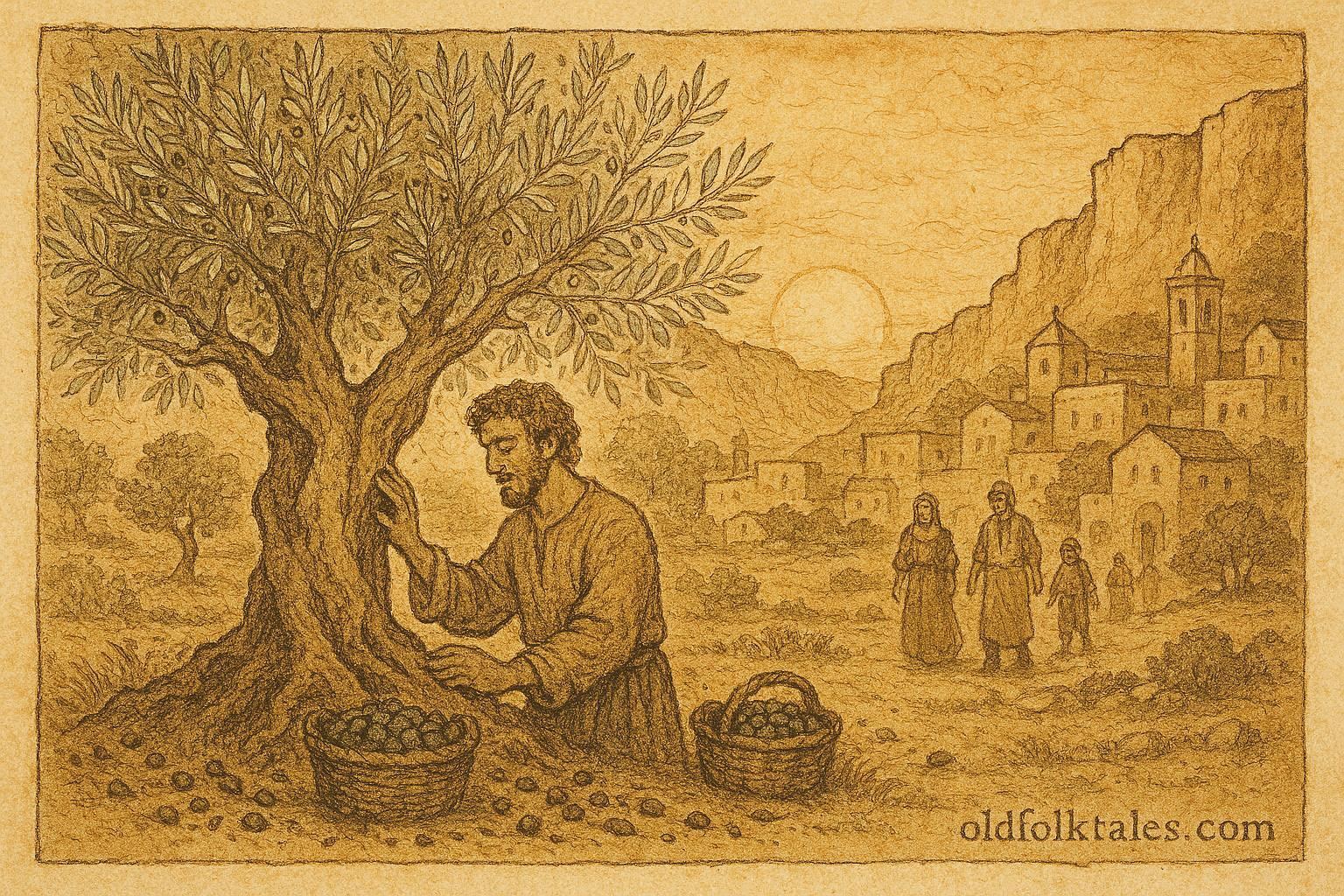
In a quiet village on the sun-baked island of Malta, where fields of golden wheat met groves of olive trees, there stood an ancient olive tree that all the villagers revered. Its gnarled trunk was as wide as a cart, and its silver-green leaves shimmered like the sea under the Mediterranean sun. Legends whispered that this tree had stood for centuries, its roots entwined with the very soul of the village, and that it would bring prosperity to those who cared for it with humility and respect.
Generations of villagers had tended the olive tree with devotion, leaving offerings of water, oil, and small tokens of gratitude. In return, their harvests were plentiful, and the village thrived. Yet, as time passed, some began to forget the old ways. They took the tree for granted, cutting its branches carelessly and stripping its fruit to sell for personal gain.
Discover Polish, Russian, Ukrainian, and Belarusian folktales where magic and morality meet
Among the villagers was a boy named Luca. Unlike others who were motivated by greed, Luca’s heart was pure, and he loved the olive tree as if it were a living member of his family. Each morning, he would sweep the ground beneath its branches, water its roots, and whisper words of thanks for its shelter and shade.
One summer, when the heat made the air shimmer like molten gold, the villagers’ greed reached its peak. They stripped the olive tree of its finest fruits, leaving none for the villagers who could not afford to pay. They ignored Luca’s gentle warnings. “The tree gives us life, yet we take without giving,” he said softly. “If we do not care for it, misfortune may follow.”
The villagers laughed at his caution. “A boy and his silly tales!” they jeered. “The tree is ours to use. Its bounty is for whoever claims it.”
That year, the village’s fortunes began to wane. The wells dried earlier than usual, the wheat ripened poorly, and storms ravaged the fields. Livestock fell ill, and the olive tree itself seemed to wilt, its once-vibrant leaves drooping and dull. Villagers grew fearful, recalling the old legends, but pride kept them from listening to the boy.
Luca, undeterred, continued his daily care. Each morning he would kneel at the tree’s roots, gently patting the earth and whispering: “Please, great tree, forgive them. Let us learn to care for you once more.”
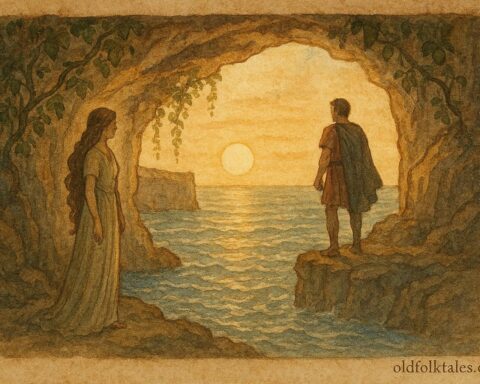
One evening, as the sun sank behind the cliffs, bathing the village in a warm amber glow, Luca heard a soft rustling. The olive tree’s branches quivered, though no wind blew. From the heart of the tree, a silvery light emerged, taking the shape of a gentle woman, her hair like woven strands of sunlight and olive leaves.
“I am the spirit of this olive tree,” she said in a voice like the rustle of leaves in a summer breeze. “For generations, I have blessed this village, but the greed of the people has brought me sorrow. Only one who acts with kindness and respect may restore balance.”
Luca bowed deeply. “Great spirit, I will do all I can. Please guide me to save our village.”
The spirit smiled, her eyes reflecting the stars beginning to pierce the twilight sky. “You must show the villagers the value of care and generosity, but it must come from the heart. Actions alone, without sincerity, will not suffice.”
The next morning, Luca began a small, careful restoration. He watered the tree, pruned broken branches, and planted new saplings nearby. He also collected the fruit that had fallen to the ground and distributed it to the elderly, the sick, and the hungry children of the village. Though many villagers scoffed at his labor, they could not ignore the boy’s tireless dedication.
One afternoon, a fierce summer storm descended, sending torrents of rain and wind through the village. Lightning cracked above, and the villagers feared for their homes and fields. Luca remained by the olive tree, shielding its roots and branches, murmuring protective words. Miraculously, while the weaker trees in the surrounding groves were broken and torn, the ancient olive tree endured, its branches bending but not breaking.
When the storm passed, the villagers emerged to see the devastation. Fields lay flattened, smaller trees uprooted, and rooftops damaged. Yet the great olive tree stood tall and steadfast, its leaves glistening with raindrops like tiny jewels. The villagers, awed by its resilience, began to understand the importance of respect, humility, and care.
Luca approached them. “See the blessings of the tree, preserved through care and respect. If we tend it with generosity, it will sustain us once more.”
Some villagers, ashamed of their earlier greed, knelt beside him, helping to water and nurture the tree. Even Pietro, the wealthiest landowner, admitted, “We forgot the ways of our ancestors. Let us restore the balance together.”
In the following weeks, the village flourished. Olive harvests returned to their former abundance, and the trees Luca had planted grew strong. The wells filled, livestock recovered, and the community rediscovered the harmony of shared care. The villagers learned that prosperity depended not on taking without thought, but on tending the gifts of nature with patience and humility.
The spirit of the olive tree, seeing the villagers’ change of heart, appeared once more to Luca. “You have restored balance through sincerity, courage, and kindness,” she said. “Your village shall flourish, and your name shall be remembered for generations.”
From that day onward, the village celebrated an annual festival under the ancient olive tree. They offered thanks, shared fruits freely, and retold the story of Luca, the kind-hearted boy who restored both the tree and the prosperity of his home.
Moral Lesson
This Maltese folktale teaches that respect for nature and sincere care for others bring lasting prosperity. Greed and neglect lead to misfortune, while humility, generosity, and devotion reward both individuals and communities.
Knowledge Check
- Who is the main hero of the story?
Luca, a kind-hearted and respectful boy from a Maltese village. - What is the magical element in the folktale?
An ancient olive tree with a spirit that brings prosperity or misfortune based on care and respect. - What causes misfortune in the village?
Greed and neglect of the olive tree. - How does Luca restore balance?
By caring for the olive tree, sharing its fruit, and teaching the villagers humility and generosity. - What lesson does the story convey about human behavior?
Respect, humility, and generosity toward nature and others lead to reward, while selfishness brings misfortune. - From which region and culture does this folktale originate?
Agricultural villages of Malta.
Source: Maltese Folk Tales and Legends (1902)
Cultural Origin: Malta, agricultural villages