Along the rocky coast of Istria, where the Adriatic Sea kissed the shore with sparkling waves, lay a small village of fishermen and farmers. Houses with red-tiled roofs clustered along narrow cobblestone streets, while olive groves and vineyards stretched up the hillsides. Life here was simple, shaped by the rhythms of the sea and the sun, yet the villagers carried a secret known to only a few: hidden within the woods above the village was a well of magical waters, said to grant wisdom to those who drank from it with a pure heart.
For generations, the well had been a source of quiet blessing. Elders spoke of it in whispers, warning children that the water would reveal its gifts only to those who approached with humility and kindness. Greed or selfishness, they said, would turn the water cold and dark, and those who tried to exploit it would find themselves confused, lost, or punished in mysterious ways.
Among the villagers was a young girl named Marija, gentle and generous, who spent her days helping her family tend sheep and care for the gardens that fed the village. She had always listened to the elders’ stories, and though many laughed at the tales, she respected them. “The well chooses who it serves,” her grandmother had told her. “Only hearts without selfishness may drink and understand.”
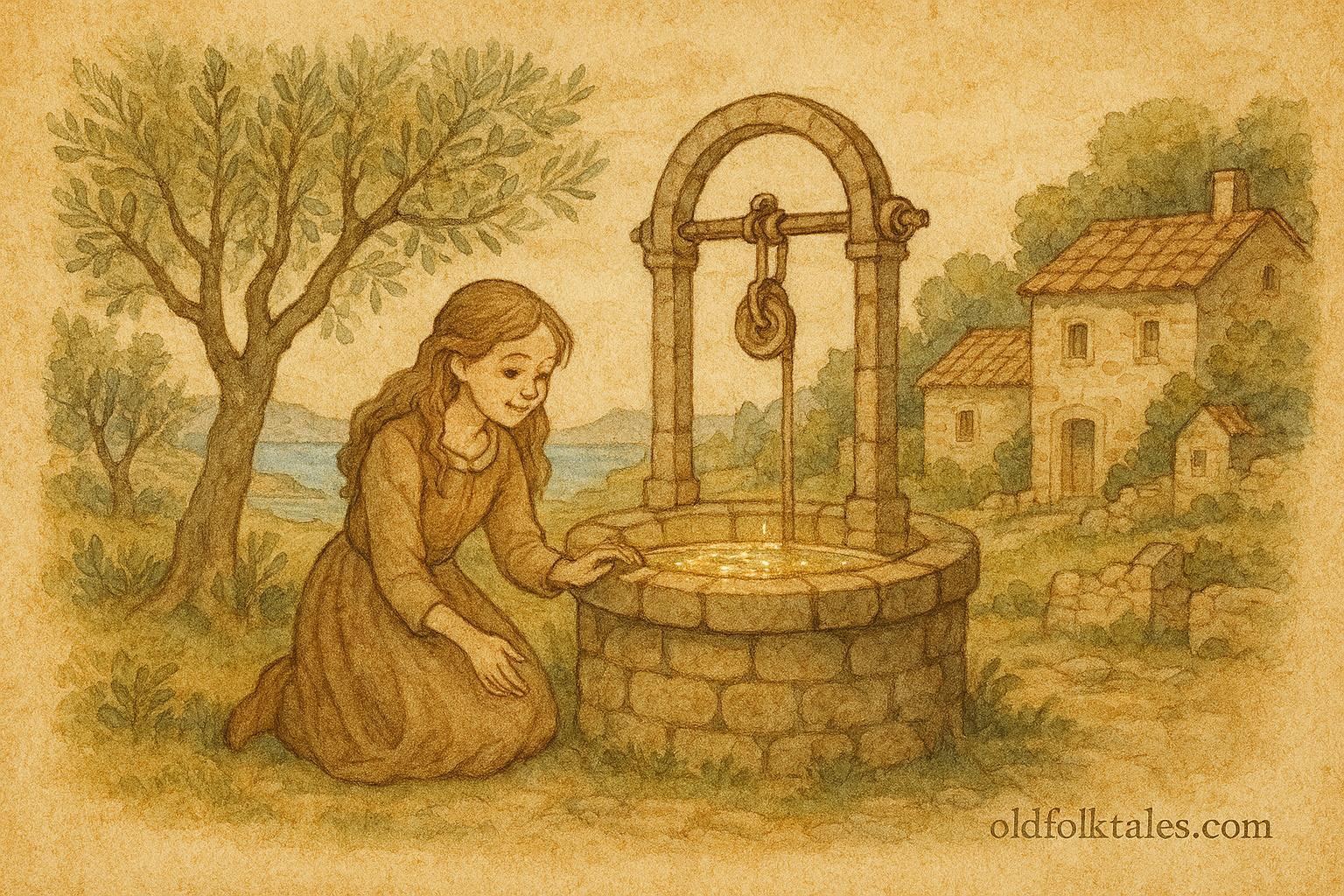
One golden afternoon, as the sun slanted low over the olive groves, Marija wandered farther into the woods than usual. She had noticed the wildflowers near the cliffs beginning to bloom, and the sound of the distant sea drew her onward. Following a narrow, winding path between gnarled oaks and silver-leaved olive trees, she stumbled upon the enchanted well, hidden among moss-covered stones. The water shimmered in hues of sapphire and jade, moving as if alive with its own quiet purpose.
Marija knelt beside it and gazed into its depths. She could hear a soft murmur, like the echo of the sea mixed with the whisper of the wind. Carefully, she cupped her hands and drank. A gentle warmth spread through her, filling her mind with clarity, insight, and understanding. She saw visions of her village: the needs of the elders, the hidden worries of the fishermen, and the struggles of children learning their daily chores. She understood, in that instant, the weight of her community and the value of sharing knowledge wisely.
Word of the well, however, spread beyond those with pure hearts. Some villagers, tempted by greed, sought to claim the waters for themselves. Men with ambitions of power, women who wished for wealth or fame, all came to the well, demanding its magic. But the waters turned dark at their approach, murky and still, and when they drank, their minds filled with confusion and folly. One man stumbled through the woods, unable to find his home; another woman forgot the location of her own house and wandered lost for hours. The well did not reward selfishness, and its power remained steadfast, visible only to those who approached with respect.
Marija, seeing the suffering caused by greed, decided to share the well’s wisdom in a careful and gentle way. She taught the children lessons about caring for one another, reminded the elders to look after the younger villagers, and guided the fishermen to fish only what was needed. She did not reveal the source of her insight, letting her actions inspire others rather than her own reputation.
As the seasons turned, the village prospered, not in riches, but in harmony and understanding. Conflicts were resolved with fairness, disputes over land and fishing rights were settled through discussion, and neighbors helped one another in times of hardship. The enchanted well, while still hidden and mysterious, became a symbol of balance: generosity and humility were rewarded, greed and selfishness punished, and the village grew wise in ways no one could have imagined.
One evening, under a pale crescent moon, Marija returned to the well to give thanks. She knelt by its edge, listening to the water’s gentle murmur. A voice, soft as the whispering wind, spoke:
“Marija, your heart has been true. You have shown that wisdom is not meant for one, but for all. The village thrives because you have shared without seeking glory. Remember this, and teach those who come after you.”
From that night onward, Marija became the quiet guardian of the well’s lessons, though few ever saw the water itself. She understood that magic, like life, worked best when guided by virtue rather than desire, and that the truest gifts were those given freely.
Over the years, travelers would hear the tale of the enchanted well, of a kind-hearted girl who taught a coastal Istrian village to live with balance, respect, and generosity. And though many sought the well for its magic, only those who approached with the same humility and purity as Marija ever found themselves rewarded.
Even now, it is said that on quiet mornings, when the sun glints across the olive groves and the Adriatic sparkles beyond the cliffs, one might glimpse the waters of the enchanted well, shimmering in secret, and feel a soft whisper guiding hearts toward wisdom and generosity.
Moral Lesson
The folktale of the Enchanted Well of Istria teaches that true wisdom and happiness come from generosity and humility, not greed or selfish ambition. Sharing knowledge and blessings with care restores balance and harmony to the community, while selfishness leads to confusion and misfortune.
Knowledge Check
1. Who is Marija?
A kind-hearted girl from the Istrian village who learns to share the well’s wisdom responsibly.
2. What makes the well enchanted?
Its waters grant wisdom to those with pure hearts, but punish the greedy or selfish.
3. How do villagers misuse the well?
They attempt to drink for personal gain, resulting in confusion, folly, or being lost.
4. What lessons does Marija teach her village?
Generosity, balance, care for one another, and responsible use of resources.
5. Where does this folktale originate?
Istria, Croatia; part of the coastal Slavic oral tradition, collected in 19th-century folklore anthologies.
6. What is the central theme of this story?
Generosity, wisdom, balance between greed and virtue, and communal harmony.
Source: Collected in Istrian oral folklore; published in Croatian folktale anthologies, 1880s.
Cultural Origin: Croatia (Istria; coastal Slavic oral tradition)