In the green heart of Anglesey, not far from the hills of Caragonan, there once lived a humble young farmer named Rhodri. He was known for his diligence and good nature, though he owned little more than a modest cottage and a patch of land. His life was quiet, guided by the rhythm of the fields and the songs of the wind that swept through the Welsh valleys.
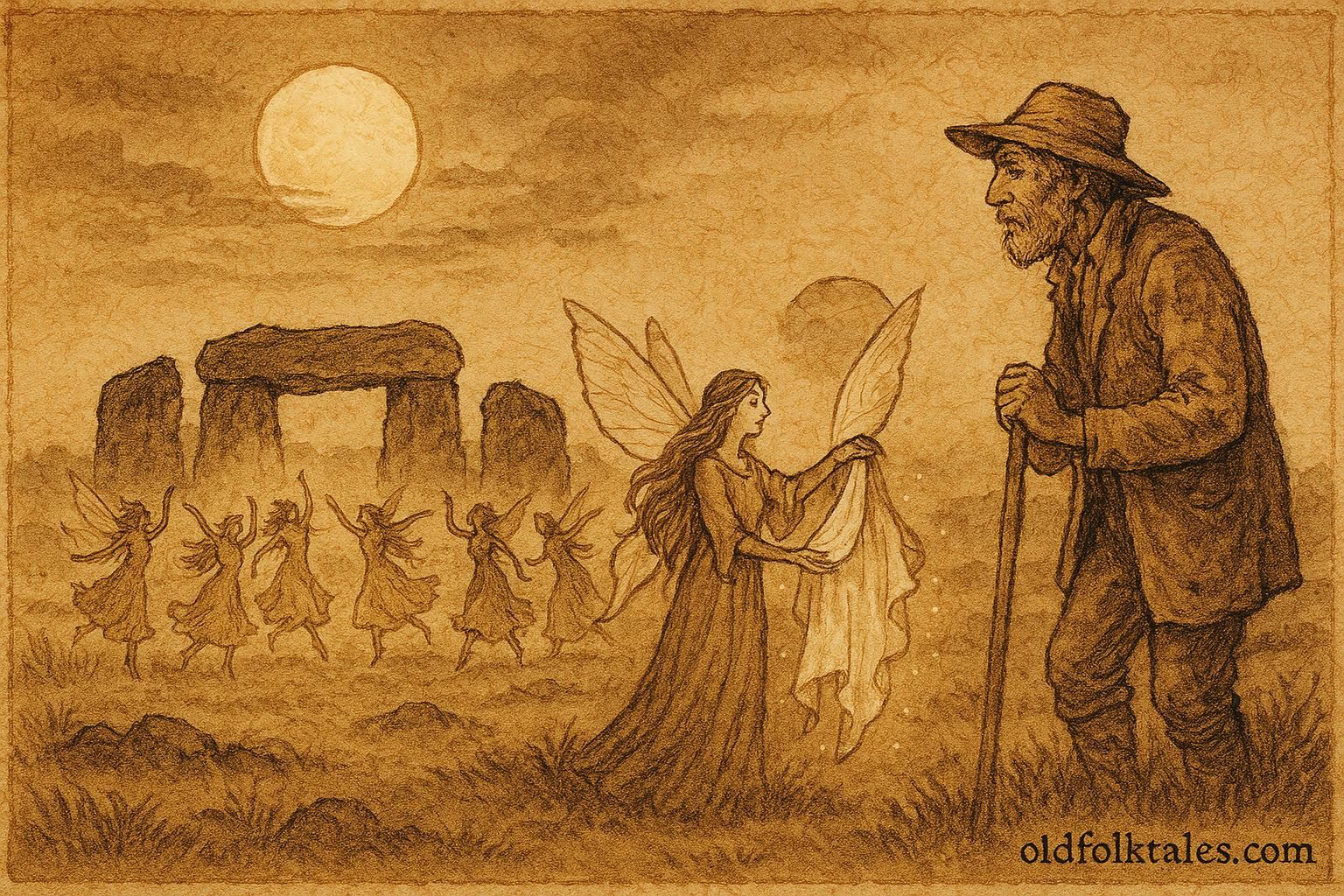
One summer evening, as the moon rose bright over the moors, Rhodri stayed late tending his sheep. The night was calm, filled with the soft hum of crickets and the whisper of the grass. As he neared a ring of stones he had never noticed before, he heard faint music, a lilting tune, light as silver bells. Drawn by curiosity, he followed the sound until he saw a wondrous sight: a circle of fairies, dancing gracefully in the moonlight.
Their silken garments shimmered like dew, their laughter gentle as the stream that curved below the hill. At the center of the dance stood the Fairy Queen herself, radiant and tall, with eyes bright as stars and a cloak woven from moonbeams. Rhodri stood in awe, hardly daring to breathe.
When the Queen noticed him, she beckoned him closer. “Mortal man,” she said in a voice soft but commanding, “you have entered the circle of the tylwyth teg, the fair folk. Few may see us and live to tell of it. Yet your heart is pure, and your gaze kind. Therefore, I will not punish you.”
Instead, she held out a cloak of shimmering silk. “This is the Cloak of Caragonan,” she said. “While you keep your heart honest and your word true, it shall bring you good fortune. But you must never use it for greed, nor speak of it to another soul. Promise me this.”
Rhodri, trembling with gratitude, swore the oath. When he awoke the next morning, the fairies were gone, but the cloak lay beside him, soft as mist and glimmering faintly in the sunlight.
From that day forward, Rhodri’s life changed. His crops grew greener than any in the valley, his sheep doubled, and prosperity smiled upon him. He built new barns, helped his neighbors, and married a kind-hearted woman named Mair. Yet through all his blessings, he never forgot the Fairy Queen’s warning, at least, not for a time.
Years passed. Rhodri became known throughout Anglesey as a fortunate man. But wealth can dull remembrance, and pride crept quietly into his heart. One year, when his fields suffered drought, he took the cloak and demanded aloud, “Bring me gold instead of grain! Let me prosper again!”
The wind turned cold. A strange silence fell across the land. That night, as he slept, the Fairy Queen appeared before him, no longer smiling. “You have broken your word, Rhodri of Caragonan,” she said sternly. “You turned my gift into greed. The bond between mortal and fair folk is not to be toyed with.”
Before he could beg forgiveness, she vanished—taking the cloak with her. By morning, his fortune was gone. His crops withered, his sheep wandered off, and all that remained was the small cottage where he had first begun. But Rhodri, though poor again, was not bitter. He had learned a truth far deeper than gold could buy, that a promise made in honesty is more powerful than any spell, and that respect for the unseen world keeps fortune in balance.
In time, he returned to his simple life, tending his sheep and telling the children of Caragonan to honor their word, even when no one is watching, for the fair folk always are.
Moral Lesson
This Welsh folktale teaches that keeping one’s promises and staying humble in fortune are greater treasures than any magical gift. Greed and broken faith bring loss, while integrity sustains true prosperity.
Knowledge Check
1. Who are the “tylwyth teg” in Welsh folklore?
They are the fair folk or fairies of Wales, known for rewarding honesty and punishing greed.
2. What was the magical object given to Rhodri?
The Fairy Queen gifted him a silken cloak that brought prosperity.
3. What moral lesson does The Fairies of Caragonan teach?
It teaches the importance of keeping promises and remaining humble in success.
4. Where does this folktale originate?
It comes from North Wales, particularly the Anglesey region.
5. How did Rhodri lose his fortune?
He used the cloak selfishly and broke his oath to the Fairy Queen.
6. What symbolizes the link between humans and fairies in the story?
The cloak symbolizes trust and the fragile bond between the mortal world and the mystical realm.
Source: Welsh folktale, Wales.
Adapted from Welsh Fairy-Tales and Other Stories by P. H. Emerson (1894).