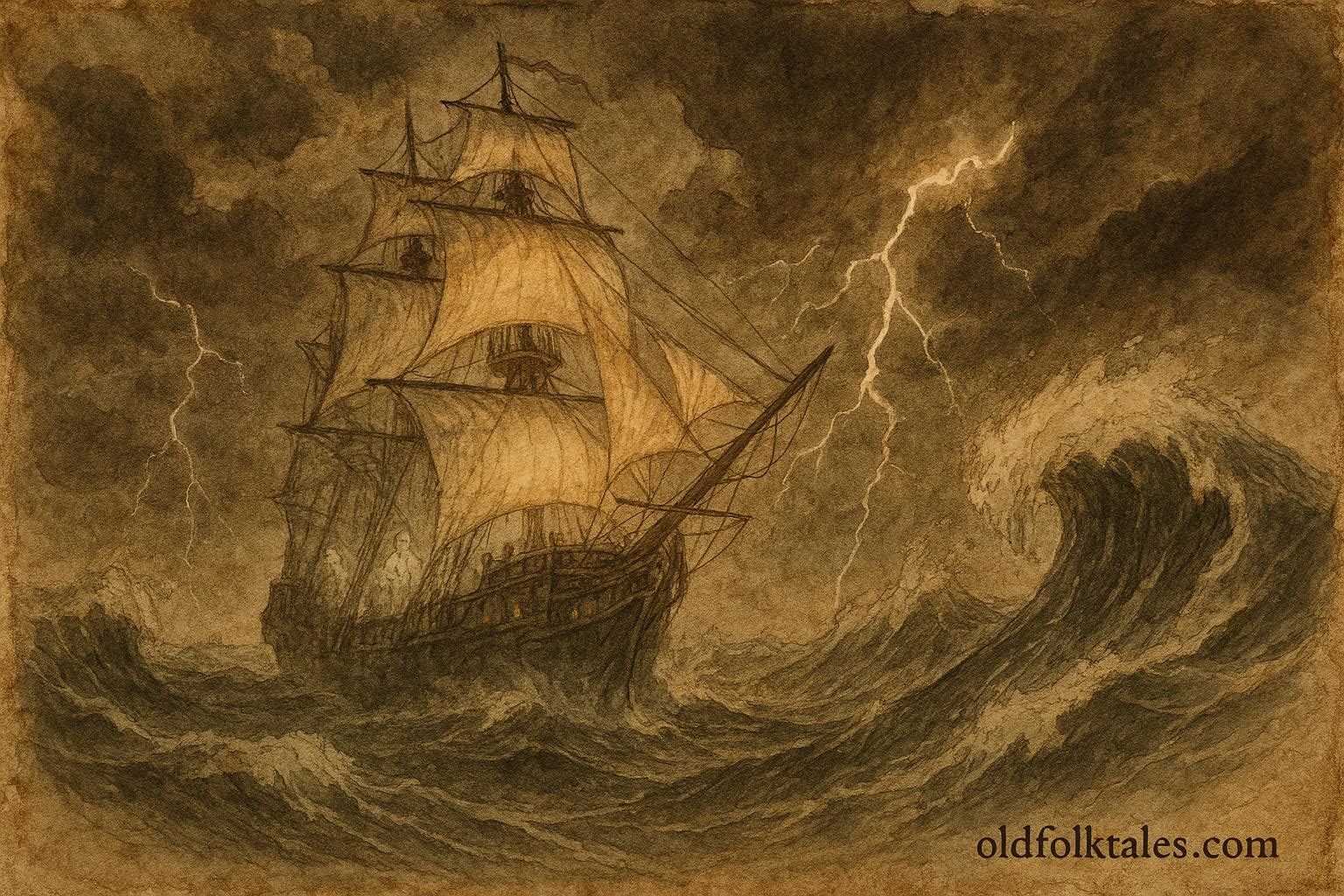
Among the oldest and most feared legends whispered along the docks of Northern Europe is the tale of the Flying Dutchman, a ghost ship condemned to roam the seas without harbor, without rest, and without hope. Long before charts were precise and the oceans fully known, sailors believed the sea to be a realm governed not only by wind and tide, but by divine law. To defy that law was to invite a punishment as vast and endless as the ocean itself.
The legend begins in the seventeenth century, during the height of Dutch maritime power, when merchant ships and trading vessels crossed the North Sea and rounded the treacherous Cape routes toward the East. Among these ships sailed a captain of formidable reputation, an experienced mariner, fearless in storms, rigid in command, and proud beyond measure. His name varies across tellings, for the sea remembers deeds more clearly than names, but his defiance is always the same.
Discover the moral heart and wild spirit of the north through timeless Nordic storytelling
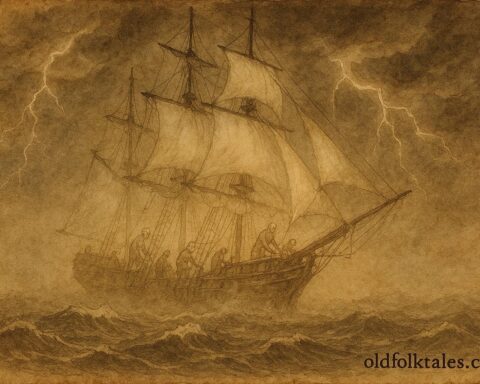
On one fateful voyage, the captain’s ship approached a violent storm. Black clouds rolled across the sky, swallowing the horizon. The wind howled like a living thing, and the waves rose as towering walls of water. Sailors pleaded with their captain to turn back or seek safe harbor, for no ship could pass through such fury unscathed.
But the captain refused.
Driven by pride and hardened by years of command, he swore that no storm, nor God Himself, would prevent him from rounding the cape and completing his voyage. Some say he uttered a blasphemous oath, striking the helm and declaring that he would sail on even if it took him until Judgment Day. Others say he cursed the heavens outright, mocking divine authority and daring fate to stop him.
At that moment, the storm intensified.
Lightning split the sky. The sea churned violently beneath the hull, and the wind tore at the sails as though seeking to rip the ship apart. The crew fell to their knees, praying for mercy, but the captain stood firm, eyes fixed ahead, unmoved by fear or reverence.
Then came the curse.
From the storm itself, whether spoken by God, fate, or the sea’s ancient judgment, came a decree: the captain would never reach port again. He and his ship were condemned to sail the oceans forever, denied rest, land, and salvation. The storm passed, but the sentence remained.
From that night onward, the ship no longer belonged to the living world.
Its sails glowed faintly in the darkness, as though lit from within. Its hull cut through the waves without resistance. The crew, once mortal men, became pale figures bound eternally to their captain’s fate. Time no longer touched them. Decay could not claim them. Nor could redemption.
Thus the Flying Dutchman was born.
For generations afterward, sailors reported sightings of a phantom ship emerging from mist and storm. It appeared most often during foul weather, its sails full despite the wind’s direction, its deck illuminated by an eerie, unnatural light. Those who saw it felt an overwhelming dread, as though death itself had drawn near.
To glimpse the Flying Dutchman was considered a dire omen.
Ships that crossed its path often met disaster soon after, wrecked upon unseen reefs, lost to sudden squalls, or plagued by illness and misfortune. Sailors told of hearing ghostly voices carried on the wind, of seeing figures pacing the deck, forever sailing yet never arriving. Some claimed the cursed captain still stood at the helm, unyielding as ever, eyes fixed on a horizon he would never reach.
Attempts to hail the ship were said to bring ruin. Messages carried by the ghostly crew, letters addressed to loved ones long dead, were believed to doom any who accepted them. The boundary between the living and the damned was not meant to be crossed.
In every retelling, the lesson was clear: the sea does not forgive arrogance.
Among Dutch seafaring communities, the legend served as a warning to captains and sailors alike. Courage was respected, but humility before nature and God was essential. The ocean, vast and indifferent, could not be mastered by will alone. To challenge it with pride was to invite annihilation, or worse, eternal wandering.
As years turned into centuries, the Flying Dutchman passed from oral tradition into written accounts. Writers, poets, and travelers recorded the legend, preserving its core: a captain who defied divine order and paid with endless exile upon the sea. Though details varied, the heart of the story remained unchanged.
Even as navigation improved and superstition waned, sailors continued to speak of the phantom ship in hushed tones. For those who live by the sea, some truths feel older than reason. Storms still rise without warning. Ships still vanish. And somewhere beyond the mist, the Flying Dutchman is said to sail on, bound forever to his fatal oath.
He does not seek forgiveness, for his pride endures. Nor does he seek land, for it is forever denied him. His punishment is not destruction, but persistence, an unending voyage across dark waters, a reminder etched into legend that some boundaries, once crossed, cannot be undone.
And so the Flying Dutchman sails still, a spectral warning upon the waves, teaching through terror what wisdom once failed to teach through mercy.
Explore the wit and wisdom of Western Europe, where humor and virtue often go hand in hand
Moral Lesson
The legend of the Flying Dutchman warns against pride, defiance, and the rejection of divine and natural order. True strength lies not in domination, but in humility. Those who challenge fate without reverence may find themselves punished not with death, but with eternal consequence.
Knowledge Check
1. What is the Flying Dutchman in folklore?
The Flying Dutchman is a ghost ship cursed to sail the seas forever.
2. Why was the Dutch captain cursed?
He defied God and nature during a violent storm, refusing to turn back.
3. Where did the legend originate?
Among Dutch seafaring communities along North Sea and Cape routes.
4. What does seeing the Flying Dutchman signify?
It is considered an omen of disaster or misfortune for sailors.
5. What themes does the legend explore?
Pride, divine judgment, fate, and the dangers of defiance.
6. Is the Flying Dutchman meant to be a moral warning?
Yes, it warns against arrogance and disrespect toward higher powers.
Source & Cultural Origin
Source: Dutch maritime legend, passed through sailors’ oral tradition c. 17th century CE (oral tradition; first written references late 18th century)
Cultural Origin: Dutch seafaring communities (North Sea and Cape routes)