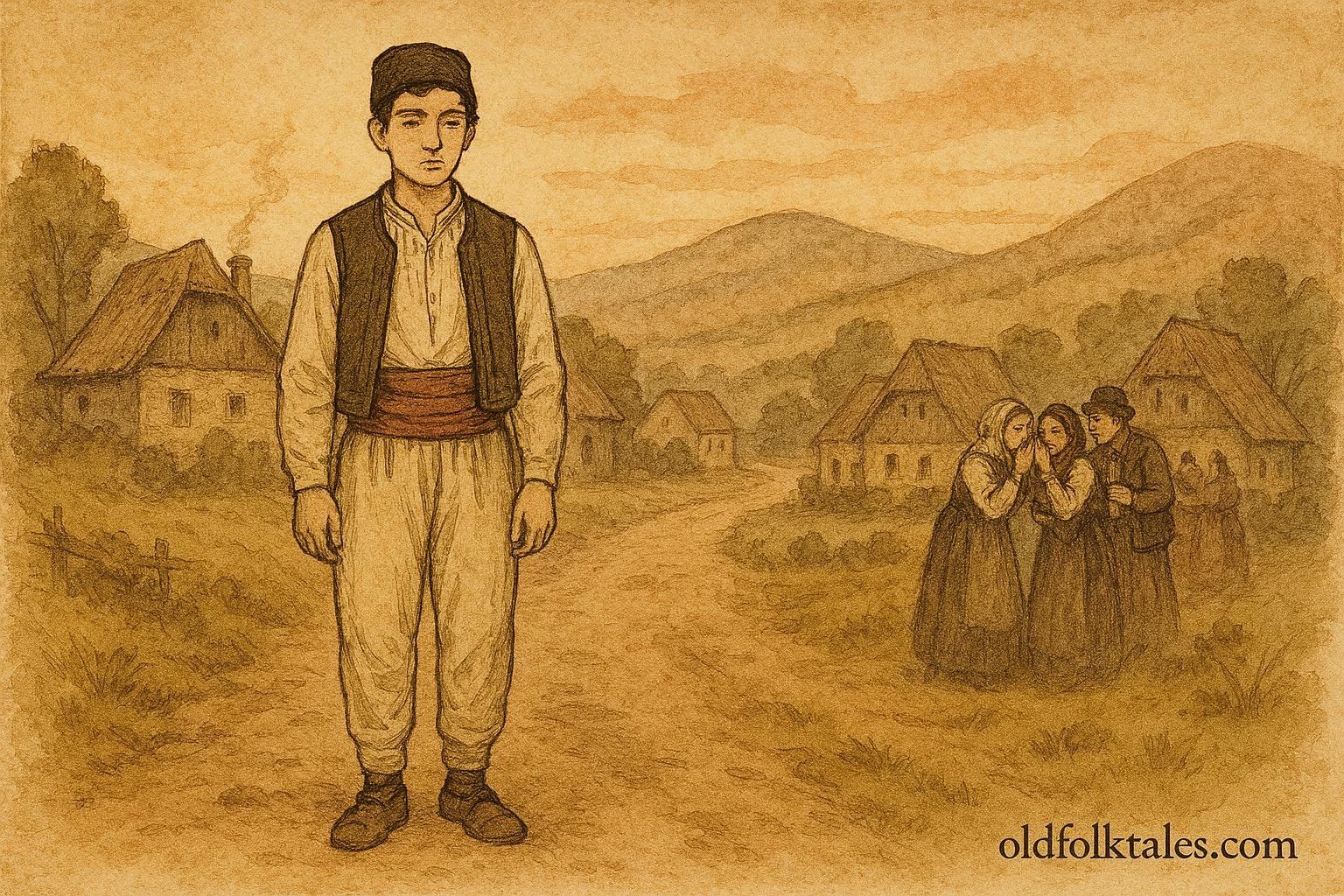
In a quiet Serbian village, tucked between rolling hills and the dark green sweep of oak forests, there lived a young man whom everyone called a fool. From the moment he could speak, his words were honest but slow; his thoughts were simple yet sincere. When other children plotted clever tricks or argued fiercely over games, he would stand quietly, listening, laughing gently, or answering with the truth, no matter how blunt. Villagers shook their heads and whispered among themselves. “He will never succeed,” they said. “He is a fool, and fools have no place in the world.”
The young man, however, carried none of the bitterness of those who mocked him. He rose with the sun each morning, helped his aging mother with the daily chores, fed the chickens, milked the cow, and carried water from the well. He greeted neighbors with a smile, even those who insulted him most cruelly, and tended to the village paths that others ignored. Though laughed at for his slow ways, he never rushed or bragged. In his heart, he felt no shame, only a quiet patience that gave him strength beyond words.
Explore the warmth and wit of Mediterranean storytelling, where love and wisdom intertwine
One year, hardship came to the village. The harvest was poor; storms had ruined the wheat, and the river had flooded the lowlands. Many young men left to seek work elsewhere, hoping for riches they might never find. The fool, too, felt the pull of the wider world, not for wealth, but because his mother’s back was bent with work and her hands were worn by years of toil. With a small loaf of bread, a worn cloak, and a leather pouch, he kissed her hand and set out along the winding road that led beyond the familiar fields and forest edges.
As he walked, he encountered many in need. First, he met an old beggar shivering by the roadside, his ragged cloak flapping in the wind. Without hesitation, the fool gave him his only spare scarf and shared half of his bread. Later, he came upon a widow struggling to lift a fallen cart, her children crying beside her. He lifted the cart, offered words of comfort, and carried her supplies to the nearest village. Even when a starving child begged for food near the riverbank, he emptied his pouch to ease the hunger. Travelers passing by laughed at him, thinking him foolish for giving away everything he had, but the young man only smiled. In his heart, he felt that true weight lay not in gold or possessions, but in helping those who could not help themselves.
Eventually, the fool reached a wealthy household, its walls high, its doors heavy, and its gardens ornate with fountains and flowering shrubs. The master of the house, a stern man known throughout the region for testing the servants he employed, eyed the young man with suspicion. “I wonder what use a fool could be,” he muttered. Yet he hired him, curious to see how such a simple man might survive the work of the household. He assigned him the hardest tasks, certain that the fool would fail tending the livestock through long nights, carrying water from distant wells, and guarding the fields against both thieves and wild animals.
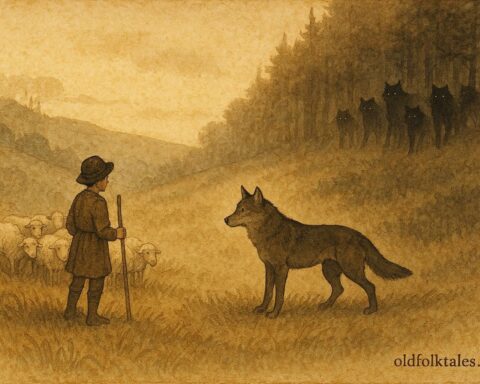
The young man performed every task faithfully. When wolves prowled near the sheep, he remained vigilant, singing softly to keep fear at bay. During storms, he worked tirelessly to shelter crops and livestock, soaking wet and exhausted, yet never complaining. Other servants, envious of his steadiness, tried to trick him into extra labor or blamed him for their own mistakes. When punished unjustly, he accepted it silently, never raising his voice, for he trusted that truth and virtue have their own timing.
One day, the master decided to test him further. He handed the fool a small sum of money and said, “Go to market and buy what the household needs. Do not waste a coin.” The fool nodded and departed, but along the road, he encountered three strangers in distress. One was hungry, one was barefoot in the cold, and one mourned the loss of a family member. The fool, moved by compassion, gave each what he could spare: food, shoes, and comfort. By the time he reached the market, his purse was empty. Villagers in the marketplace laughed, whispering that the fool had wasted all the money and would return empty-handed.
Yet the strangers were not ordinary people, they were noblemen in disguise, testing the goodness of travelers. Impressed by the fool’s generosity, they rewarded the household richly and praised the young man for his honesty and compassion. Word spread quickly, reaching even the master, who could not hide his astonishment. The fool, once mocked and underestimated, had revealed a depth of character the wealthy and proud often lacked.
When he returned to his village, the young man’s transformation was subtle but unmistakable. He did not boast of his reward or his newfound respect, but walked quietly among the villagers, helping where needed and greeting each person with the same gentle smile as before. The villagers who had once ridiculed him now bowed their heads in respect, and many came to seek his counsel in matters of life, work, and judgment. Those who had scorned him learned a powerful lesson: wisdom does not always appear as cleverness; it often walks quietly, wrapped in patience, kindness, and integrity.
Even in his old age, the fool remained humble. He cared for his mother until her last days, tended the land with the same gentle hands, and shared his knowledge with children who would listen. He became a bridge between generations, a living example that the simplest heart may hold the greatest wisdom, and that virtue is its own reward.
Moral Lesson
This Serbian folktale teaches that true wisdom is not measured by cleverness, cunning, or outward appearances. Patience, honesty, and kindness, though they may be mocked, carry a strength that endures beyond ridicule or misfortune. Those who act with virtue reveal an intelligence far deeper than pride can comprehend, and goodness often brings its own rewards in unexpected ways.
Knowledge Check
1. Why is the young man considered a fool by the village?
Because he speaks simply, acts honestly, and does not engage in cunning or prideful tricks.
2. What motivates the fool to leave his village?
To ease his mother’s workload, not for wealth or personal gain.
3. How does the fool treat those he meets on his journey?
With compassion, generosity, and selflessness, even when it costs him.
4. What role does the master play in the story?
He tests the young man’s character through hardship and challenging tasks.
5. How is wisdom portrayed in the tale?
As moral integrity, patience, and kindness rather than cleverness or cunning.
6. What is the cultural origin of this folktale?
Serbian (South Slavic oral folklore), as recorded by Vuk Stefanović Karadžić.
Source: Vuk Stefanović Karadžić, Narodne srpske pripovijetke (1849–1853)
Cultural Origin: Serbia (South Slavic folklore)