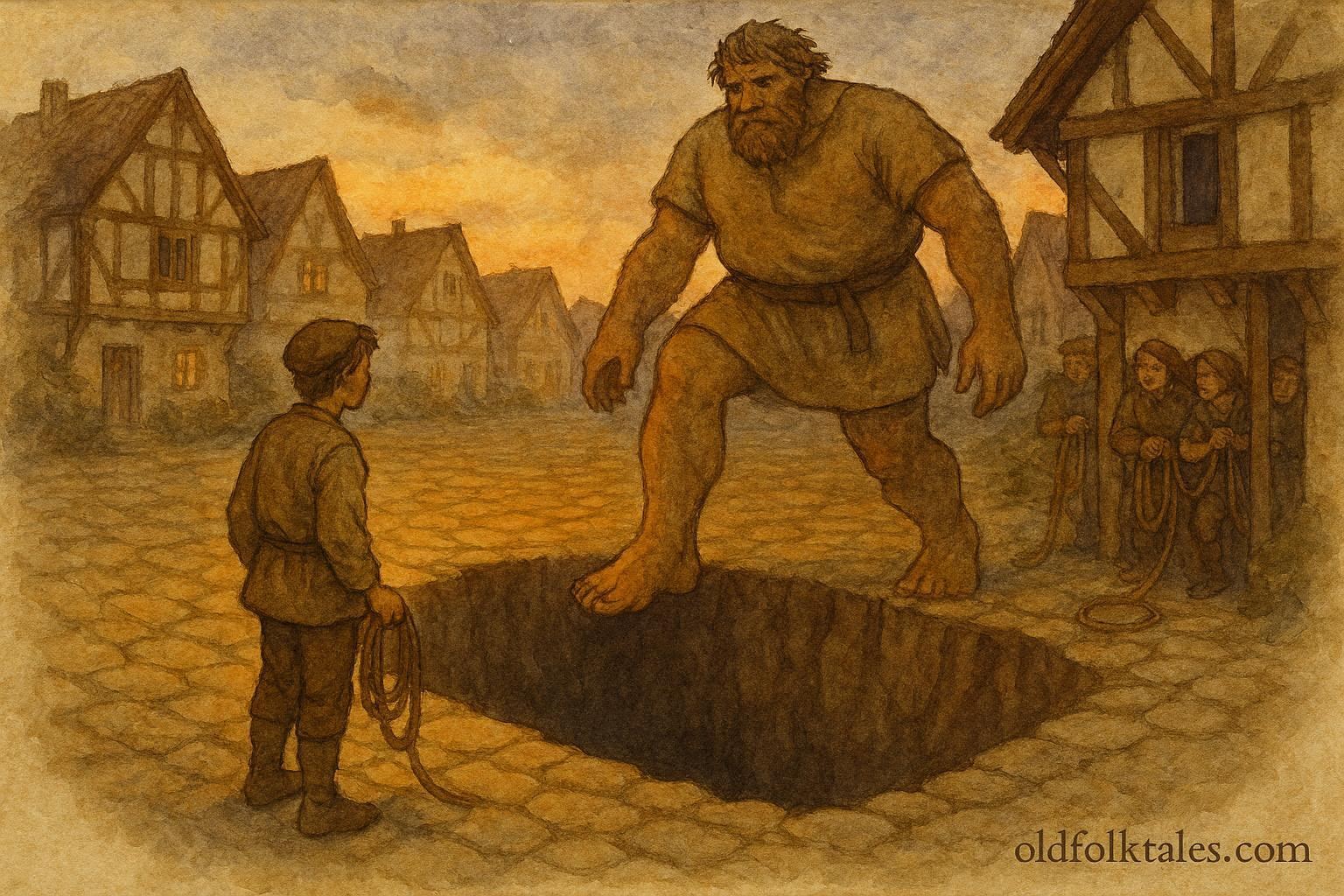
In the quiet, rolling countryside of Luxembourg, nestled among dense forests and gentle hills, lay the town of Wiltz. The village was small but vibrant, with cobblestone streets, timbered homes, and fields of golden wheat swaying beneath the sun. Life was simple, and the villagers lived in harmony with the land and one another. Yet peace in Wiltz was not to last, for a fearsome giant had begun to terrorize the region.
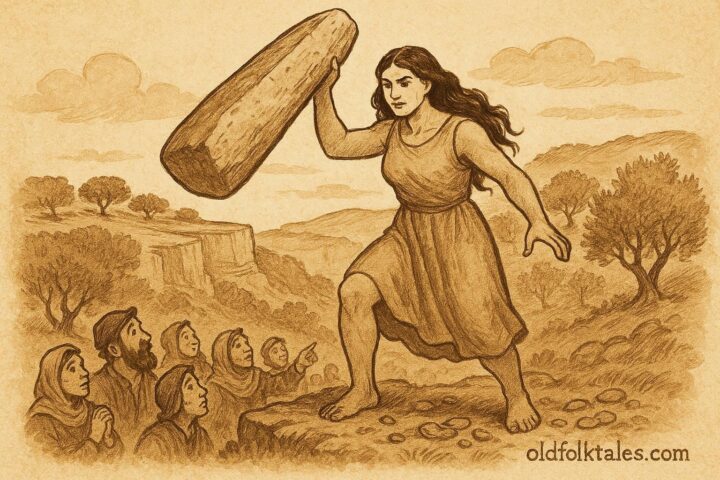
This giant was no ordinary foe. Towering above the tallest trees, with hands as large as barrels and a voice that shook the hills, he descended upon Wiltz at will. Livestock disappeared from the fields, granaries were overturned, and even the bravest villagers dared not confront him. Fear hung over the town like a dark cloud, and nightly fires were lit to ward off his approach, though they often proved futile.
Among the villagers was a humble young man named Étienne. Though small in stature and of modest means, Étienne was known for his quick mind, careful observation, and ingenuity. While others quaked in fear, he studied the giant from a distance, noticing patterns in his movements and behavior. Étienne understood that brute strength alone could not defeat such a foe; it would take cleverness, cunning, and courage.
One evening, as the sun dipped below the horizon and the sky turned shades of rose and amber, Étienne gathered his thoughts by the riverbank. He watched the giant in the valley below, his shadow stretching across the fields like a dark omen. The young man had devised a plan, a trap that would require patience, stealth, and an intimate knowledge of the land.
Étienne began by digging a deep pit along the path the giant most often traveled. Covered with branches, leaves, and soil, the trap was cleverly concealed. To lure the giant, Étienne left a trail of grain, shining pots, and simple tools, objects that might catch the giant’s curiosity and draw him to the pit. He worked quietly through the night, the moon casting silver light over the fields, guiding his hands as he layered the trap with precision.
The following day, villagers watched from hidden corners, anxious and skeptical. They had endured the giant’s wrath for so long that hope was fragile. Étienne, however, remained calm. He had anticipated the giant’s greed and curiosity; he trusted in his plan.
As twilight fell, the giant appeared once more, his footsteps shaking the earth. At first, he ignored the trail, but soon, shiny pots caught his eye. He bent to examine them, then noticed the scattered grain and tools. His massive hands reached toward the ground, following the bait, and step by step, he moved across the carefully disguised pit.
Étienne held his breath. One misstep, and the trap could fail, or worse, the giant could discover it and turn his wrath toward the villagers. The ground beneath the giant’s feet creaked and shifted. With a final, massive step, the pit gave way, and the giant plunged into its depths. The villagers gasped, both in fear and in relief, as the earth covered the pit partially, trapping the giant within.
But Étienne knew that the danger was not yet fully ended. The giant, though trapped, was clever and strong. Étienne approached cautiously, carrying a coil of thick rope woven from flax. He circled the pit, lowering the rope and instructing the villagers to pull in unison when the giant attempted to rise. The giant struggled, his enormous arms swinging, but each movement tightened the rope, binding him more securely.
By nightfall, the giant was restrained and exhausted. The villagers, guided by Étienne’s careful instructions, secured him with chains and stakes, ensuring that he could cause no further harm. Fear turned to awe as the villagers realized that a single mind, guided by courage and cleverness, had outwitted a foe whose strength seemed insurmountable.
Prince Henri, visiting the region to witness the story for himself, heard of Étienne’s triumph. Impressed by the young man’s courage and intelligence, he bestowed honors upon him, providing resources to strengthen Wiltz’s defenses and recognizing Étienne as a hero among his people. The young man, however, remained humble, giving credit to the land, the villagers’ assistance, and the careful planning that had made the victory possible.
In the weeks that followed, Wiltz flourished. Farmers returned to their fields, children played freely, and the villagers held a grand celebration in Étienne’s honor. Stories of his ingenuity spread throughout Luxembourg, inspiring songs, poems, and oral retellings by firesides. The tale reminded everyone that courage need not be measured in size or strength; it could be measured in cleverness, determination, and a willingness to act for the good of others.
Étienne continued to live in Wiltz, respected and admired but never arrogant. He shared his knowledge with neighbors, teaching them ways to protect their farms and homes, and encouraging them to trust their wits and work together in times of difficulty. The giant remained trapped, a symbol of past fears now overcome, and visitors from nearby villages would marvel at the ingenuity that had turned terror into triumph.
Even years later, as the children of Wiltz grew and learned of the giant, they were taught not only to be brave but also to be clever. Étienne’s story endured as a cultural lesson, emphasizing that intelligence, resourcefulness, and solidarity within a community could triumph over even the most daunting challenges. The giant, though once a figure of fear, became part of the collective memory, a reminder of danger overcome through wit and courage rather than mere strength.
Discover the timeless charm of French, Dutch, and Belgian stories filled with cleverness and heart
Moral Lesson
The Giant of Wiltz teaches that courage and intelligence can overcome even the greatest threats. Bravery combined with cleverness, observation, and community solidarity ensures that challenges are met not with fear alone but with strategy and hope.
Knowledge Check
- Who is the protagonist of the story?
- Étienne, a humble and clever young man from Wiltz.
- What threat faces the town of Wiltz?
- A giant who terrorizes villagers, stealing livestock and destroying property.
- How does Étienne trap the giant?
- By digging a concealed pit and luring him with bait, then restraining him with ropes and stakes.
- What themes are central to this Luxembourgish folktale?
- Courage and cleverness, community solidarity, and triumph of good over evil.
- How do the villagers respond to Étienne’s plan?
- They assist cautiously, follow his instructions, and celebrate his success once the giant is trapped.
- What cultural elements are highlighted in the tale?
- Rural Luxembourgish landscapes, village life, folklore of giants, clever heroes, and community cooperation.
Source: Collected by Jean-Marie Lemaire, Folk Tales of Luxembourg, 1918, Luxembourg.
Cultural Origin: Luxembourgish