In the rugged highlands of Central Albania, where stone houses clung to the hillsides and the wind carried stories across valleys, there lived a young girl whose kindness shone brighter than the stars. Though her life was marked by hardship, her spirit remained gentle, her heart full of compassion, and her presence a quiet comfort to those around her.
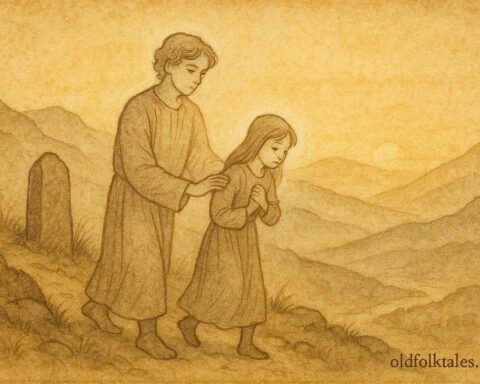
She lived in a modest home with her family, yet her days were far from peaceful. Those who should have protected her instead treated her with cruelty. She was given the hardest tasks, the longest hours, and the least kindness. From dawn until nightfall, she worked, fetching water from distant springs, gathering wood from steep hills, and tending to chores that left her weary and alone.
Still, she never allowed bitterness to take root in her heart. Even in her suffering, she remained kind. She shared what little she had, spoke gently to others, and found moments of solace beneath the open sky, where she would look upward and whisper her hopes to the heavens.
The nights were her refuge.
When her work was done and the house fell silent, she would step outside and gaze at the vast sky above. The stars shimmered like distant fires, and the pale glow of the moon bathed the earth in soft light.
“How peaceful it must be,” she would think, “to belong to the sky, far from pain and sorrow.”
The moon, in its quiet brilliance, seemed to watch her, calm, distant, and untouched by the hardships of the world below.
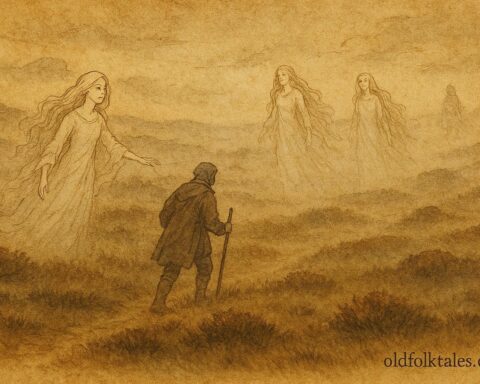
One evening, after a particularly harsh day, the girl wandered farther than usual. Her feet carried her beyond the familiar paths, into a quiet clearing where the earth seemed to breathe more softly. The air was still, and the sky above stretched endlessly, filled with stars.
Overcome with exhaustion and sorrow, she sank to her knees and whispered,
“If there is mercy in this world, let me find it. If there is a place where I may rest, let it be far from here.”
Her voice trembled, but it carried a sincerity that echoed beyond the clearing.
In that moment, something shifted.
The air grew lighter, and a gentle radiance began to surround her. It was not harsh or blinding, but soft and warm, like the first light of dawn. The girl lifted her head, her eyes wide with wonder.
From above, a presence seemed to answer her plea, not with words, but with a quiet understanding that filled her with calm. It was as though the heavens themselves had heard her sorrow and chosen to respond.
The light grew brighter, wrapping around her like a protective embrace. The weight of her suffering began to lift, replaced by a sense of peace she had never known.
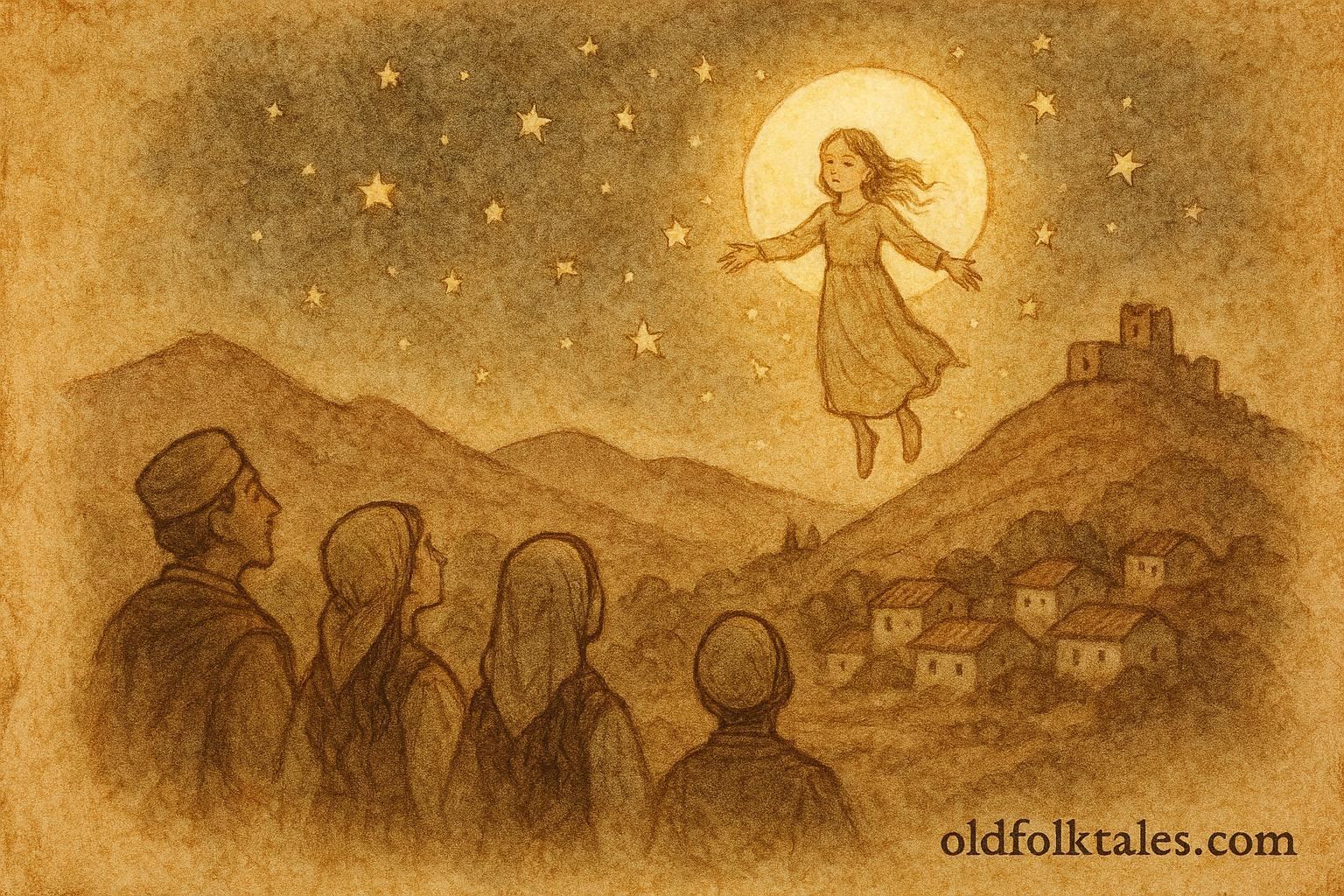
Slowly, she felt herself rising.
The earth beneath her faded, the sounds of the world growing distant. She was no longer bound by the hardships that had defined her life. Instead, she was carried upward, toward the vast expanse of the sky.
Her form changed, becoming lighter, more radiant, as though her very essence was being transformed.
The girl who had endured so much was no longer confined to the ground. She was becoming something more, something eternal.
As she ascended, the world below seemed smaller, its struggles fading into the distance. Yet she did not forget it. She carried with her the memory of every hardship, every moment of kindness, every quiet act of resilience.
And then, she became the Moon.
Her gentle light spread across the earth, illuminating the night with a calm, steady glow. No longer bound by suffering, she now watched over the world, her presence a silent promise that even in darkness, there is light.
From that night onward, the people of the land spoke of the Moon with reverence. They believed it was not merely a celestial body, but a guardian, a symbol of purity, resilience, and justice beyond human reach.
When the nights grew dark and the world seemed heavy with sorrow, they looked to the sky and remembered the girl who had risen above her suffering. Her light reminded them that kindness endures, that hardship does not define one’s fate, and that there is always hope beyond the trials of life.
And so, the Moon continued its journey across the sky, night after night, watching over the earth with quiet grace. Its glow was not cold or distant, but filled with the warmth of a heart that had known both pain and compassion.
The girl who had once suffered in silence now shone as a beacon for all, her transformation a testament to the power of resilience and the promise of peace beyond hardship.
Moral Lesson
This Albanian folktale teaches that purity of heart and resilience in the face of suffering are never without reward. Even in the darkest moments, kindness and hope can lead to transformation and eternal peace.
Knowledge Check
- Who is the main character in “The Girl Who Became the Moon”?
A kind-hearted girl from Central Albania who endures hardship but remains compassionate. - What causes the girl’s transformation into the Moon?
Her suffering, purity, and heartfelt plea for mercy lead to a divine transformation. - What does the Moon symbolize in this folktale?
It represents purity, resilience, eternal light, and spiritual justice. - What is the main theme of the story?
The story emphasizes hope, endurance, and reward for kindness despite suffering. - Why do people revere the Moon in the tale?
They believe it is the transformed girl watching over the earth as a guardian. - What lesson does the story teach about hardship?
That suffering can lead to transformation, and goodness is ultimately rewarded.
Source: Legends of Albania, 1987
Cultural Origin: Central Albania