In a small Ukrainian village surrounded by open fields of rye and barley, there lived a girl known for her gentleness. She rose before sunrise, helped her mother knead bread, carried water from the well, and sang softly while tending the vegetable garden behind their cottage. The villagers often said that her presence alone made the air feel lighter.
She had no great wealth, no noble birth, and no extraordinary beauty that would draw envy in the way courtly legends describe. Yet she possessed something rarer, a heart that wished no harm, even to those who wronged her.
And someone did.
Not far from the village edge lived an old woman feared more than loved. She kept to herself, muttered to the wind, and gathered herbs under moonlight. Some called her wise. Others called her something darker. It was said she understood roots, shadows, and the language of things that grew unseen beneath the soil.
The girl once helped this woman during a harsh winter. When others avoided the old cottage, the girl carried firewood there without complaint. She offered bread. She spoke kindly.
But kindness does not always soften hardened hearts.
Instead, the old woman’s envy grew. The villagers smiled when the girl passed. Children followed her through the fields. Even the cherry trees near the river bloomed more brightly where she walked. The old woman watched this and felt something twist inside her, not admiration, but resentment.
One spring evening, when the sky burned pink over the horizon and the air carried the promise of blossoms, the old woman called the girl into the forest. She claimed she had rare seeds to share, seeds that would grow into trees bearing fruit sweeter than honey.
Trusting, as she always did, the girl followed.
Deep among the birch and oak, where sunlight struggled to reach the ground, the old woman whispered words older than church bells and older than the village itself. The wind stilled. The earth seemed to hold its breath.
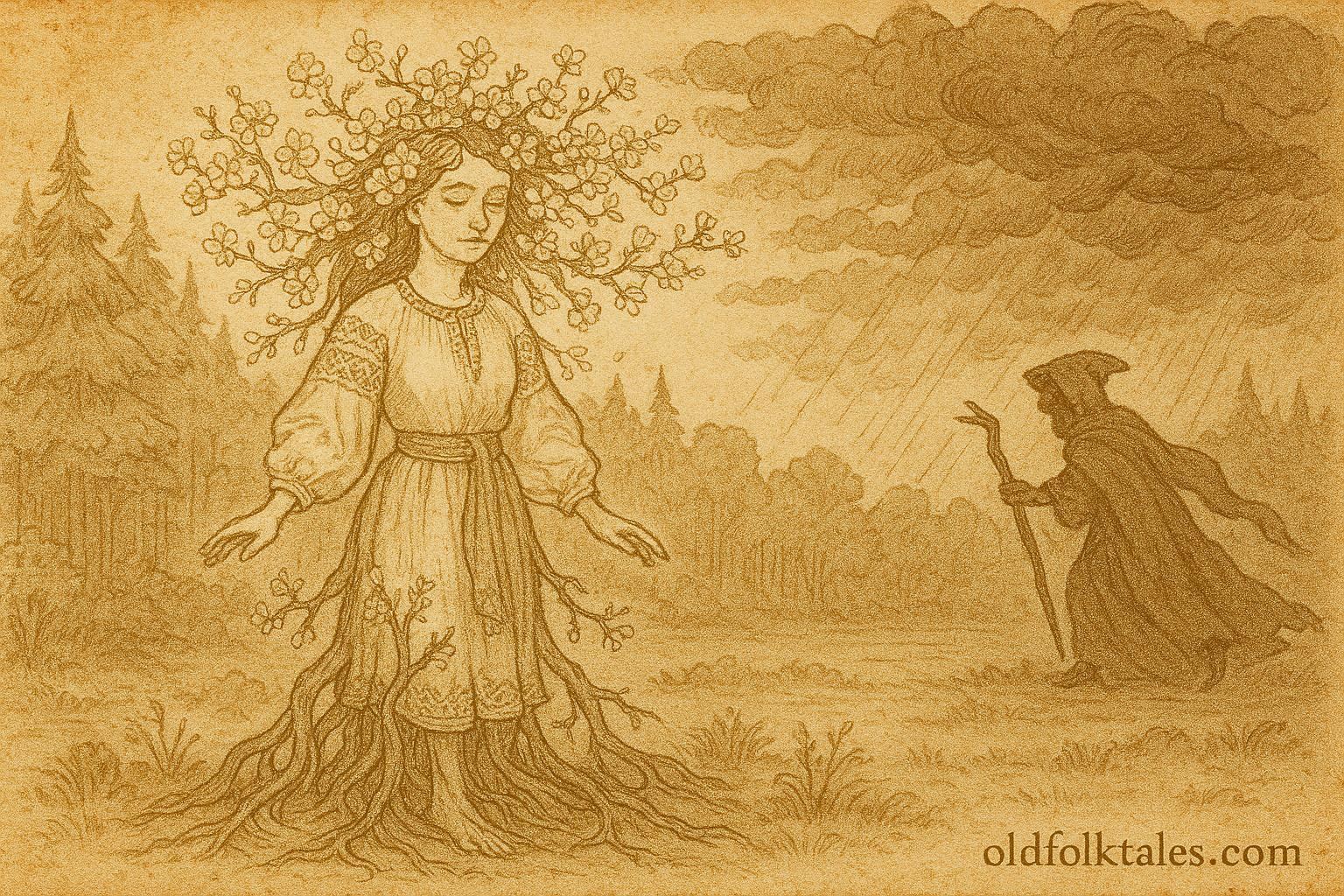
And before the girl could speak, before she could understand, her body rooted to the soil.
Her arms stretched into branches.
Her hair became blossoms pale as dawn.
Her feet sank into the earth as roots.
Where she once stood, there now grew a young cherry tree.
The old woman left, satisfied.
But curses born of jealousy often misjudge what goodness truly is.
The Tree That Remembered
When villagers searched for the missing girl, they found only a newly grown cherry tree standing alone in the clearing. It seemed too young to have grown naturally, yet too strong to have been planted. Its blossoms shimmered even before the season was right.
Her mother wept beside it.
As tears fell upon the soil, something remarkable happened. The tree’s branches bent gently downward, as if in comfort. A breeze passed through the leaves, though no other trees stirred.
The villagers sensed what had happened, though no one spoke it aloud.
That summer, when famine threatened neighboring regions, the cherry tree bore fruit unlike any other. Though young, it blossomed abundantly. Its cherries were deep red, sweet, and plentiful. No matter how many were picked, more ripened.
Children who ate its fruit grew stronger.
The elderly found relief from aching bones.
The sick recovered more quickly.
The village prospered.
And always, the tree stood quietly, offering without demand.
Jealousy Meets Its Reflection
The old woman watched this transformation from afar. Instead of destruction, her curse had become blessing. Instead of silencing the girl’s goodness, she had rooted it into something permanent.
Anger returned.
One night, under a sky thick with clouds, she crept back to the clearing carrying an axe. If she could not undo the magic, she would destroy it.
She raised the blade.
But when steel touched bark, a sharp cry rang out, not from the tree, but from the air itself. The wind howled. The ground trembled.
The axe splintered in her hands.
Lightning cracked across the sky, striking the earth beside her. The storm was sudden and fierce, as though nature itself had risen in defense.
Terrified, the old woman fled.
From that night on, she was never seen in the village again.
Some said she wandered into the forest and lost her way. Others whispered that the forces she tried to command had turned against her.
The Bloom of Remembrance
Years passed.
The cherry tree grew taller, its trunk sturdy, its branches wide. Every spring, it bloomed before any other tree in the valley. Its blossoms became a sign that winter had truly ended.
Villagers began holding small gatherings beneath it during planting season. They would offer bread and salt at its roots, not as worship, but as gratitude.
Children were told:
“Kindness does not vanish. It takes root.”
Young women braided cherry blossoms into their hair during festivals. Farmers planted saplings from its seeds along their fields. Travelers rested in its shade.
Though transformed, the girl’s presence remained active in the life of the community. Her sacrifice had not silenced her influence, it had expanded it.
And so, the village changed.
They became more careful with envy.
More mindful of gratitude.
More aware that what grows from love cannot easily be destroyed.
Discover Polish, Russian, Ukrainian, and Belarusian folktales where magic and morality meet
Moral Lesson
True kindness cannot be erased by jealousy. Even when harmed, goodness can take root and become a lasting blessing. The story teaches that selflessness outlives cruelty, and that nature often preserves what is pure.
Knowledge Check
-
What caused the girl’s transformation in this Ukrainian folktale?
A jealous witch used ancient magic to turn her into a cherry tree out of envy. -
How does the cherry tree continue to help the village?
It produces abundant fruit that nourishes and heals the community. -
What happens when the witch tries to destroy the tree?
Nature intervenes with a violent storm, preventing the destruction. -
What does the cherry tree symbolize in Ukrainian folklore?
Sacrifice, enduring kindness, feminine virtue, and the sacredness of nature. -
What cultural values are reflected in the story?
Agrarian life, reverence for trees, communal gratitude, and moral justice. -
What is the key theme of this Ukrainian transformation tale?
Selflessness endures, while jealousy ultimately destroys itself.
Source: Recorded in Ukrainian folktale anthologies (1890s)
Cultural Origin: Northern and Central Ukrainian agrarian traditions and reverence for sacred trees in Slavic folklore.