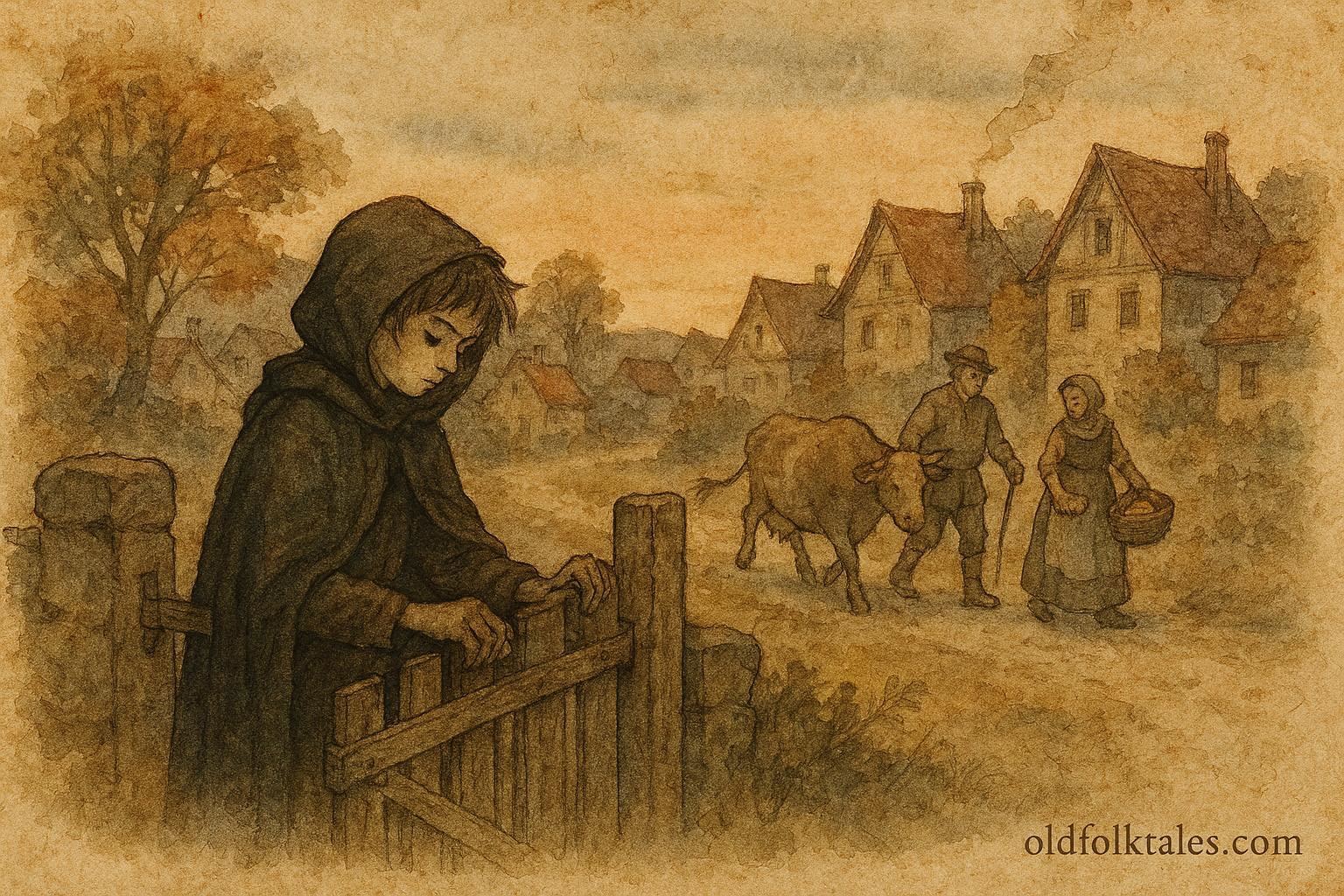
In a quiet village nestled in the rolling hills of central Bulgaria, there lived a boy who was often overlooked and ridiculed. His clothes were worn and patched, his shoes too large for his small feet, and his voice too soft to compete with the teasing laughter of others. Children and adults alike called him names and kept their distance, dismissing him as weak and insignificant.
But the boy had something the villagers could not see, an unshakable spirit of kindness and an eye for fairness that surpassed them all.
One afternoon, while wandering near the edge of the forest, the boy discovered something extraordinary. Hidden beneath a pile of autumn leaves lay a cloak, stitched of the darkest fabric he had ever seen. It shimmered faintly in the sunlight, and as he wrapped it around his shoulders, a startling sensation swept over him, he vanished from sight.
He could not see himself, of course, but the world around him looked unchanged. He raised a hand, and it moved freely through the air. He turned in a circle and realized with wide eyes that he had become invisible.
The boy’s first instinct was shock, followed by fear. Such power was unlike anything he had known. He could be anywhere, and no one would know he was there. The temptation to seek revenge against those who mocked him was strong. He imagined slipping unseen into the homes of bullies and pranksters, scaring them or causing them to stumble.
Yet, as he stood alone in the forest, he remembered his mother’s words: “Do not repay cruelty with cruelty. True strength lies in what you do when no one is watching.”
And so, he made a different choice.
In the days that followed, the boy became the unseen guardian of his village. He would sneak into the market to leave extra food on the stalls of the poorest families. He repaired broken doors and gates that had long been neglected. He returned lost animals to their owners, sometimes even guiding frightened children back home through the darkened streets.
No one knew who was helping them, but they marveled at the sudden kindnesses that appeared as if by magic. And though the villagers praised these deeds, they also whispered superstitiously that it must be the work of spirits.
One winter, the village faced a particularly cruel challenge. The river that supplied their water froze early, and the ice threatened to block the flow entirely. Without water, the fields would fail, and the villagers’ livestock would suffer.
The boy, cloaked and unseen, went to the riverbank each night. He broke the ice, cleared channels, and guided animals safely to the remaining water. By dawn, the villagers found their river flowing once more, as if the frost had never posed a threat.
They called it a miracle.
The boy smiled silently, satisfied that the work was done.
It was not only material kindness that he performed. He began to observe the injustices around him, subtle but impactful. The village had a few greedy traders who overcharged widows and children, and some elders hoarded goods while others went hungry. The boy, invisible, would expose their misdeeds indirectly: spilling scales to show the true measure, or slipping a note into the hand of a conscientious witness. He did not punish them cruelly, but he guided fairness to prevail, ensuring the village remained balanced and just.
Over time, the villagers began to notice that those who acted selfishly found obstacles in their path, while those who were generous or honest prospered. They did not understand why, but they started to adjust their behavior accordingly. And slowly, respect began to grow, not just for the boy, but for the values he seemed to champion, even if unseen.
Years passed. The boy grew, and so did the village. Though his magical cloak remained his secret, the villagers no longer mocked him. They saw a quiet, steady strength in him, and his reputation for integrity spread even without his revealing the cloak’s power.
When festivals came, he helped without recognition. When conflicts arose, he intervened silently, ensuring fairness. And though he remained invisible to those who judged him by appearance alone, he became visible in the hearts and minds of those around him.
Eventually, the boy realized he no longer needed to rely on the cloak to influence his world. The villagers had come to value him for who he was, not for what magic he might possess, but for the goodness and fairness he consistently displayed.
He hung the cloak in a secret place, still powerful and magical, but no longer essential. He had learned the greatest secret of all: true strength and respect come not from visibility, but from integrity.
Even today, according to the stories passed down in central Bulgaria, the boy’s invisible acts are remembered. His deeds became a silent lesson, reminding each generation that unseen kindness can shape a community and that true power lies in humility and justice, rather than in vengeance or selfish ambition.
Moral Lesson
The Invisible Cloak of the Outcast Boy teaches that integrity and humility are more powerful than revenge or recognition. True respect and lasting change come from acts of unseen kindness and the courage to do good without expecting praise.
Knowledge Check
1. What magical item does the boy discover in the folktale?
He discovers an invisible cloak that allows him to move unseen.
2. How does the boy use the cloak?
He helps the villagers, repairs damage, and exposes injustice without seeking revenge.
3. Why does the boy choose kindness over revenge?
He values integrity and remembers his mother’s teaching that true strength is shown in unseen actions.
4. How does the village change as a result of his actions?
Villagers behave more fairly, respect grows, and the community becomes just and balanced.
5. What lesson does the story teach about power and recognition?
That unseen deeds and humility can have a greater impact than visible power or vengeance.
6. Where does this folktale originate?
It comes from central Bulgarian folklore, collected by Angel Karaliychev in 1944.
Source: Collected in Bulgarian Folk Tales by Angel Karaliychev (1944)
Cultural Origin: Central Bulgarian folklore