In a kingdom nestled between rolling hills and sparkling Mediterranean waters, there once reigned a proud and noble king. His palace gleamed in the sunlight, adorned with white limestone walls, intricate carvings, and tapestries that told the stories of generations past. The people of the land respected and adored him, for he ruled with fairness, wisdom, and a strong sense of justice. Yet, as splendid as his reign was, fate had a peculiar and unexpected twist in store: one morning, the king awoke to discover a long, twisting horn growing from the crown of his head.
One morning, as the king awoke to the first light of dawn streaming through the tall palace windows, he felt a strange sensation atop his head. Rising from his bed, he rushed to the mirror in alarm. To his astonishment, there, emerging from the crown of his head, was a single, twisting horn. It was long and gleaming, spiraling toward the ceiling as if it had grown overnight from some hidden magic. The king’s eyes widened with disbelief, and a shiver ran down his spine. “How could this be?” he whispered, touching the smooth, hard surface. “What sorcery is this?”
News of the king’s transformation spread swiftly throughout the castle. The courtiers gasped, their faces pale with shock. Some whispered in fear; others gawked openly, unsure whether to feel horror or awe. The royal physicians and wise men were summoned immediately, yet none could explain why the king had grown the horn or how it might be removed. Rumors began to ripple through the city: some said it was a curse from an offended spirit, while others whispered that it was a mark of great destiny.
The king himself felt a mix of dread and curiosity. At first, he hid behind heavy velvet curtains, ashamed to appear before his subjects. But soon, he realized he could not escape the eyes of the people who loved him. Slowly, with the horn catching the sunlight and casting a strange shadow across his face, he ventured into the palace gardens. The birds seemed startled by the unusual sight, and the gentle breeze whispered through the orange and olive trees as though carrying its own astonishment.
Despite the king’s fear, life in the kingdom continued. But the people were divided. Some admired the horn as a symbol of the king’s unusual power and wisdom, believing it marked him as chosen by higher forces. Others grew uneasy, finding it unsettling to look upon their once-familiar ruler transformed in such a fantastical way. The courtiers, especially, debated endlessly in the shadowed halls of the palace. “What does this mean for the kingdom?” they fretted. “Will neighboring rulers see it as a sign of weakness, or of threat?” Yet the king remained patient, determined to face whatever destiny had given him with dignity.
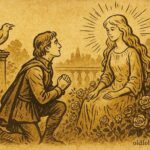
One day, a brave and clever hero arrived at the palace. Word of the king’s horn had reached his village, and he felt compelled to aid the ruler. The hero was neither a prince nor a magician but a common man of sharp mind and kind heart. He bowed before the king and said, “Majesty, I have traveled far to offer my help. Perhaps there is a way to understand the magic of the horn and restore peace to the kingdom.”
Together, the king and the hero explored every possibility. They consulted the oldest scrolls in the royal library, spoke with wise elders from distant lands, and even observed the creatures of the forest, searching for clues hidden in nature itself. Days turned into weeks, and still the horn remained, shining with an almost otherworldly light. Yet in this journey, something remarkable happened: the king’s fear began to wane. He discovered patience, humility, and a new sense of wonder for the mysteries of the world. His subjects, witnessing his courage and serenity, gradually accepted the strange but unchanging truth.
In time, the horn became less a symbol of fear and more a sign of the king’s unique presence. Children laughed and pointed, imagining magical creatures of legend, while the elders nodded knowingly, as if recognizing a deeper meaning. Even the courtiers, once doubtful, came to respect the steadfastness of their ruler. The king had not lost his power; instead, he had gained a lesson in resilience, dignity, and the importance of embracing life’s unexpected changes.
Though the horn never disappeared, the kingdom flourished. Trade and culture thrived, and the king’s reputation spread far beyond the island, celebrated as a ruler who faced the extraordinary with grace. The tale of the horned king was recounted around hearths and marketplaces, a story of wonder, courage, and the strange twists that life can bring.
Moral Lesson
The story of the King Who Grew a Horn on His Head teaches that true leadership is not measured by outward appearance but by wisdom, patience, and the courage to face the unexpected. Life often presents challenges we cannot control, yet how we respond defines our character.
Knowledge Check
- Who was the main character in the story?
The king, who ruled a kingdom by the Mediterranean and suddenly grew a horn on his head.
- What was the king’s initial reaction to the horn?
He was alarmed, bewildered, and ashamed at first, hiding from his subjects.
- What role did the hero play in the tale?
A clever and brave common man who helped the king seek understanding of the horn and offered guidance.
- How did the people of the kingdom react to the horn?
Some were fearful, others awed; over time, they came to accept it as a symbol of the king’s unique presence.
- What is the symbolic meaning of the horn?
The horn represents life’s unexpected changes and the opportunity for growth, resilience, and acceptance.
- What cultural origin does the tale come from?
Maltese folklore, rooted in oral storytelling traditions of the Maltese islands.
Source: Maltese folktale, Malta. Adapted from Maltese Fairy Tales (Hrejjef) by Isabelle Gatt, University of Malta (2011).