Along the wild and wind-beaten coast of Ayrshire in southwest Scotland, where cliffs fall sharply into cold grey waters and caves open like black mouths in the rock, there lingers a tale told in lowered voices. It is not a tale of fairies or enchanted wells. It is a story meant to unsettle, to remind listeners that when society’s laws fail, darkness can root itself deep within the earth. This is the legend of Sawney Bean.
In a time when Scotland’s roads were lonely and poorly guarded, when travelers journeyed by horseback across open moorland and through dense woodland with little more than trust and prayer to protect them, there lived a man named Alexander “Sawney” Bean. Accounts describe him not as a man of noble birth or tragic misfortune, but as one who rejected honest labor early in life. He drifted from village to village, known more for idleness than for craft.
In time, he found a companion, a woman said to share his hardened nature. Together they withdrew from ordinary society. Instead of building a home among neighbors, they chose the edges of the world: a vast cave system along the Ayrshire coast, carved deep into cliffs by centuries of relentless tide.
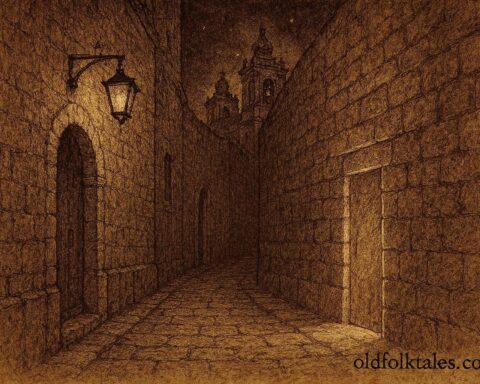
The cave was no shallow hollow. It stretched inward through twisting tunnels and hidden chambers, invisible from the cliffs above and nearly unreachable except by those who knew the shifting paths revealed at low tide. There, concealed by rock and sea, Sawney Bean and his companion established their hidden existence.
At first, they survived by theft.
Travelers crossing desolate roads would vanish without a trace. A merchant riding alone. A couple returning from market. A small group caught between towns at dusk. The disappearances were scattered, unconnected, at least at first. No bodies were found. No witnesses remained.
Whispers began.
Some blamed highwaymen. Others suspected wolves or roaming brigands. But none imagined the scale of what had taken root in the caves.
As years passed, the hidden clan grew.
Sawney Bean and his partner had children, many children, and in time those children bore offspring of their own. Isolated from society and bound only to one another, the family multiplied. They lived entirely outside law, faith, and custom. Their cave became a settlement beneath the earth, its chambers storing what they stole.
The legend claims that their crimes grew darker. No longer content with theft alone, they preyed upon travelers not merely for coin or goods but for sustenance. In the secrecy of their cavern, far from witness and accountability, morality eroded completely.
For over two decades, the story says, the clan survived in this way.
Villages across Ayrshire and beyond felt the fear. Disappearances mounted. Trade routes became dreaded passages. Some townsfolk were accused falsely; innocent men were arrested and punished when suspicion fell too near. The absence of evidence fueled panic.
Fear of the unknown has always been powerful. When danger cannot be seen, it multiplies in imagination.
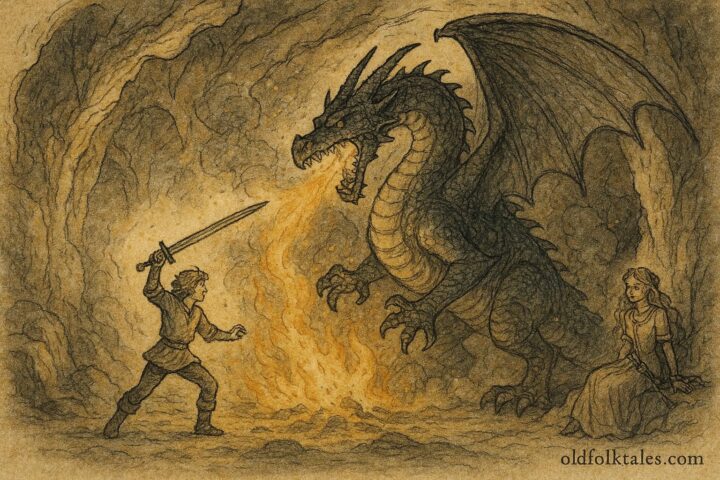
The legend reaches its turning point with a married couple traveling late along the coast road. They were set upon by attackers emerging suddenly from darkness. The husband, skilled with sword and determined to defend his wife, fought fiercely. The clash drew attention from other travelers approaching along the same road. Outnumbered and exposed, the attackers retreated toward the cliffs.
For the first time, witnesses survived.
The report that reached authorities was unlike any before it. The attackers were described not as common thieves but as wild figures, ragged, pale from life without sun, vanishing toward the sea.
Alarm spread quickly. The scale of disappearances, once dismissed as isolated crimes, now demanded investigation.
The matter rose beyond local officials. According to later accounts, King James VI himself became involved, dispatching a large force to scour the Ayrshire coast. Bloodhounds were brought to track scent along the cliffs. Soldiers searched tirelessly, examining rock faces and hidden inlets.
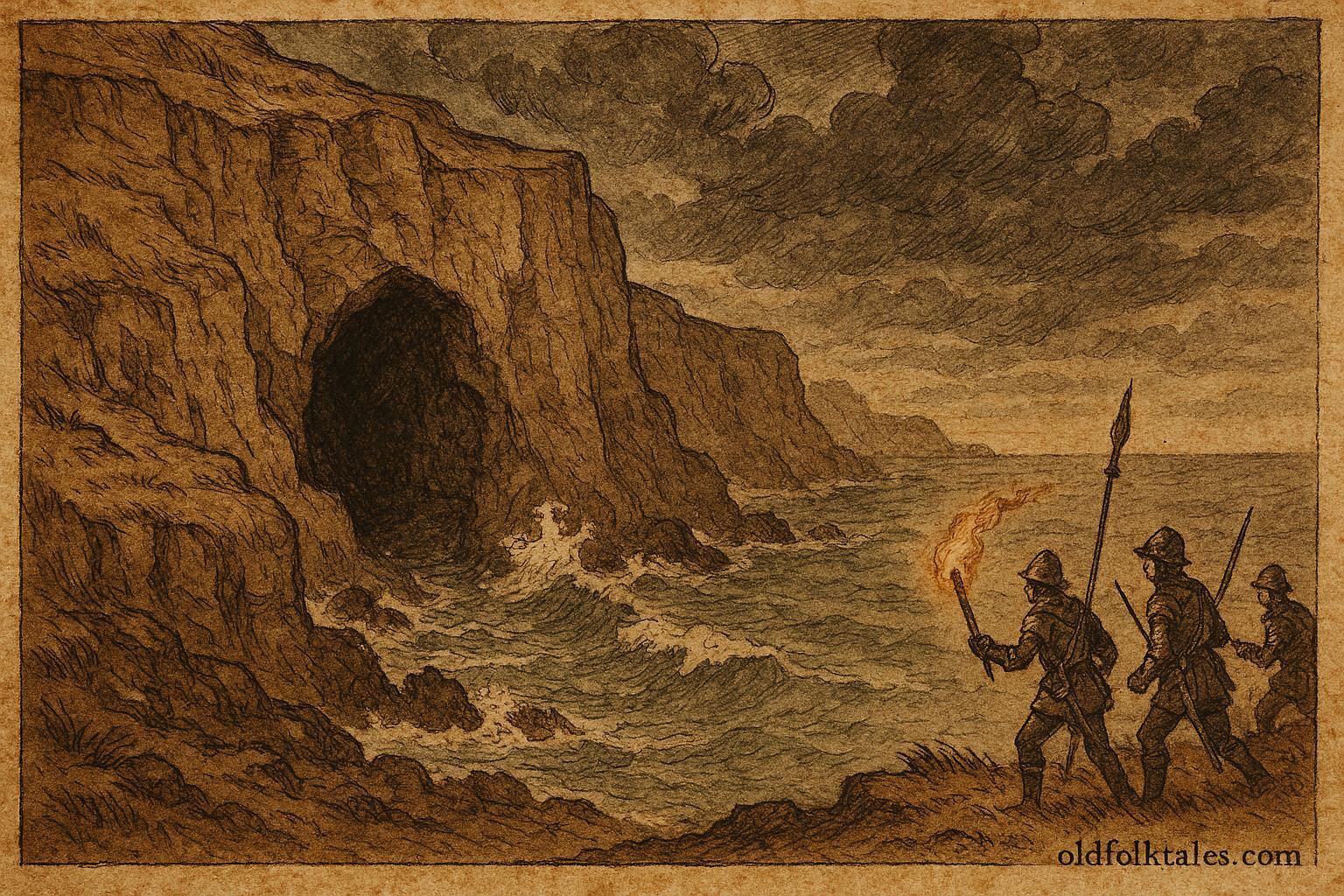
At low tide, the entrance to the cave was discovered.
Torches were lit. Armed men entered.
What they found within the cavern, the legend insists, confirmed their worst fears. The tunnels branched into deep chambers lined with stolen goods, coins, clothing, saddles, weapons. Evidence of countless victims filled the shadows.
The clan was captured alive.
Sawney Bean, his partner, their children and grandchildren, said to number nearly fifty, were dragged from the darkness into daylight. For perhaps the first time in years, they stood beneath open sky.
The story emphasizes their lack of remorse. Hardened by isolation, they reportedly expressed no regret for their deeds.
Royal justice was swift and severe. The clan was transported to Edinburgh to face public execution. The punishments described in The Newgate Calendar are brutal, meant not only as retribution but as spectacle and warning. The tale spares little detail in older printings, underscoring that savagery would meet uncompromising consequence.
Whether every element occurred precisely as recorded has long been debated by historians. Some question the numbers. Others suspect exaggeration shaped by moral panic or anti-Scottish propaganda during later centuries.
But folklore does not survive on courtroom accuracy alone.
The power of the Sawney Bean legend lies in what it represents.
It embodies society’s deepest fear: that beyond the edge of law and faith, humanity might revert to something monstrous. It reflects anxieties about isolation, about families cut off from moral structure, about what grows in darkness when no one is watching.
It also reinforces the idea of ultimate justice. However, hidden the crime, however deep the cave, wrongdoing will surface. Authority, whether royal or divine, will uncover it.
The Ayrshire coastline still bears caves carved by tide and time. Visitors who walk along those cliffs may hear the sea roar against stone and imagine how easily a secret might hide within such places.
But the legend of Sawney Bean does more than frighten. It warns.
Communities survive through shared responsibility. Laws, customs, and compassion bind society together. When those bonds break entirely, when individuals reject all moral accountability, the result is not freedom but decay.
And so, the story endures in Scotland’s darker folklore, a tale told not to delight, but to caution.
Journey into the charm of British wit and Irish wonder through centuries of folk tradition
Moral Lesson
The Legend of Sawney Bean serves as a stark warning: when individuals abandon moral law and withdraw from society’s shared responsibility, destruction follows. Justice may be delayed, but it is never permanently escaped.
Knowledge Check
1. Who was Sawney Bean in Scottish legend?
Sawney Bean is a figure from Ayrshire folklore said to have led a hidden outlaw clan living in coastal caves.
2. Where did the Sawney Bean clan live?
According to legend, they lived in a vast sea cave along the Ayrshire coast in southwest Scotland.
3. What themes does the Sawney Bean story explore?
The tale explores justice versus savagery, fear of the unknown, and the breakdown of social order.
4. What historical source recorded the legend?
The story appears in 18th-century editions of The Newgate Calendar, notably around 1773.
5. Was Sawney Bean a real historical figure?
Historians debate the authenticity of the legend, as evidence remains uncertain and possibly exaggerated.
6. What moral warning does the legend convey?
It warns that moral decay and isolation from society lead to destruction and eventual justice.
Source: The Newgate Calendar, 18th-century criminal accounts (notably 1773 editions).
Cultural Origin: Ayrshire, Southwest Scotland.