In the lush valleys and rolling hills of 19th-century Wallachia, where the air smelled of freshly tilled soil and the songs of birds filled the morning, there lived a poor boy named Mihai. Though his family had little wealth and no land beyond a tiny garden, Mihai’s heart was rich with kindness, curiosity, and an eagerness to help others. Villagers often spoke of his generosity: he shared his meager meals with orphans, aided elderly neighbors, and tended animals that others had abandoned.
One day, while wandering along the banks of the Olt River, Mihai discovered a strange glimmer beneath a willow tree. There, half-buried in the soft soil, was a harp carved from the finest wood, adorned with silver inlays that shimmered even in the dim forest light. Intrigued, Mihai lifted the harp and strummed its strings. To his amazement, the soft notes produced magic: the leaves trembled, a deer paused mid-step, and even the wind seemed to dance in harmony with the melody.
Discover the moral heart and wild spirit of the north through timeless Nordic storytelling
The Harp’s Power Revealed
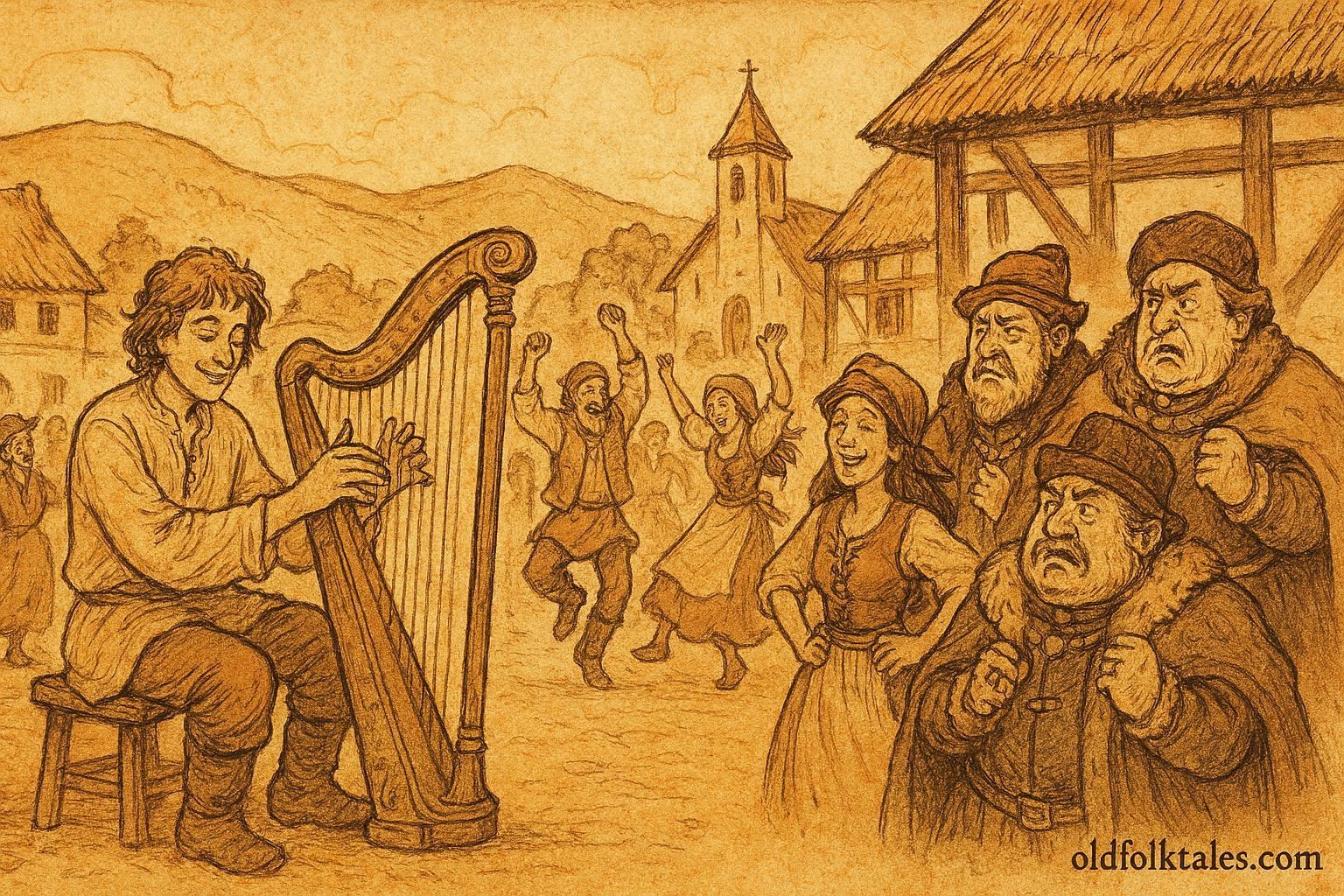
Mihai soon discovered that the harp had incredible powers. When played, its melodies could compel anyone nearby to dance uncontrollably or fall into a deep sleep. Yet the boy, wise beyond his years, recognized that such power could be dangerous if misused. He vowed to use it only for good, helping those in need and thwarting injustice.
It was not long before word of the harp reached the ears of greedy nobles who ruled the surrounding lands. These lords, notorious for hoarding grain and taxing peasants unfairly, sought to seize the magical instrument for themselves. They believed that with the harp’s power, they could compel everyone to obey their commands and solidify their wealth. Mihai, however, was clever. Rather than confront them with force, he devised a plan that relied on wits, timing, and the harp’s enchantment.
Outwitting the Nobles
The nobles sent servants to spy on Mihai, but each time they approached, Mihai played the harp and lulled them into a peaceful sleep, or caused them to dance until exhaustion forced them to retreat. When the nobles themselves attempted to seize him, he performed a public demonstration: he entered the town square, harp in hand, and played a melody so joyful that even the guards could not resist dancing. The nobles, furious at their humiliation, attempted to grab the instrument, only to find that Mihai had anticipated their moves. Using clever tricks and the town’s narrow streets to his advantage, he escaped unharmed.
Mihai’s ingenuity became legendary. He used the harp to redistribute wealth: those who had hoarded grain were forced to give some to starving villagers, while those who acted with kindness were allowed to enjoy a festival of music and celebration. Every action was guided by fairness and wisdom, not malice.
Acts of Kindness and Cleverness
One memorable tale tells of a peasant woman accused of stealing by a cruel noble. Mihai arrived just as she was about to be punished. He strummed the harp, gently lulling the angry crowd into calm reflection. Then, using clever reasoning and questioning, he exposed the noble’s false accusation: the woman had in fact saved the nobleman’s child from drowning, but the greedy lord had twisted the story for his own amusement. The woman was exonerated, and the villagers cheered, praising Mihai’s wisdom and the harp’s gentle magic.
Another time, a band of highwaymen attempted to rob traveling merchants. Mihai, hearing of their approach, played a lively tune that forced the thieves to dance across the hilltops in such exhaustion that they could no longer threaten anyone. The merchants, grateful and amazed, gifted him food, coins, and warm hospitality. Mihai accepted these offerings humbly, giving much back to the community.
Lessons Learned Through Music
Over the years, Mihai’s reputation grew. He became known not only as a boy with a magical harp but as a guardian of justice, a clever protector of the weak, and a model of how kindness combined with intelligence could overcome greed and cruelty. His actions taught the villagers that wealth was meaningless without fairness, and that magic, while powerful, was most valuable when guided by a moral heart.
Despite his growing fame, Mihai remained humble. He lived simply, tending animals, helping farmers, and playing his harp for children and the elderly. Tales of his deeds spread far beyond the valley, inspiring other young people to act with cleverness, courage, and kindness.
Discover the spiritual depth and wisdom hidden in the ancient folklore of Eastern and Balkan Europe
Moral Lesson
The Magic Harp teaches that true power lies not in wealth, instruments, or force, but in kindness, cleverness, and moral integrity. Even the most humble individual can achieve great good when intelligence is paired with generosity. Misuse of power and greed ultimately fail, while courage and compassion are rewarded.
Knowledge Check
1. Who discovered the magical harp in the story?
Mihai, a kind-hearted poor boy from Wallachia.
2. What powers does the harp have?
It can compel anyone nearby to dance uncontrollably or fall asleep.
3. How does Mihai use the harp?
To outwit greedy nobles, protect villagers, and ensure justice.
4. What themes are central to the story?
Kindness rewarded, intelligence over greed, morality, and the responsible use of magic.
5. What challenges does Mihai face?
He must deal with greedy nobles, false accusations, and threatening highwaymen.
6. What is the cultural origin of the folktale?
Romanian folklore, Wallachia, 19th century.
Source: Adapted from Petre Ispirescu, Basme românești (1882)
Cultural Origin: Romanian folklore, Wallachia, 19th century