Far to the north, where the pine forests whispered in the cold winds and icy rivers glimmered like silver ribbons under the pale sun, lay the land of Pohjola. It was a realm of beauty and danger, a land where the human world touched the magical, and where the extraordinary was part of daily life. In this northern kingdom lived a maiden of unparalleled beauty, known simply as the Maiden of the North. Her eyes were like twilight skies, her hair shimmered like frost on the morning pines, and her presence seemed to command both awe and caution.
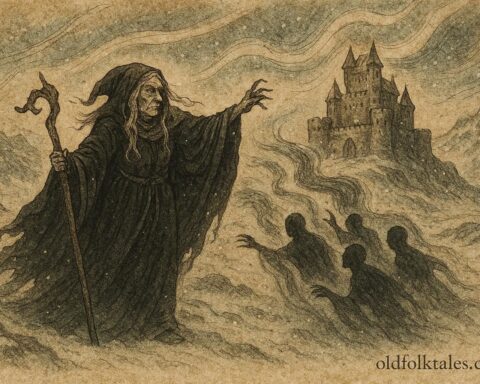
The maiden was not free to marry at whim. Her mother, a powerful sorceress who ruled Pohjola with a firm hand and mystical power, devised challenges for all who sought her daughter’s hand. Many suitors had tried and failed, unable to meet the trials of skill, intelligence, and courage. Yet tales of the maiden’s grace and beauty traveled far, reaching a young hero in a distant village of southern Finland. Inspired, he resolved to journey north, to face whatever trials awaited, and to win her heart with bravery and wit.
The hero’s journey began along narrow forest paths, where snow-dusted branches scratched at his cloak and icy winds cut through the air. Rivers blocked his way, their waters swift and cold, and mountains rose like jagged teeth against the horizon. Guided by determination and tales of the maiden’s magical homeland, he pressed onward, his heart steady, his mind focused on the trials to come.
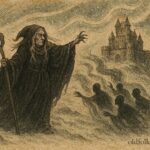
Upon reaching Pohjola, the hero was greeted by the maiden’s mother, whose eyes glinted with scrutiny. “Many have come before you,” she said, her voice a rumble like distant thunder. “To win my daughter’s hand, you must first prove your skill, courage, and cleverness. Fail, and you shall leave this land with nothing, but lessons learned.”
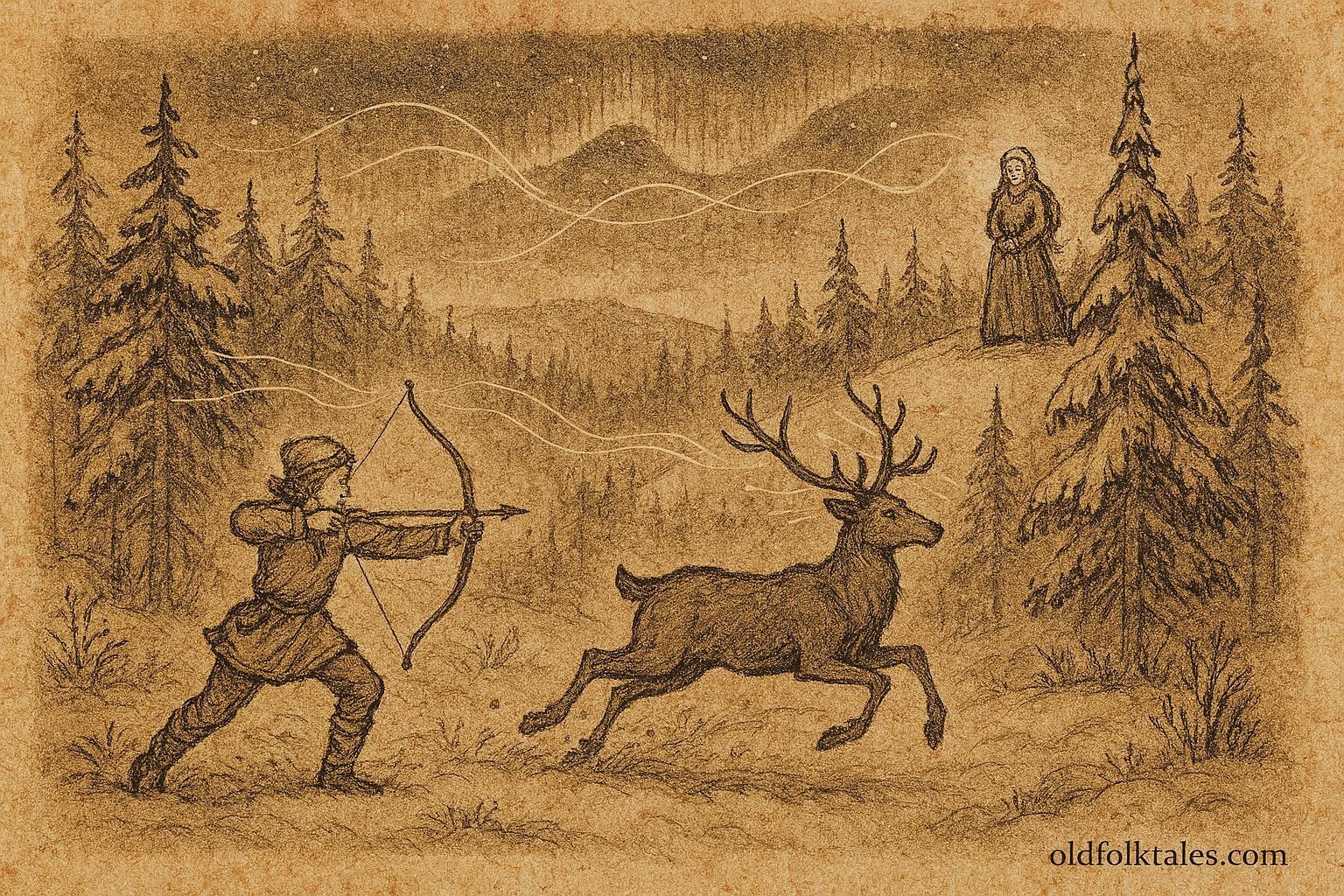
The first trial was of strength and precision: the hunt. The hero was tasked with capturing a magnificent stag that roamed the frost-laden forests. It was not enough to simply chase the animal; he had to track it with care, anticipate its movements, and use intelligence to ensure a clean capture. Day after day, he tracked the creature through forests where the snow muffled his steps, across frozen streams that cracked and groaned underfoot, and up cliffs that tested both his endurance and courage. Finally, combining patience with skill, he cornered the stag without harming it unduly and presented it to the sorceress. She nodded in acknowledgment, impressed but far from defeated.
The second trial was of artistry: weaving. Using a loom set with magical threads, he had to create a cloth that shone with the brilliance of the northern lights. The threads shimmered with colors impossible in the natural world, shifting as though alive. Hours turned into nights as the hero worked, weaving carefully under the watchful eyes of Pohjola’s enchanted creatures. Each knot, each crossing of thread, required both precision and ingenuity. By the third morning, a cloak of unparalleled beauty lay before the sorceress, glowing softly in the dim light. Her gaze softened slightly, yet she reminded him that the final challenge awaited.
The last trial was one of intellect: riddles and cunning. The sorceress posed questions that tested knowledge of nature, magic, and the hidden ways of the world. Some riddles seemed impossible, like puzzles woven from moonlight and shadow. The hero paused, considering each one, recalling the songs and wisdom passed down in his village, and spoke carefully. With every correct answer, the sorceress’s eyes narrowed in surprise and then widened with reluctant respect.
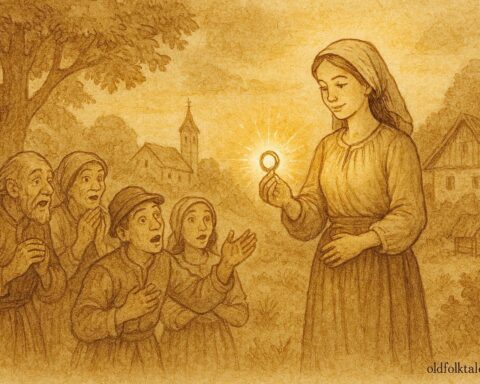
At last, the young hero had completed all trials. The maiden herself appeared, a figure of serene grace and quiet strength. She smiled, recognizing the courage, cleverness, and perseverance in the youth before her. Though beauty alone had drawn him north, it was his bravery, skill, and wit that had earned her respect. “You have proven yourself,” she said softly. “Not merely by might, but by heart and mind. For this, you are worthy.”
The union was celebrated with music, dance, and the shared joy of a community that recognized courage and virtue. The hero’s journey had not only won the maiden’s hand but had forged a bond between their peoples, a testament to the rewards of perseverance, cleverness, and respect for both human and supernatural forces. Tales of the Maiden of the North spread across the lands, sung by bards beside hearths, carried in whispers along rivers, and remembered in the hearts of those who valued courage, wit, and love.
Discover the moral heart and wild spirit of the north through timeless Nordic storytelling
Moral Lesson
True heroism combines courage, cleverness, and perseverance. Love and respect are earned through deeds and wisdom, not merely desire or strength. Trials may challenge the body and mind, but they also reveal the heart’s worth.
Knowledge Check
-
Who is the protagonist of the story?
A young hero seeking the hand of the Maiden of the North.
-
What trials does the hero face to win the maiden?
Hunting a stag, weaving a magical cloth, and answering riddles.
-
Who sets the challenges for the suitors?
The maiden’s mother, a powerful sorceress of Pohjola.
-
What qualities allow the hero to succeed?
Courage, cleverness, skill, and perseverance.
-
What theme is emphasized in the folktale?
The pursuit of love through bravery, intelligence, and respect.
-
What is the cultural origin of the story?
Finland, Northern Finnish oral folklore compiled in Kalevala.
Source: From Kalevala oral traditions, compiled by Elias Lönnrot, 1835.
Cultural Origin: Finland, Northern Finnish folklore.