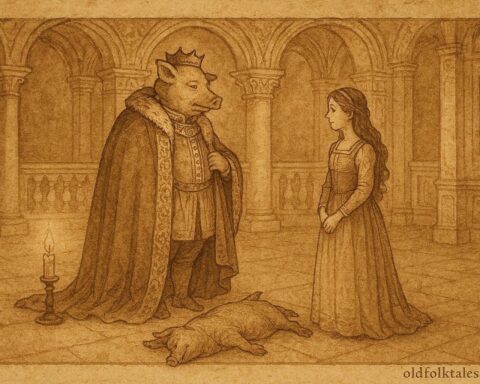
High upon the banks of the Rhine, near the old town of Bingen, stands a lonely tower that has watched the river’s mists rise and fall for centuries. Locals call it the Mäuseturm, the Mouse Tower, and few dare to pass it without whispering a prayer or crossing themselves. For deep within its stone walls lies the memory of Archbishop Hatto, a man whose heart turned as cold as the waters that now surround his grave.
The Archbishop’s Greed
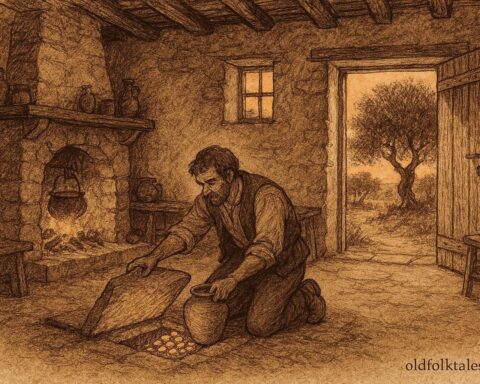
Archbishop Hatto of Mainz ruled during a time of bitter famine. The year had been harsh; crops failed, and winter came too soon. The people of the Rhine villages, gaunt and hollow-eyed, begged for grain. Yet Hatto, instead of opening his granaries, hoarded the stores for profit. His barns overflowed while the poor starved outside his gates.
From his lofty castle, Hatto looked down on their suffering and said, “The lazy mice must be taught to fend for themselves.” To him, the hungry peasants were no more than vermin nibbling away at his wealth. When the cries of the people grew too loud, he devised a cruel deception.
The Cruel Trick
One morning, Hatto sent word throughout the villages: “Come to my barn, and you shall be fed.” Desperate, the starving men, women, and children gathered, believing their bishop’s heart had softened. He led them into a large wooden granary, filled knee-deep with corn. Their faces lifted with gratitude, until the great doors slammed shut behind them. Hatto ordered his servants to set the barn aflame.
As the fire roared, Hatto mocked their screams from outside. “Hear the mice squeak!” he jeered. “They feast too long upon my grain, now let them have their fill!” The barn burned to ashes, and with it, the last trace of mercy in the bishop’s soul.
The March of the Mice
That night, the air grew thick and strange. From the blackened ruins of the barn came a sound like rustling leaves, but it was no wind. Out of the ashes poured thousands upon thousands of mice. Their tiny eyes glowed like embers, and their teeth glinted in the moonlight. They swarmed through the streets of Mainz, over bridges, under gates, moving with a single purpose: vengeance.
Servants fled in terror. The cathedral bells rang in warning, but none could stop the tide. Hatto awoke to the sound of scratching, inside his chambers, beneath his bed, behind his walls. He fled to his castle’s upper tower, but the mice climbed higher. He escaped by boat across the Rhine to a small stone tower on an island, believing the waters would protect him.
The Punishment
For a brief moment, Hatto breathed in relief. The island was surrounded by swift waters; surely no creature so small could cross. But soon, he saw the mice on the opposite bank, pouring into the river like a dark ribbon. They swam in countless numbers, their tiny heads bobbing through the current. Within hours, they reached the island.
Hatto locked the doors, piled furniture against the walls, and prayed for deliverance. Yet the mice found cracks in the stone, chewed through the wooden doors, and poured in. His screams echoed across the Rhine as they fell upon him, biting and gnawing until not even his bones remained.
When morning came, the tower stood silent. The river flowed on, indifferent and eternal. The people said that divine justice had spoken, that greed, when left unchecked, devours itself. Since then, the tower has been called the Mäuseturm, the Mouse Tower, a warning carved in stone against cruelty and pride.
Moral Lesson
The story of Archbishop Hatto reminds us that greed and tyranny bring about their own destruction. No wealth can protect a heart that turns against compassion. Justice, though it may seem delayed, always finds its way, sometimes through the smallest of creatures.
Knowledge Check
1. What is the moral lesson of “The Mouse Tower of Bingen”?
It teaches that greed, cruelty, and lack of compassion ultimately lead to one’s downfall through divine justice.
2. Who was Archbishop Hatto in the folktale?
He was a greedy and heartless bishop who hoarded grain during a famine and deceived his starving people.
3. Why is the tower called the Mäuseturm (Mouse Tower)?
It was named after the swarm of mice that punished Archbishop Hatto for his cruelty.
4. What do the mice symbolize in this German folktale?
They symbolize divine retribution, justice, and the idea that even the smallest creatures can bring down the mighty.
5. What region and country is the tale from?
The story originates from Bingen on the Rhine River in Germany and is part of German folklore collected by the Brothers Grimm.
6. What lesson about leadership does this story convey?
True leadership requires mercy and responsibility; leaders who exploit their people invite ruin upon themselves.
Source: Adapted from the German folktale “The Mouse Tower of Bingen” (Deutsche Sagen, No. 187), collected by the Brothers Grimm (1818).
Cultural Origin: German folklore, Rhine River region.