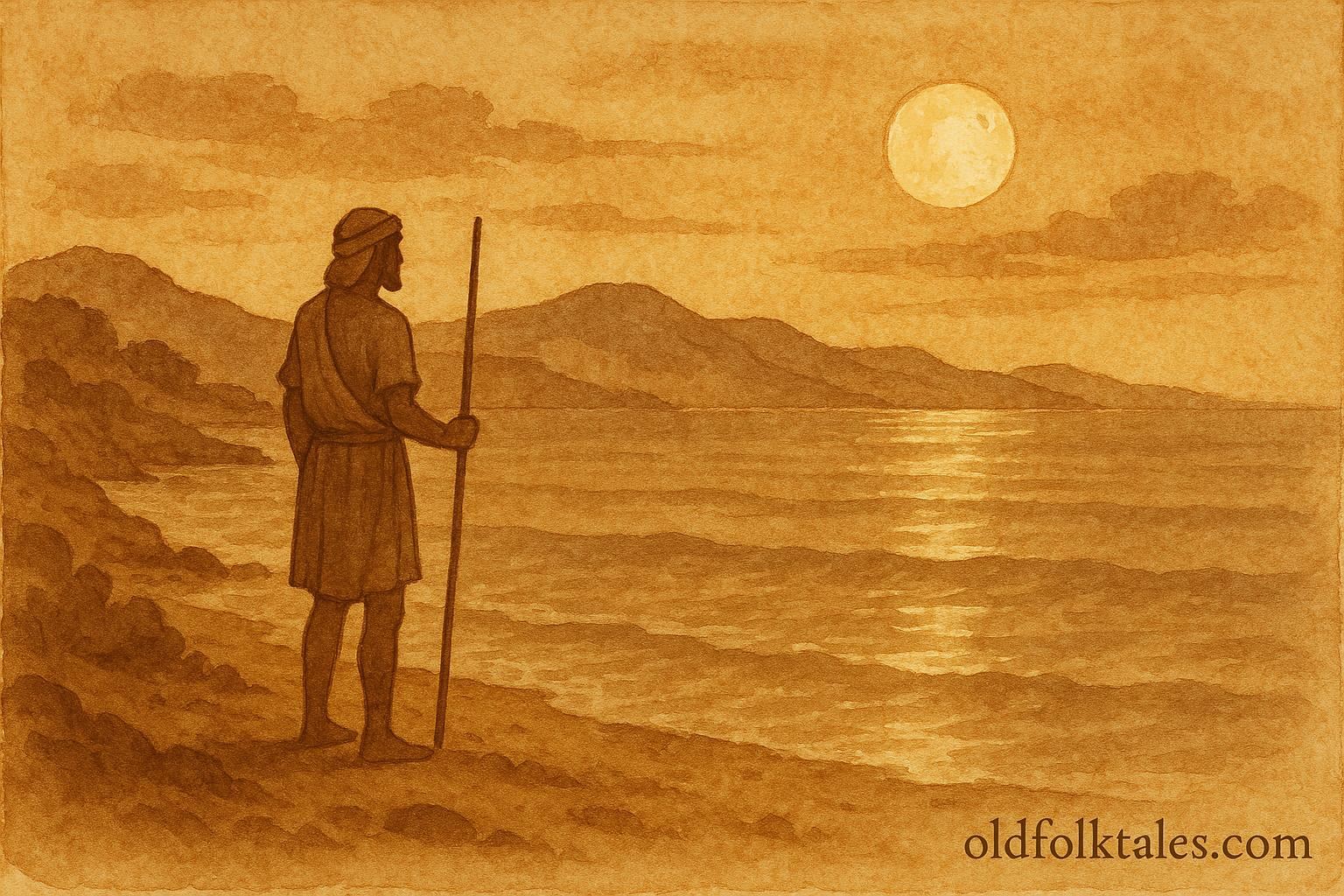
In the ancient island of Crete, where the Aegean Sea whispers against the cliffs and moonlight dances upon the foam, there lived a humble fisherman. Every day, he cast his net into the turquoise waters, hoping the sea, mysterious and generous, would favour him. One evening, beneath the glow of the rising moon, he felt his net grow heavy with something unlike any catch he had known.
When he pulled it ashore, he found not a fish, nor treasure, but a maiden clothed in silver seaweed, a Nereid, a daughter of the sea. Her hair shimmered like strands of moonlight, her eyes glowed deep as the ocean floor. The fisherman stood speechless before her beauty.
“Let me go,” she pleaded softly, her voice like the murmuring tide. “I belong to the sea. My home is in its depths.”
But the fisherman, overcome by love and wonder, refused. “Come to land with me,” he said earnestly. “Be my wife, and I will cherish you more than life itself.”
The Nereid looked at him long and sadly. “You are a mortal man,” she said, “and mortals are quick to anger. Hear me well, if you ever strike me, even once, I shall leave you forever.”
He swore by the saints and the sea itself that he never would. So, she went with him, and together they made a home by the shore. The villagers whispered of the beautiful stranger who never aged, who spoke to the waves as though they were kin. Yet she was a loving wife, quiet and devoted. She bore the fisherman two children, both bright-eyed and fair, with hair like sunlit foam and voices that sang like gulls at dawn.
Though she lived among mortals, part of her heart still belonged to the ocean. On moonlit nights, when the tide was high, she would walk barefoot to the edge of the surf and sing to the waters. Her songs were soft and sad, filled with longing. Sometimes, the waves would rise as if to answer her, glimmering with an otherworldly light.
The fisherman loved her deeply, but her strange ways troubled him. He could not understand her bond with the sea, and jealousy began to stir in his heart, jealousy not of another man, but of the sea itself.
One tragic day, their little child fell into the fire while she was tending to the hearth. The fisherman rushed in, crying out in anguish. His grief overwhelmed him, twisting into fury, and he turned upon his wife. “Your songs!” he shouted. “Your cursed songs have brought this misfortune upon us!”
In his rage, he struck her, just once. But that single blow sealed his fate.
The Nereid stood still, her eyes wide with sorrow, not anger. “You have broken your oath,” she whispered, her voice trembling like ripples across the tide. “The sea calls me home.”
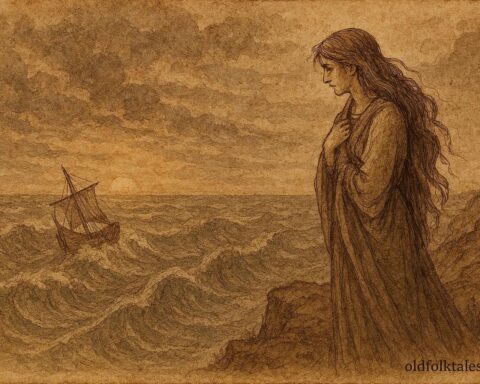
Without another word, she fled to the shore. The fisherman chased after her, crying out her name, but the waves had already opened to receive her. She vanished into the foam, her silver garments glinting briefly beneath the water before fading into the deep.
He fell to his knees, staring at the restless waves that had taken her. From that day on, he lived in silence, tending the children she left behind. But on nights when the moon rode high and full, he would hear her voice, soft and haunting, rising from the surf. The villagers, too, began to hear it: a woman’s song drifting over the sea breeze, echoing between the cliffs.
And so, even now, when fishermen set sail from Crete beneath the moonlight, they cast flowers into the waves, offerings to the Nereid Bride, the spirit of the sea who once loved a mortal man.
Moral Lesson
Love, no matter how deep, cannot hold what belongs to another world. The tale of the Nereid reminds us that promises made in passion must be honoured in peace, for once broken, they can never be mended.
Knowledge Check
1. Who was the Nereid in the story?
She was a sea spirit, a daughter of the sea, caught by a fisherman off the coast of Crete.
2. What promise did the fisherman make to the Nereid?
He swore never to strike her, as doing so would make her leave him forever.
3. What event led to the breaking of the fisherman’s oath?
Their child fell into the fire, and in his grief, the fisherman struck his wife in anger.
4. What symbolizes the Nereid’s eternal connection to the sea?
Her nightly songs to the waves and her final return to the ocean represent her unbreakable bond with the sea.
5. What moral does this Greek folktale teach?
The story warns that love cannot imprison what is free by nature, and that breaking sacred promises brings loss and sorrow.
6. What cultural tradition remains from the tale in Crete?
Fishermen still cast flowers into the waves to honour the memory of the Nereid Bride.
Source
Adapted from the Greek folktale “The Nereid Bride” in Modern Greek Folklore and Ancient Greek Religion by John G. Lawson (1910), London: Cambridge University Press.
Cultural Origin: Greece (Cretan Folklore)